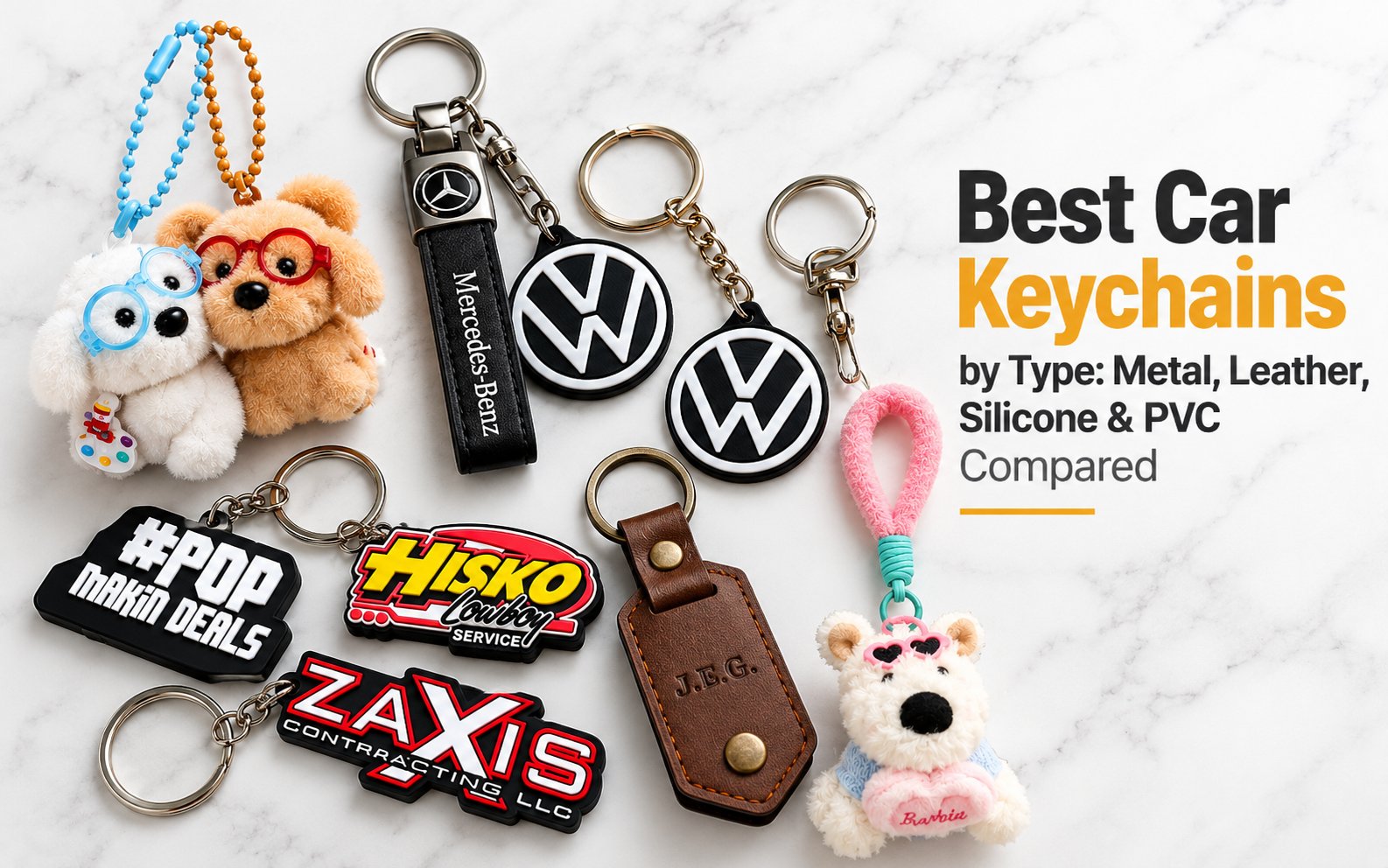
There’s no single best printing method for fridge magnets. The right one depends on your material, your artwork, and how much detail your design actually carries, since a flat one-color logo and a full-color photo are not the same printing job. This guide walks through the printing methods actually used on fridge magnets, how they pair with different materials, and what to confirm with your supplier before approving artwork or matching your own design.
The Printing Methods Actually Used on Fridge Magnets
No single process prints every fridge magnet. A manufacturer matches the process to the material and the artwork, not the other way around. The five below cover almost every fridge magnet you’ll see on a site like huasancustom.com’s custom refrigerator magnets page and its metal fridge magnet manufacturing guide.
Screen printing (silk screen) pushes ink through a mesh stencil, one color per pass. It lays down thick, solid color that holds up well, and it stays the right pick for one-color or two-color logos, large text, and big runs where the setup cost pays back fast. The trade-off is color depth: each extra color adds a pass, and a photo-realistic gradient isn’t really a screen job.
UV printing uses ultraviolet light to cure the ink instantly as the printer lays it down. It reproduces color accurately, handles gradients and fine detail, and works well on flat hard surfaces like acrylic and metal. Turnaround is fast because there’s no drying step, but the printed surface still needs a protective layer if the magnet will live on a fridge for years.
CMYK digital printing reproduces full-color photographic detail most accurately. HuaSan uses it for flexible magnetic sheet fridge magnets, the format most photo, calendar, and mass-campaign orders run on, since it skips the screen setup that adds cost and lead time at small quantities.
Pad printing transfers ink from an etched plate through a silicone pad, which lets it wrap around curved or uneven surfaces that screen printing can’t reach cleanly. It comes up on molded rubber and soft PVC pieces, where a flat print won’t sit right on the shape.
Enamel fill isn’t printing at all, but buyers often lump it in with printing questions. Hard enamel (imitation enamel) and soft enamel fill color into etched or stamped recesses in a metal base, then polish or bake the surface. If your design is a solid-color logo on a metal pin, enamel is often the answer. If your design is a photo or a gradient, it isn’t.
Matching Printing Method to Material
| Bahan | Typical Process | Sesuai Untuk | Watch Out For |
|---|---|---|---|
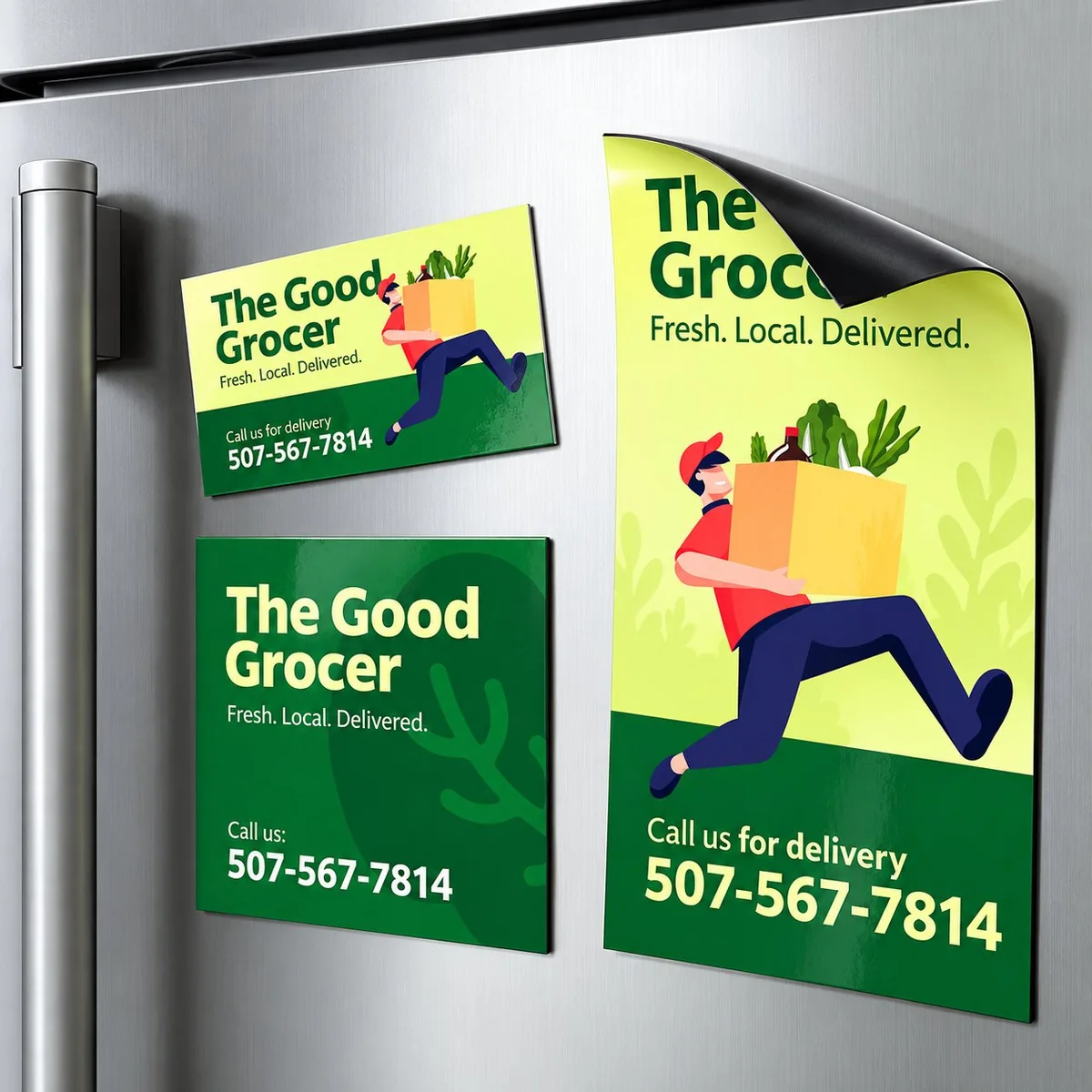
| Kepingan magnet fleksibel | CMYK digital print + lamination | Photos, calendars, mass campaigns | Creases can crack the printed surface if folded |
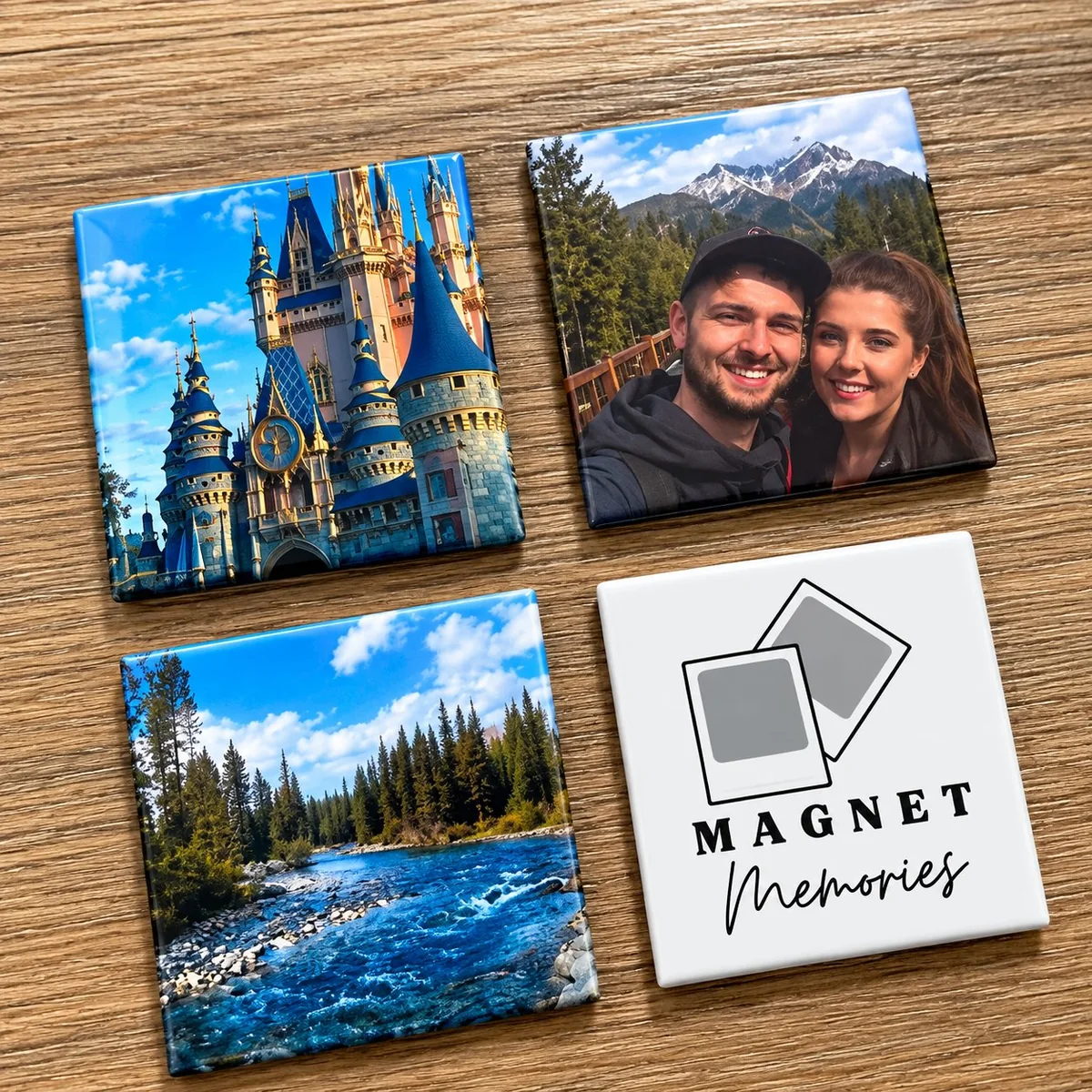
| Akrilik | UV print + laser cut | Retail artwork, photo magnets, full color | Scratches show on the printed surface over time |
| Logam | UV printing, screen printing, pad printing, or enamel fill | Photo-quality art (UV) vs. solid logo color (screen or enamel) | Enamel is not printing, confirm which one you are actually ordering |
| Rubber / soft PVC | Molded with surface color, 2D or 3D | Mascots, tourism, kids’ promotions | Fine text can lose definition once molded |
| Plastik | Injection mold + print | Promosi, set pendidikan | Print sits on a molded surface, not a flat sheet |
Scope note: process pairings above come from huasancustom.com’s custom refrigerator magnets page and metal fridge magnet manufacturing guide, not a fixed industry rule. Confirm the exact combination with your supplier before finalizing artwork.
Why Photo and Gradient Designs Need a Different Process Than a Flat Logo
A flat logo in one or two colors and a full-color photo aren’t the same printing job. Screen printing lays down thick, even color, which is exactly what a flat logo needs. CMYK digital and UV printing lay down thousands of tiny color blends, which is what a photo needs. Picking screen for a photo gives you a chunky, posterized result. Picking UV or digital for a flat logo burns setup time you didn’t need.
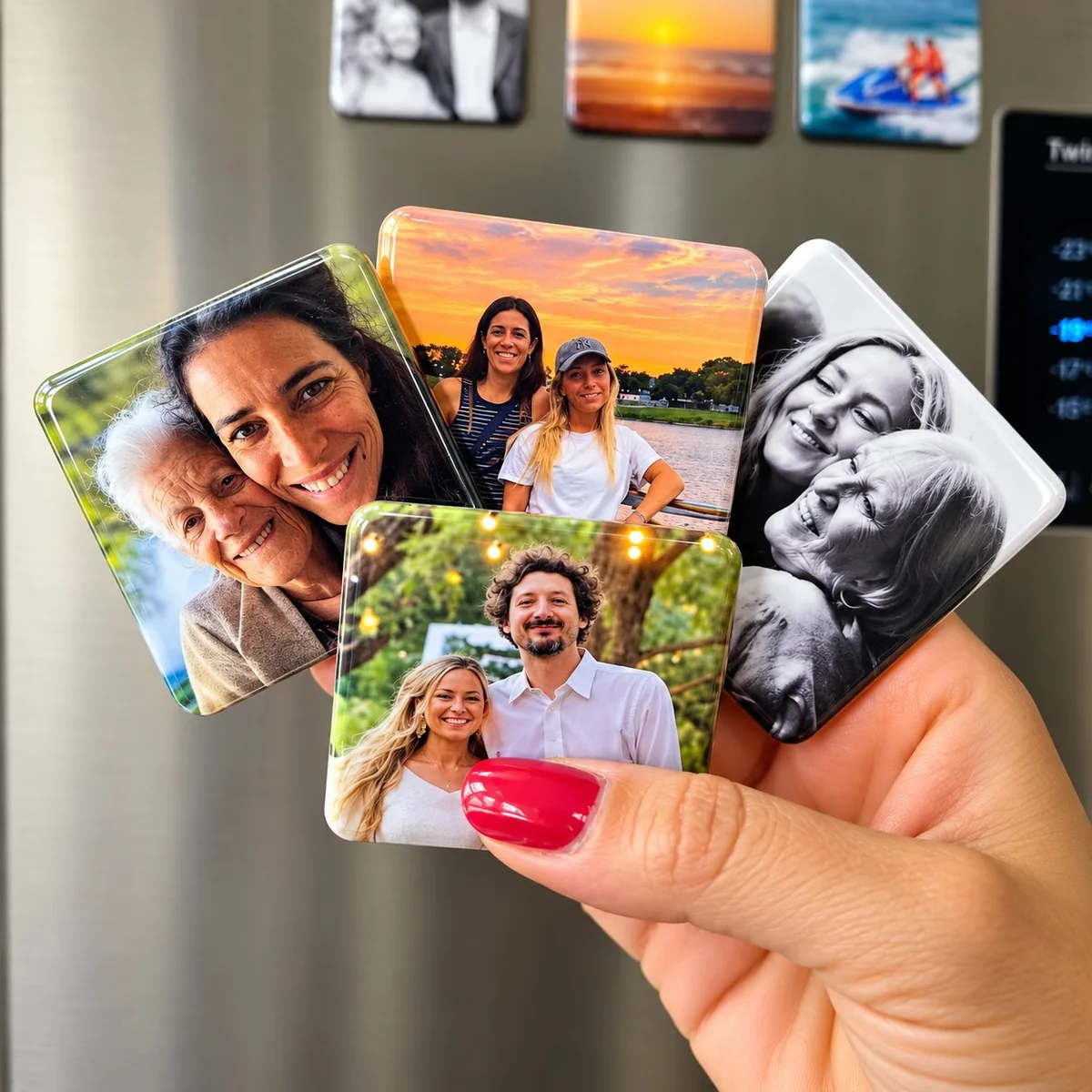
If your project is a photo magnet specifically, the 10 creative ways to make your fridge more personal guide covers file resolution, color mode, and proof expectations, and the bulk personalized magnet guide covers how digital output stays cost-effective at volume.
What Protects the Print After It is Applied
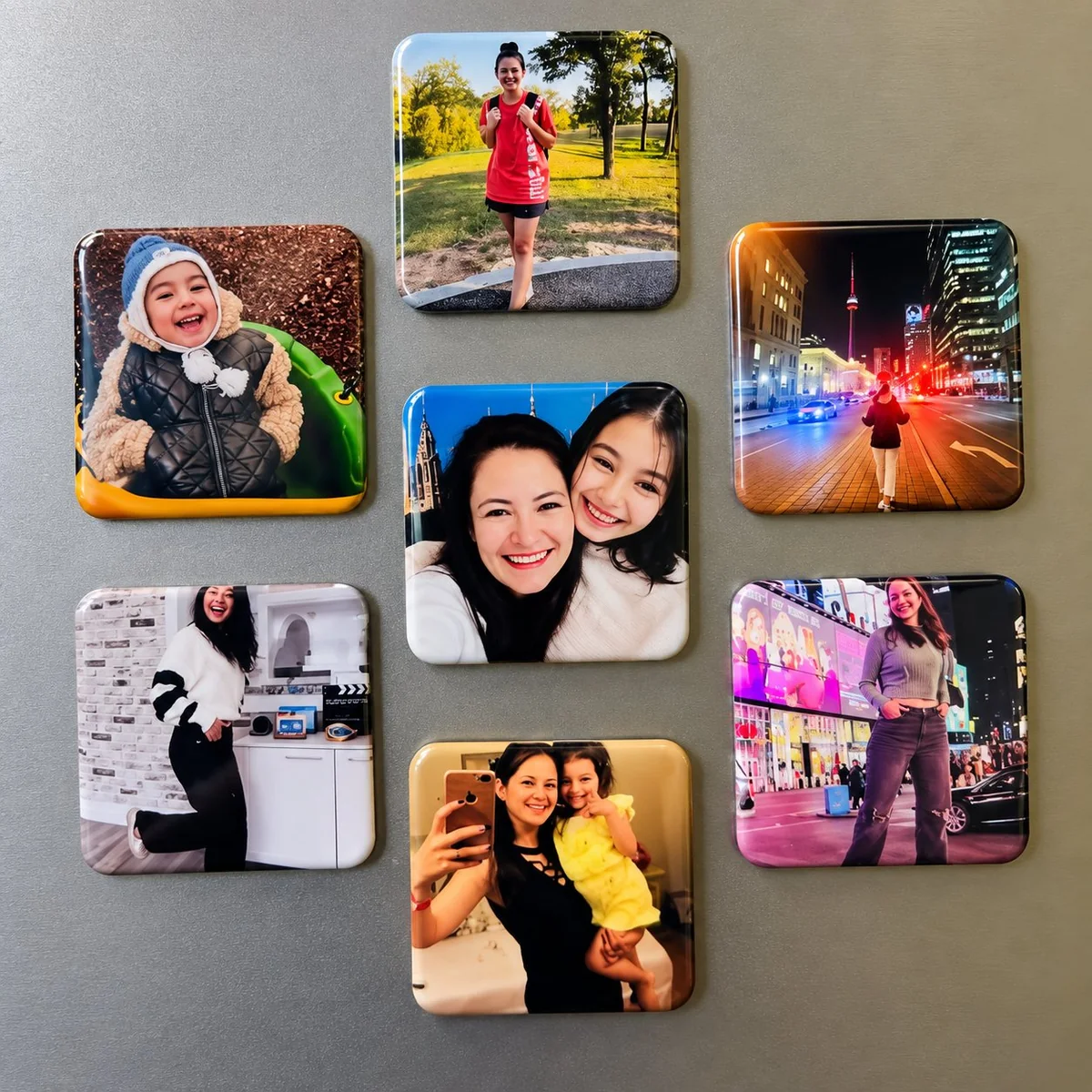
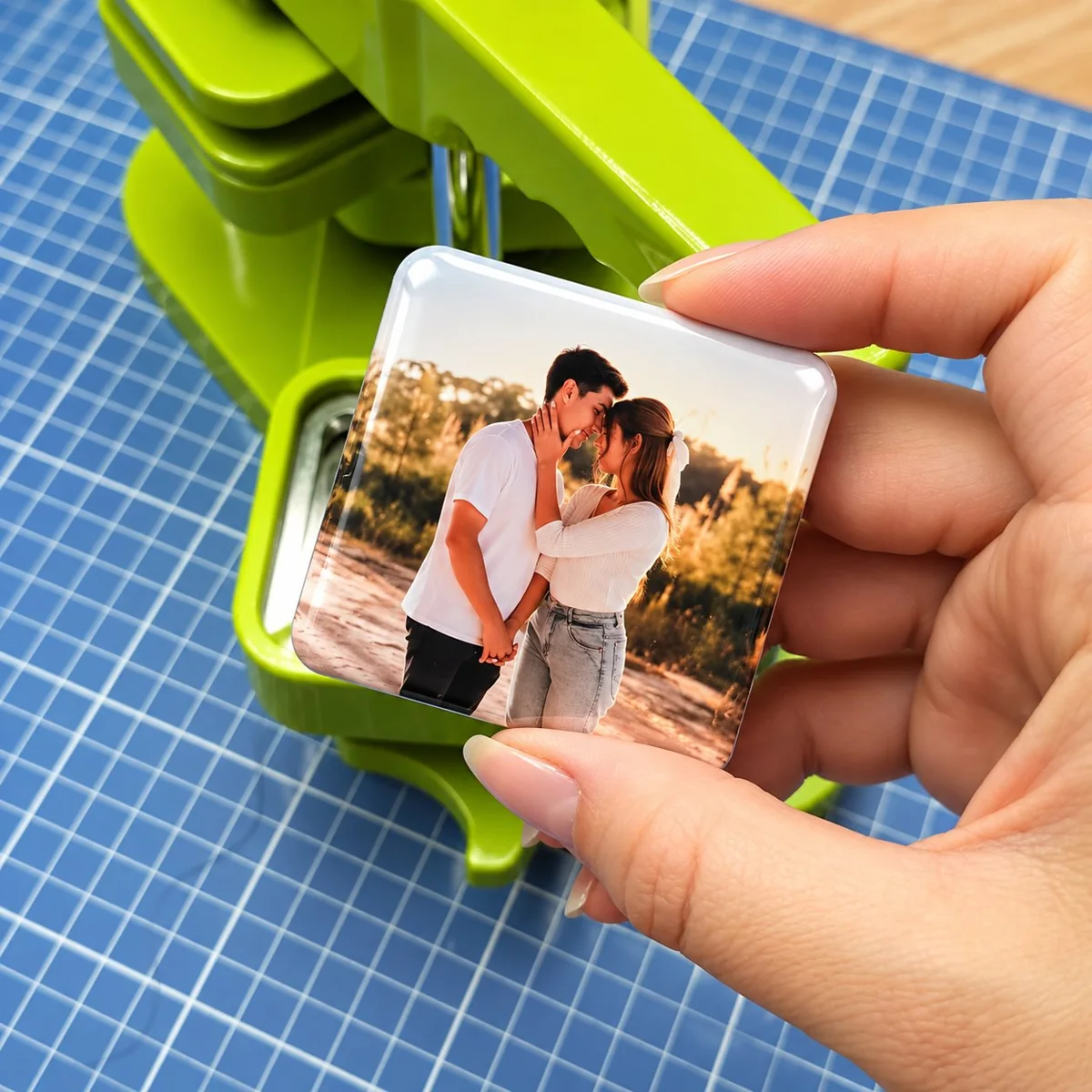
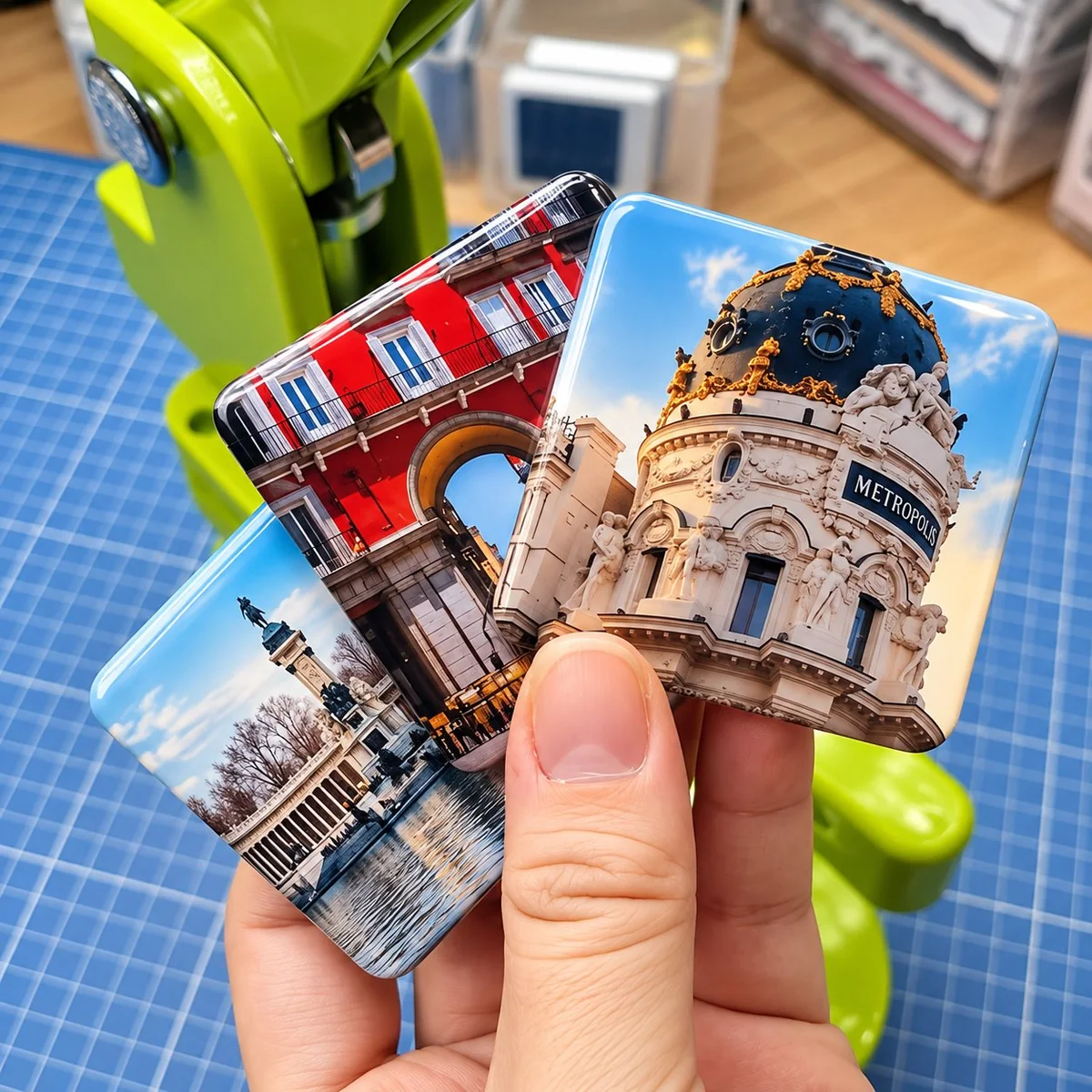
Exposed ink wears out fast on a fridge magnet, so the protective layer matters as much as the printing method itself. Lamination covers a flat digital print on flexible magnetic sheet with a thin film that resists scratches, moisture, and color fade. Epoxy doming lays a clear resin cap over a UV print or a metal piece, giving the surface a glossy, slightly raised finish. A clear coat or varnish is the lighter option, used when lamination or epoxy would change the look the buyer wants.
Ask your supplier which protective layer they include as standard for your chosen process, and which ones they charge extra for. A lamination that costs an extra few cents per magnet is cheap insurance against a print that scratches off after a season. The fridge magnet printing service page covers which protective finishes HuaSan includes by default versus as an upgrade, so confirm the exact line items on your quote before you sign off.
What to Check Before You Approve a Printing Method
Confirm these details with your supplier before you sign off on artwork:
- Which process fits your material, not just your budget
- Minimum line width and text size the process can actually reproduce
- Whether your quote includes a protective layer, lamination, epoxy, or clear coat
- Color mode, CMYK or Pantone matching, for accurate printed color
- Real photos of the process running on your material, not just a finished sample photo
That last point matters more than it sounds. A finished sample tells you the design looks right once. Real factory photos of your material moving through the actual machine tell you whether the operator has run your substrate before, and whether the result will match a second order six months later. Ask for both, not just one.
Printing method is also one of several factors that shape your final cost, alongside material, size, and quantity. A process that needs tooling or screen setup will price differently than a flat digital print at the same quantity, so a quote comparison only works when the process is part of the comparison. The custom refrigerator magnets page covers how these factors stack together on a real quote.
Soalan Lazim
What is the best printing method for a photo fridge magnet?
CMYK digital printing on flexible magnetic sheet, or UV printing on acrylic, both reproduce photo-quality color and gradient detail well. Screen printing is the wrong tool for photos because each color is laid down as a solid pass, so gradients and skin tones don’t translate. Confirm with your supplier which process your specific photo magnet product runs on, since the right one depends on the base material and the protective finish you choose.
Is UV printing better than screen printing?
Neither is universally better. UV printing handles full color and photo detail with a fast turnaround. Screen printing lays down thicker, more durable color for solid logos, big text, and large runs where the screen setup pays back. The right pick depends on your design, your material, and your quantity, not on which process is newer.
Is enamel the same as printing?
No. Enamel fills color into etched or stamped recesses in metal, while printing applies ink onto a surface. Buyers often ask about them together because both show up on metal fridge magnets, but they are different production paths. Enamel is the usual answer for a solid logo on a metal pin, while UV or screen printing is the answer for a photo or a gradient on the same metal base.
Can I mix printing methods on one magnet?
Yes, on metal fridge magnets specifically. A baked white base coat with UV printing over it is a real combination HuaSan offers, which gets you a bright white background plus full-color detail in one finished piece. Confirm the exact combination and any setup fee with your supplier before approving artwork, since mixed methods add a step to the production flow.
Does the printing method affect my minimum order quantity?
It can. A process that needs tooling or screen setup, rather than a flat digital print, usually carries a higher minimum, since your supplier has to recover setup time across the run. Ask for the per-process minimum before you commit to a design, especially if your project sits near a typical threshold, and confirm any quantity breaks your quote assumes.
Getting the Right Printing Method for Your Design
The printing method that fits your fridge magnet depends on your material and how much color detail your artwork actually needs, not on which process is newer or more popular. Share your target material, your artwork or design idea, the color detail you need, your quantity, and your deadline so HuaSan can confirm the right printing method, protective finish, and lead time for your custom fridge magnet project.
Bring along:
- target material (flexible sheet, acrylic, metal, rubber, plastic)
- artwork file or a short design brief, with photo or flat logo noted
- approximate quantity and any delivery deadline
- any protective finish preference (lamination, epoxy dome, clear coat)
- any color matching requirement (CMYK or Pantone)
Minta Sebut Harga or compare the broader magnet peti sejuk tempahan catalog for material and process combinations across all formats.