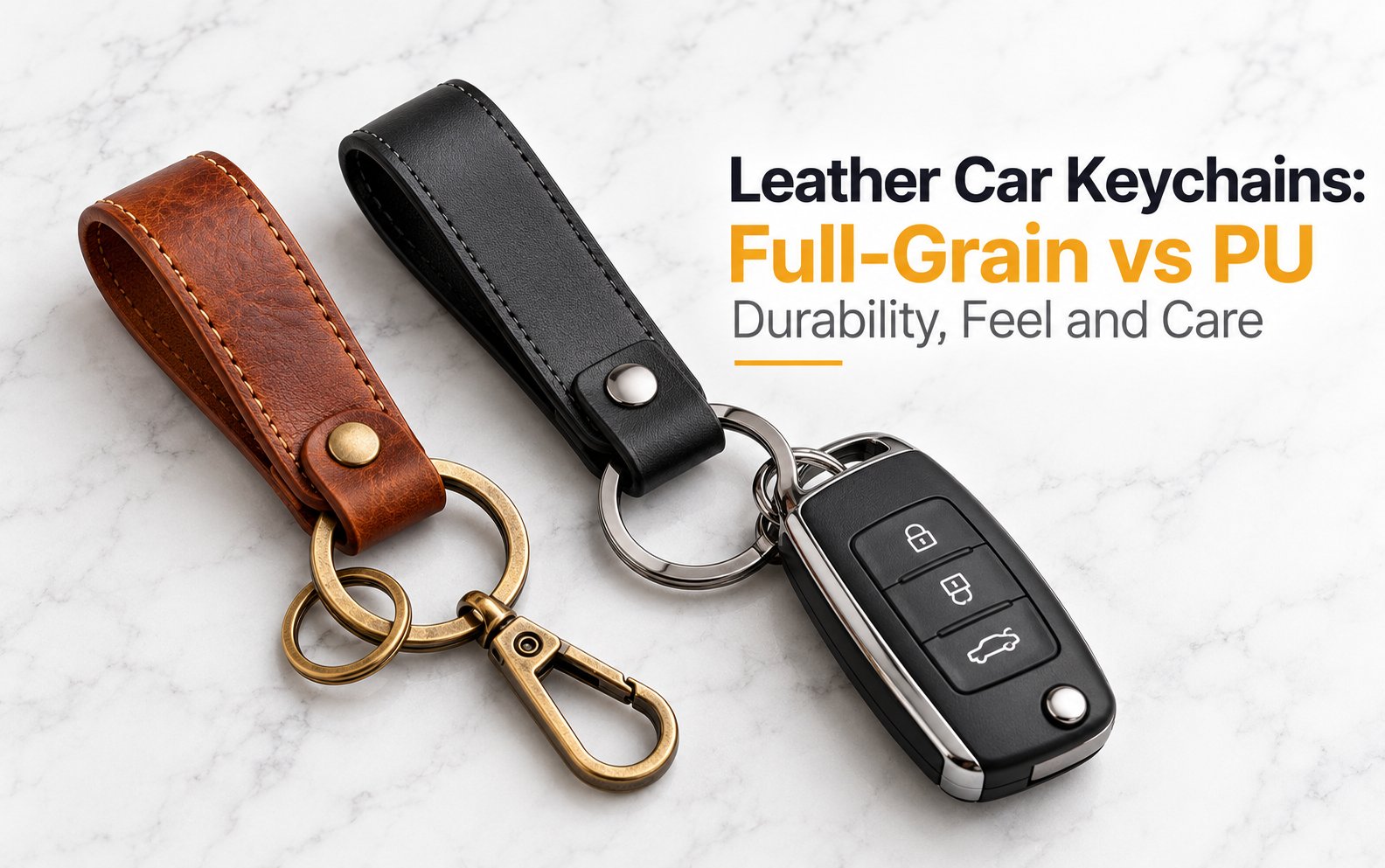
This article covers the grade hierarchy, what each grade does in car-key conditions, and what to write into a custom order brief so the factory cuts the right material. For a broader look at leather keychain types, finishing methods, and a free DIY pattern, see Huasan’s leather keychain guide.
The Grade Hierarchy: What the Labels Actually Mean
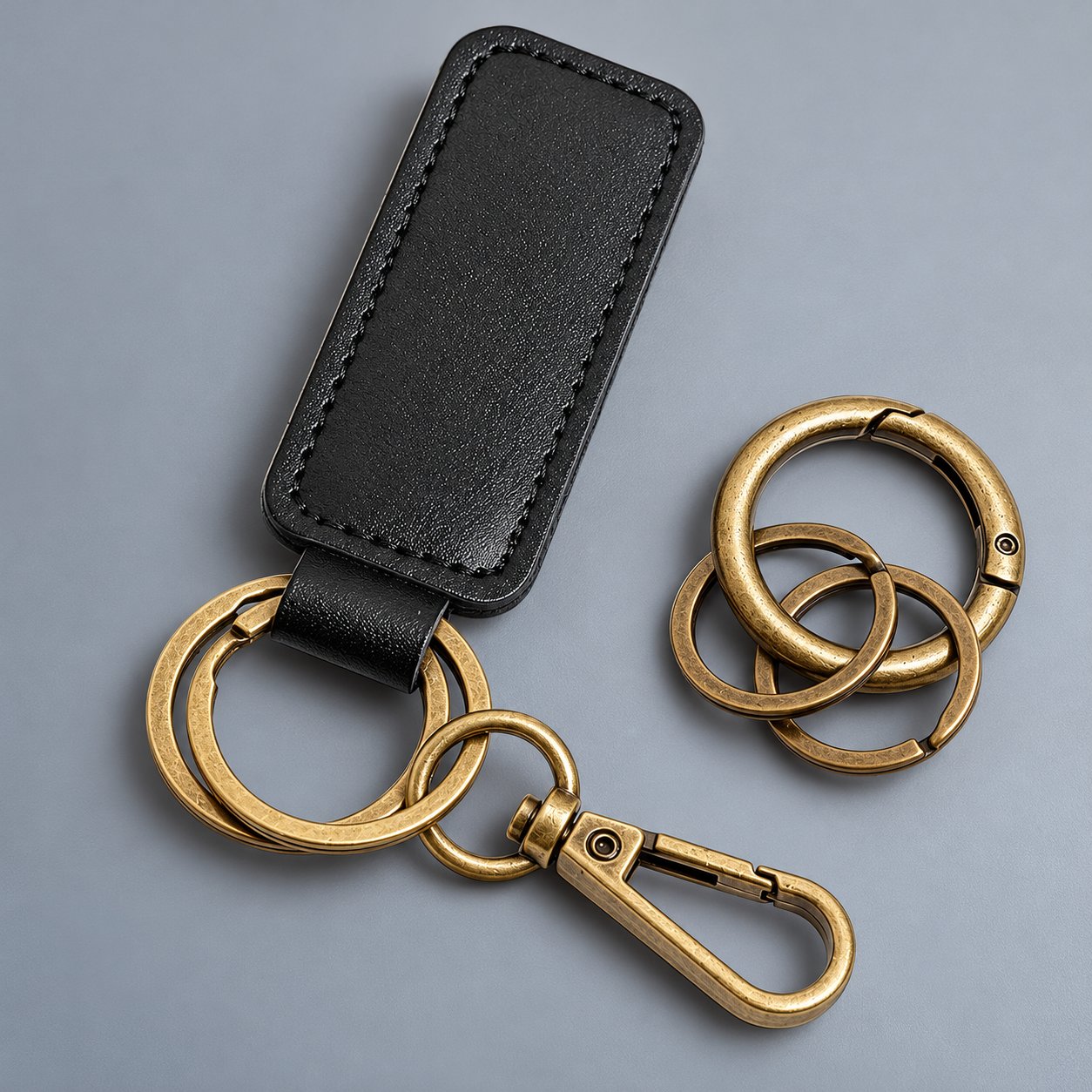
When you read “genuine leather” on a product listing, you might assume it means real hide, premium quality. It does mean real hide. It does not mean premium. In the leather industry, “genuine” is actually the third tier in a four-level hierarchy, sitting above bonded and well below the grades worth specifying for a car key program. Understanding where your supplier sits in that hierarchy is the first thing to sort before you write a brief.
| Grade | What it is | Surface treatment | Durability for daily car-key carry |
|---|---|---|---|
| Full-grain | Outermost hide layer, zero buffing or sanding, natural grain intact | Aniline or semi-aniline dye, breathes freely | Highest: darkens and stiffens slightly, then softens with use, resists tearing at the fold |
| Top-grain | Same outermost layer but sanded smooth, then coated with polyurethane or acrylic | Uniform finish, more stain-resistant initially | Good: coating can micro-crack at the fold after 18 to 24 months under daily key yanks |
| Genuine (corrected-grain) | Split hide from lower in the hide, heavy surface coating applied | Embossed grain pattern, plastic feel | Moderate: surface coating peels under repeated flex, especially under heat and sweat |
| Bonded | Shredded leather fiber mixed with PU binder, pressed into sheets | Uniform, looks like full-grain until it peels | Low: surface delamination starts within 6 to 12 months of daily carry |
| PU (polyurethane) | No hide content, polyurethane coating on fabric base | Consistent color batch to batch, easy to clean | Variable: doesn’t peel the same way bonded does, but surface degrades under heat |
Scope note: Durability ratings above reflect general leather industry standards for daily carry applications, not Huasan-published lab test data. Confirm your specific material’s grade in writing before ordering.
Your choice comes down to two grades worth specifying for a program where longevity or brand perception matters: full-grain and top-grain. Genuine and bonded look fine in a product photo, but you’ll find they fail fast in real use. PU is its own category, covered below.
What Car-Key Conditions Do to Each Grade
Your car keychain lives in a different environment than a bag charm or a hotel room key. You pull it from a pocket 20 to 40 times a day. It spends time in a glove box that can reach 55 to 70°C in summer sun. It picks up hand lotion, sunscreen, and hand sanitizer from your everyday handling. No general leather care guide accounts for all of this at once.
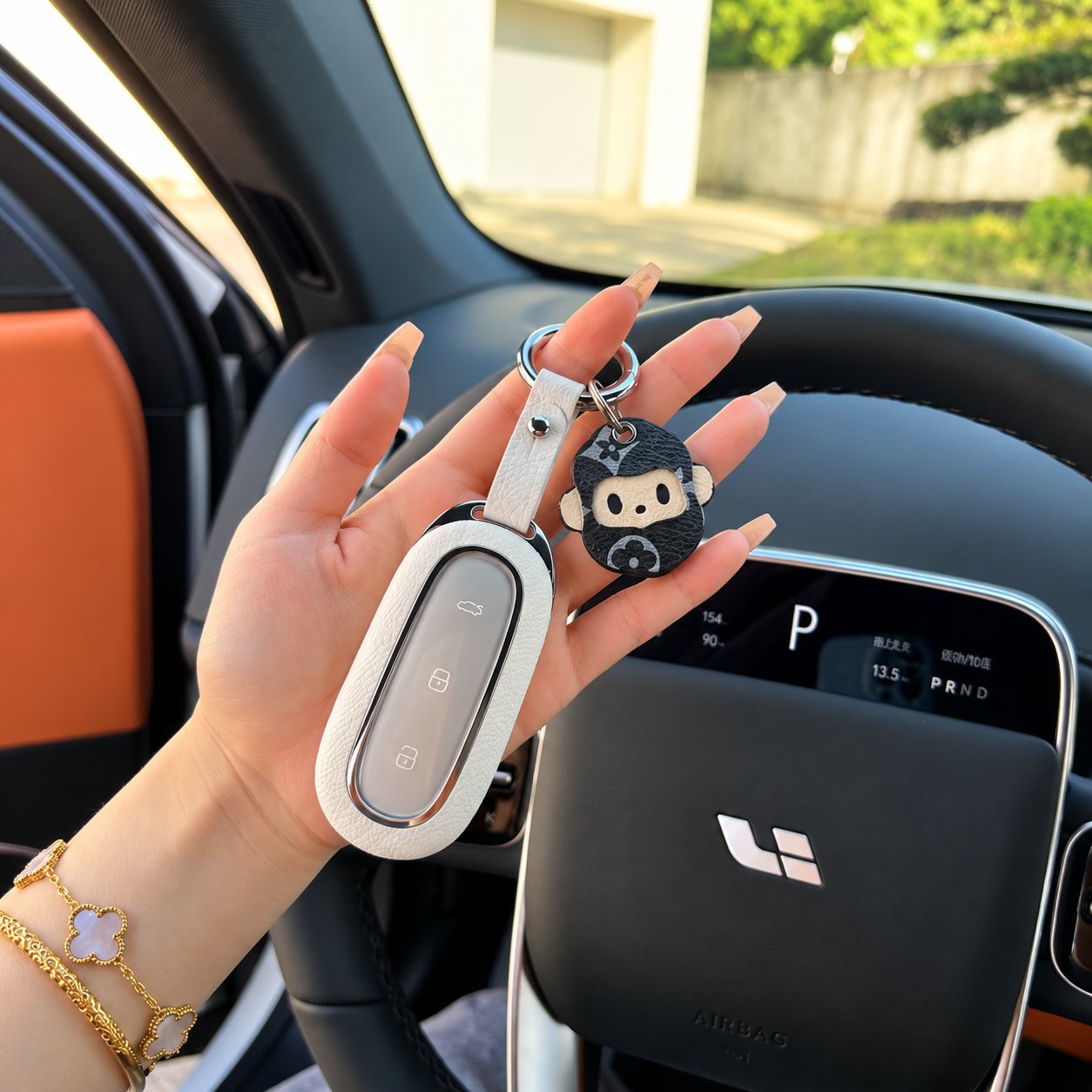
Heat. Full-grain and top-grain handle your glove-box exposures because the natural fiber structure holds moisture and doesn’t rely on a surface coating. Your genuine or corrected-grain hide has a thick polyurethane coating that contracts at a different rate than the hide beneath it. Repeated heating and cooling cycles widen any micro-cracks at the fold line, which is where your loop attaches to the ring.
Hand sanitizer. Alcohol-based sanitizer strips surface oils from natural leather and dissolves PU coatings. On a full-grain hide, what you get is surface drying. You reverse it by conditioning the leather within a few weeks. On a PU or bonded piece, the alcohol softens your polyurethane layer directly, and there is no equivalent recovery. If your buyers use hand sanitizer 10 to 20 times a day, common in healthcare, food service, and school settings, they will notice surface changes on a PU keychain within a few months.
Sunscreen. The chemical sunscreen agents that absorb UV, specifically oxybenzone and avobenzone, react with polyurethane finishes and leave permanent stains on PU leather. On a full-grain or top-grain hide, sunscreen leaves a darker patch that usually wipes clean with a damp cloth before it sets. If you are ordering for a dealership handout program targeting customers in high-sun climates, flag this in your product brief.
Strap-loop load. The point where your leather loop folds over the key ring is the highest-stress location on any leather keychain. You want a minimum 1.5mm hide thickness at that fold, with a double layer sewn rather than just folded and glued. On genuine or bonded leather, this fold often uses a thinner cut to keep cost down. The stitching holds initially. Your hide at the fold line tears across the grain after 6 to 12 months of the daily yank-and-press motion a car key gets.
Full-Grain Patina: What to Expect at 6 Months vs 2 Years
If your buyer is ordering for a premium auto brand or a dealership gift program, the patina story is part of the product pitch. Here is what actually happens to your full-grain keychain over time, so you can set honest expectations before the order goes in.
Months one through three: your surface is stiff and the color is flat and even. Your leather is still at its factory finish. Your buyer may feel the key is too bulky or the leather too rigid. Tell them to carry it daily. The natural oils from daily handling are what break it in.
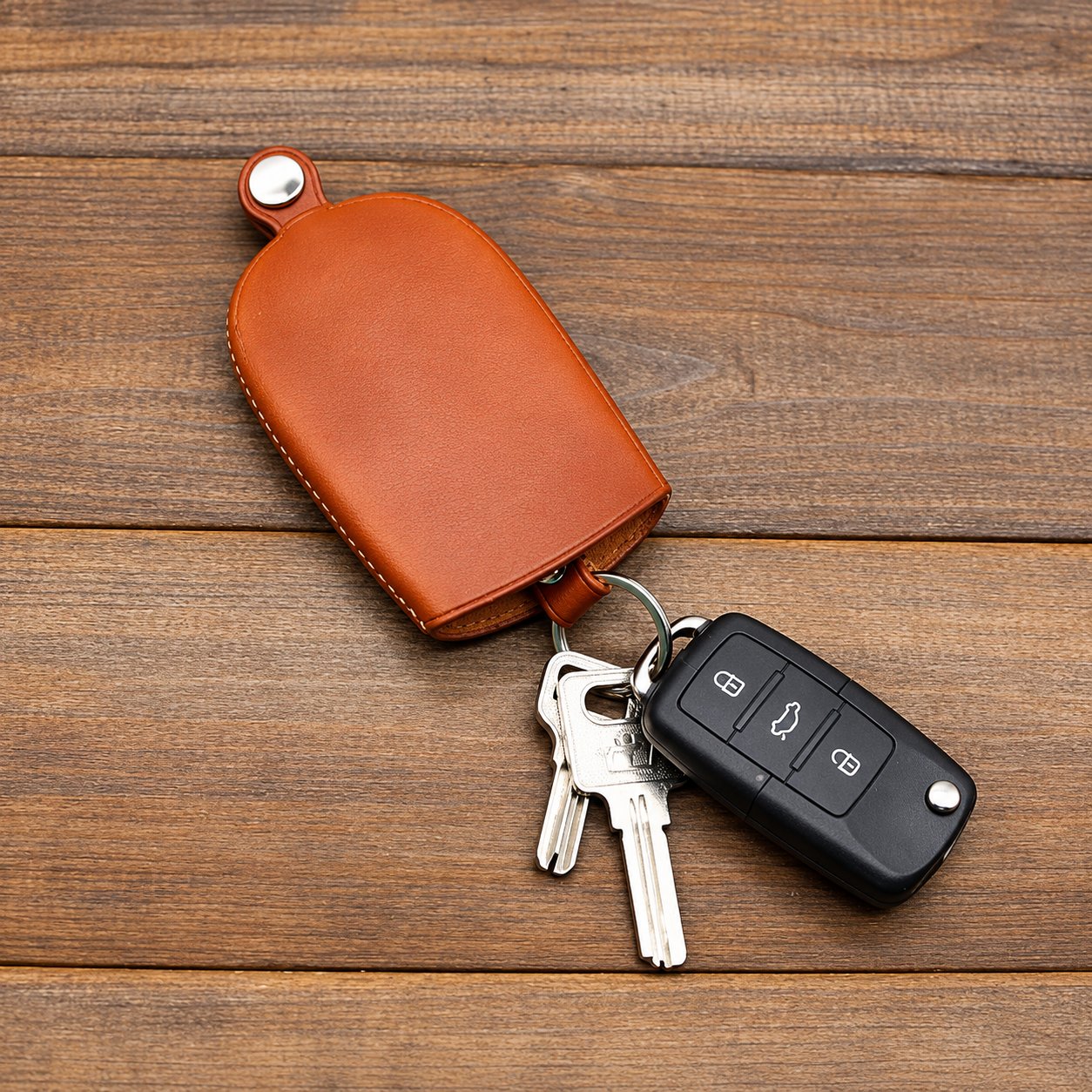
Months four through eight: the fold and the grip area start to darken. Your surface loses its slight sheen and develops a matte, waxy feel. This is the early patina stage. Your leather is actually getting stronger at this point, not weaker, as the fibers compact with use.
Year one and beyond: the darkening spreads across the body unevenly, deepest at the points your buyer’s hand contacts. Each piece develops a different patina pattern depending on how it is carried. Two keychains from the same batch will look noticeably different from each other after 18 months. For a premium brand, this variation is your value proposition. For a promotional giveaway where color consistency across recipients matters, it is a potential issue to flag before you finalize the grade.
Top-grain doesn’t develop the same depth of patina because the surface coating slows natural oil absorption. Your buyer gets a more consistent look over time, less character, less variation between units.
When PU Makes Sense for a Car Key Program
PU is not a bad choice. It is the wrong choice for some of your programs and the right one for others. Your job is knowing which one you are ordering for before the sample goes in.
PU fits your high-volume promo piece with an intended life of one to two years. It also fits a program where the brand runs frequent seasonal refreshes and expects to reorder in a new colorway each cycle, or where your target market prefers vegan materials and the real-leather story is actively the wrong one. PU matches color perfectly batch to batch, which full-grain cannot guarantee because no two hides are identical.
Where PU falls short: premium delivery gifts, luxury brand markers, and long-duration pieces your buyer’s customer will carry for years. PU’s surface degradation at the fold and under sun exposure undercuts the brand message the product is supposed to carry. For a fleet or dealer program where the key owner will carry the piece daily for two or three years, top-grain genuine leather outperforms PU on durability and never develops the peeling problem that makes a failed PU keychain look cheap.
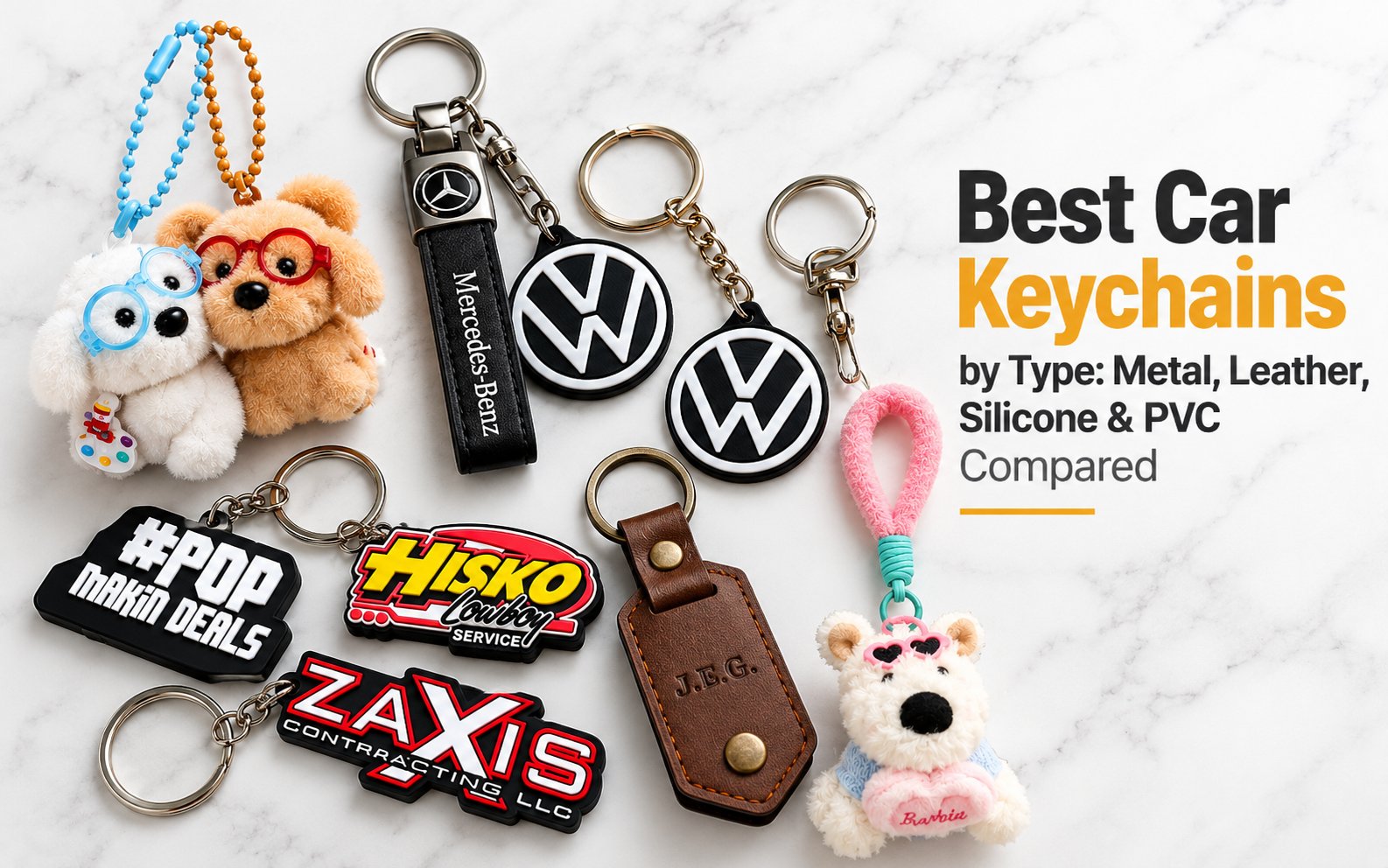
If cost is the primary constraint and you want to compare leather to PVC or silicone alternatives, the material comparison page covers where each one sits on durability, logo capability, and price. See custom leather keychains and material pricing and MOQ figures across the full Huasan keychain line to cross-reference leather against other materials if you need to hold a tighter unit price.
What to Write in Your Custom Order Brief
Most factories will cut whatever you specify. If you don’t specify the grade, they’ll cut the material that fits your price range. That usually means corrected-grain or PU when your brief just says “leather keychain, black.” A few things to put in writing before the sample stage:
Grade. Write “full-grain vegetable-tanned” or “full-grain chrome-tanned” rather than just “genuine leather.” If you are ordering top-grain, write “top-grain, max 1.8mm thickness.” This locks your factory to the right cut.
Stitching. Request waxed polyester or bonded nylon thread rather than standard polyester. Specify 4 to 6 stitches per centimeter at the loop fold. Waxed thread holds longer under the repeated flexing a car key imposes.
Loop and ring spec. A standard 25mm split ring passes through a 16mm finished loop width. If you are specifying a heavy keyring or a carabiner-style attachment for fleet keys, confirm your loop dimensions allow the ring hardware to fit before sampling. A loop cut for a 25mm ring won’t pass a 32mm ring without forcing it.
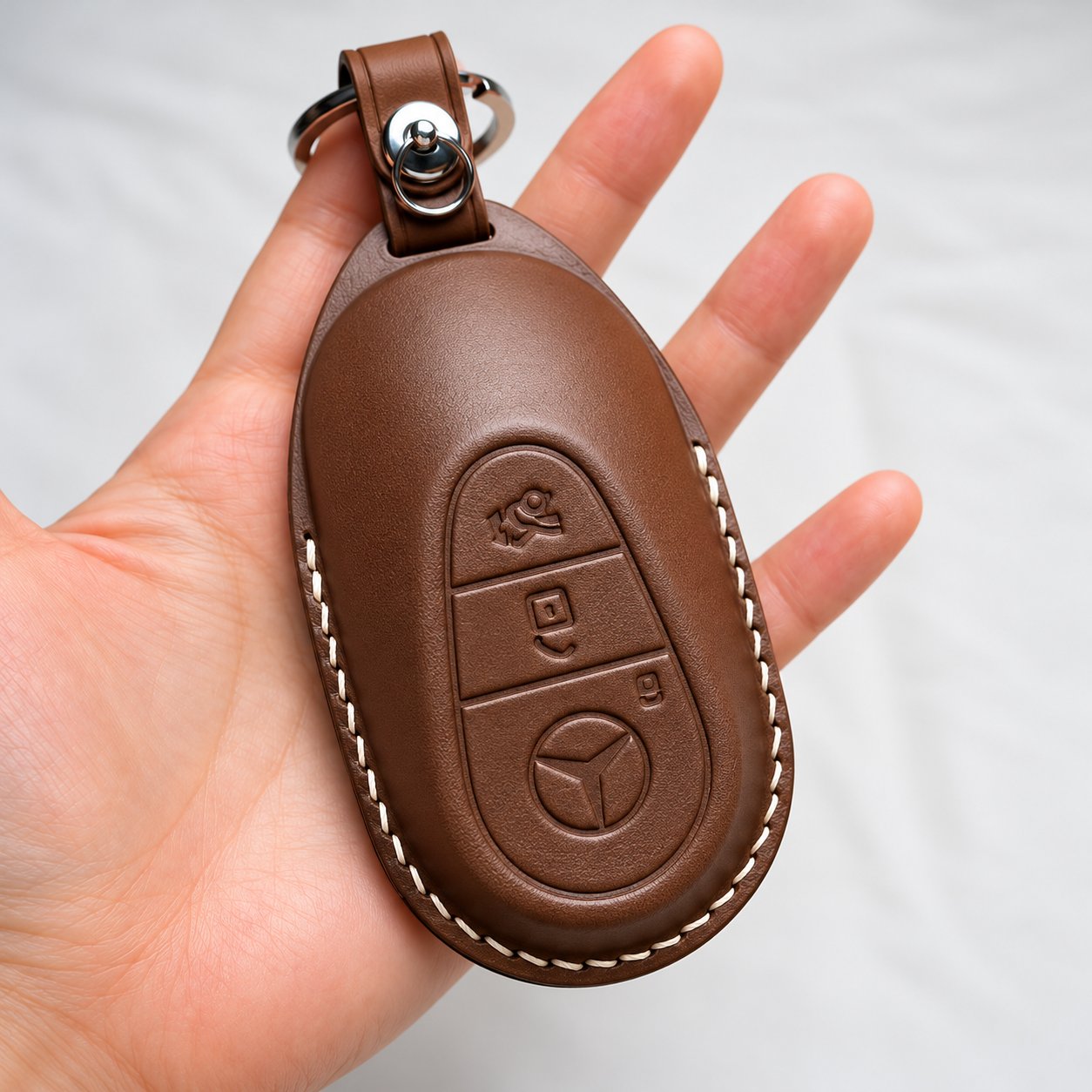
Logo method. Debossing is the most durable option for a car key program because the mark is pressed into the hide rather than sitting on top of it. Foil stamping is strong for occasional use but can wear at the fold point on a daily-carry piece. For the full eight methods available on Huasan’s leather line and when to use each, the leather keychain guide has the complete breakdown.
Order figures. Your leather MOQ at Huasan is 100 pieces per design. Tooling runs $60 to $200 USD for a cutting die plus emboss or foil plate, depending on design complexity. Your sample lead time is 5 to 8 working days from artwork approval. Your bulk production at 1,000 pieces runs 15 to 22 days, and at 5,000 pieces runs 20 to 28 days. Reference unit price at 1,000 pieces is $1.10 to $3.50 USD FOB South China, depending on hide grade, logo method, and hardware.
Care for a Leather Car Keychain in Daily Use
Huasan’s leather keychain guide covers general leather care. For a car key carried daily, three points matter more than the general advice.
First: don’t store your leather keychain inside the glove box during summer months. A parked car interior reaches temperatures that dry out any leather, including your full-grain. Carry it with you or leave it somewhere temperature-stable.
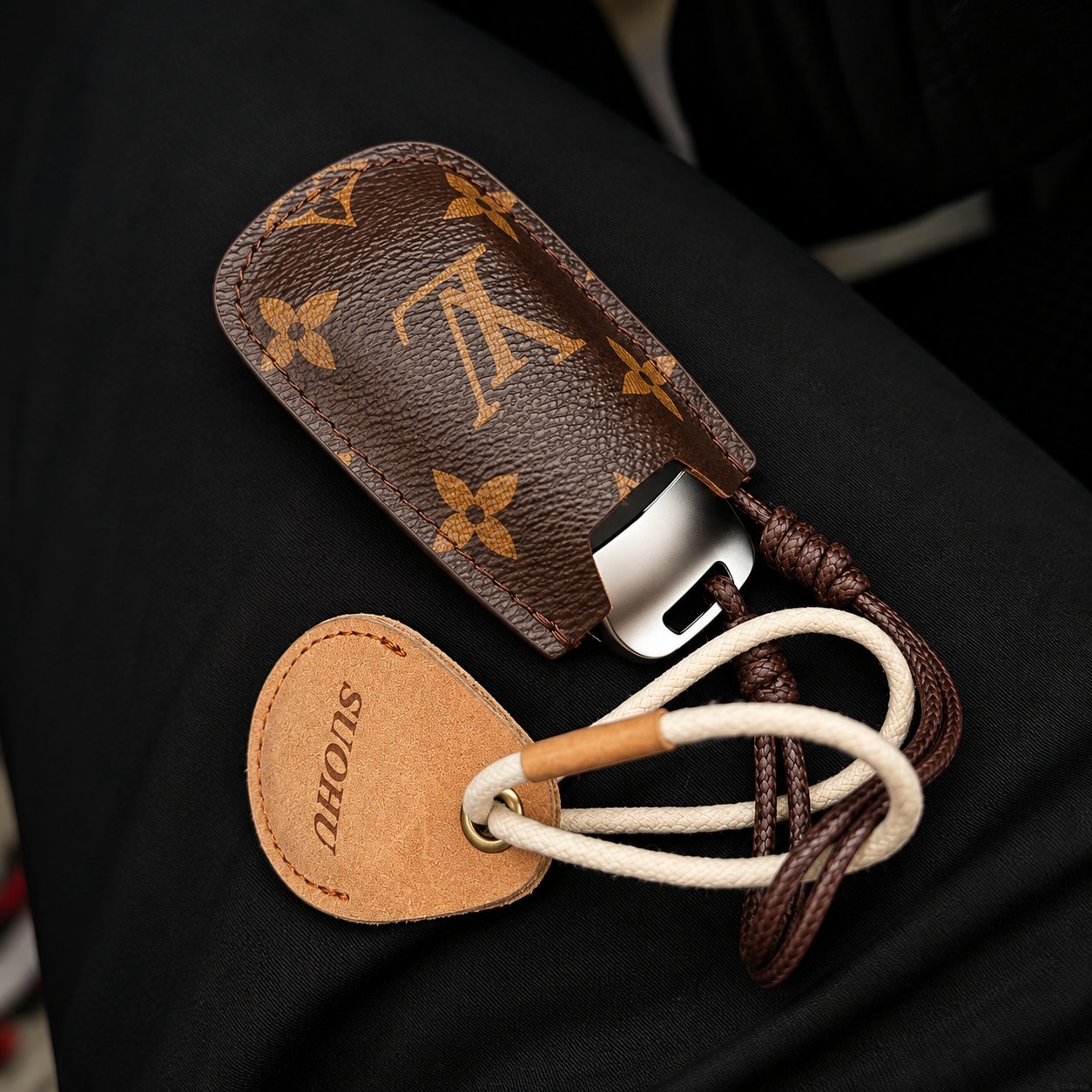
Second: wipe off sunscreen before it sets. A quick dry cloth wipe right after applying sunscreen keeps the chemical agents from penetrating the surface. Once sunscreen has soaked in and dried, the stain is significantly harder to remove from PU and impossible to fully remove from corrected-grain.
Third: condition full-grain leather three to four times a year if you carry it daily. A light application of a neutral leather conditioner, not a heavy wax polish, keeps your hide flexible at the fold. PU needs no conditioning.
FAQ
What is the difference between full-grain and top-grain leather for a car keychain?
Full-grain uses the outermost hide layer with no surface sanding. Top-grain uses the same layer but sands it smooth and applies a polyurethane or acrylic coating. Full-grain develops a patina and gets stronger with daily use. Top-grain looks more consistent across units and resists staining initially, but the surface coating can micro-crack at fold points after 18 to 24 months of heavy daily carry.
Does a leather car keychain work with a smart key fob?
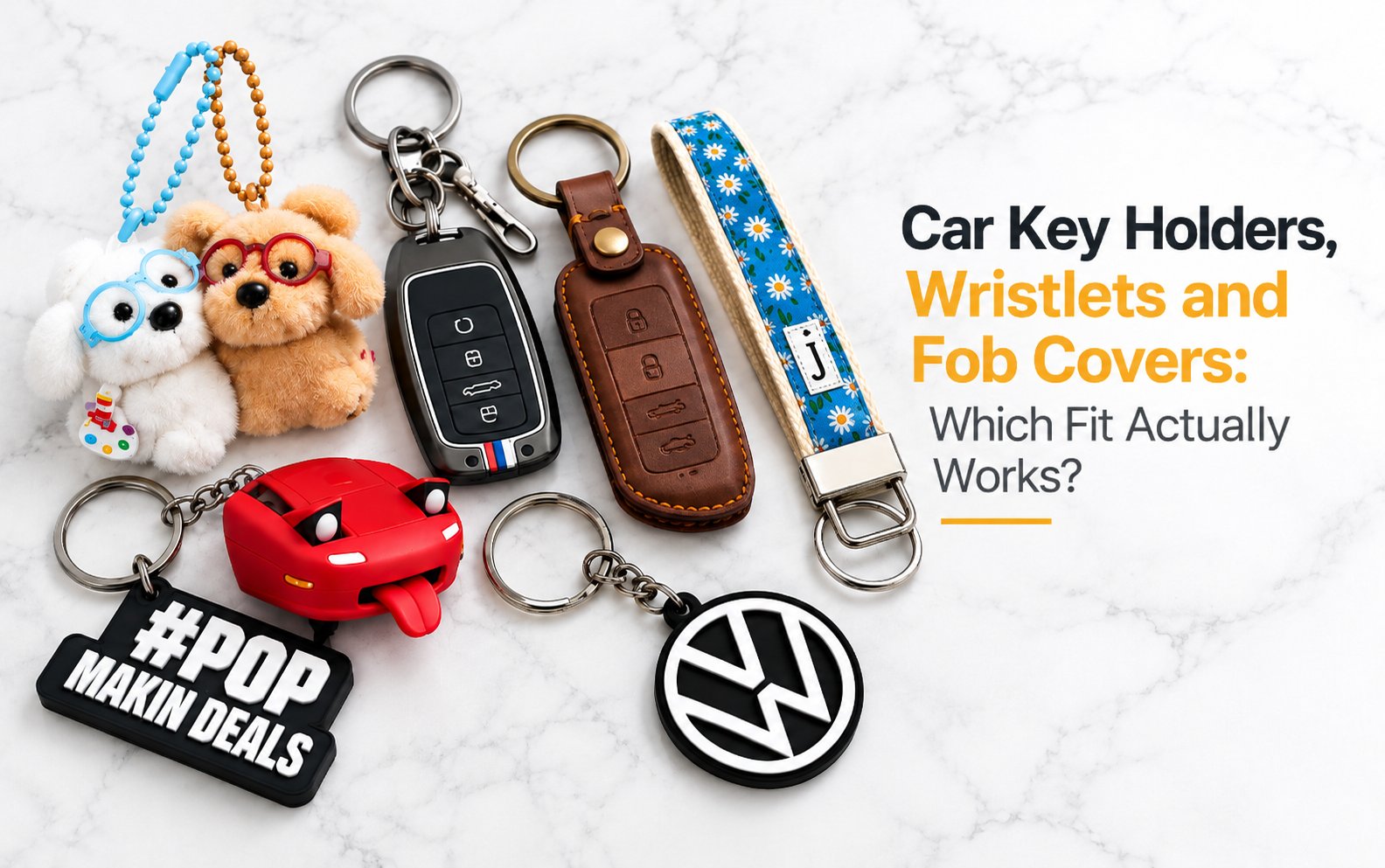
Yes. A leather keychain connects at the key ring, not the fob body, so it works with any fob. Your fob clips to the split ring the same way regardless of the keychain material. If you are also ordering a fob sleeve or cover, those two products are separate specifications. A leather strap and a PVC or silicone fob case can be ordered together as a matching set.
How long does a genuine leather car keychain last with daily use?
It depends on the grade. Full-grain can last five to ten years with basic care. Top-grain runs three to five years before the surface coating shows micro-cracking at the fold. What the industry calls “genuine leather,” meaning corrected-grain or split hide, typically shows surface peeling within 18 to 36 months of daily car-key use. If your buyer wants the keychain to outlast a vehicle ownership cycle, specify full-grain or top-grain in the order brief.
Tell us your leather grade preference, logo method, target quantity, and whether you need a matching fob case or strap included. We will put together a factory quote covering tooling cost, unit price at your target volume, sample timeline, and packaging options.