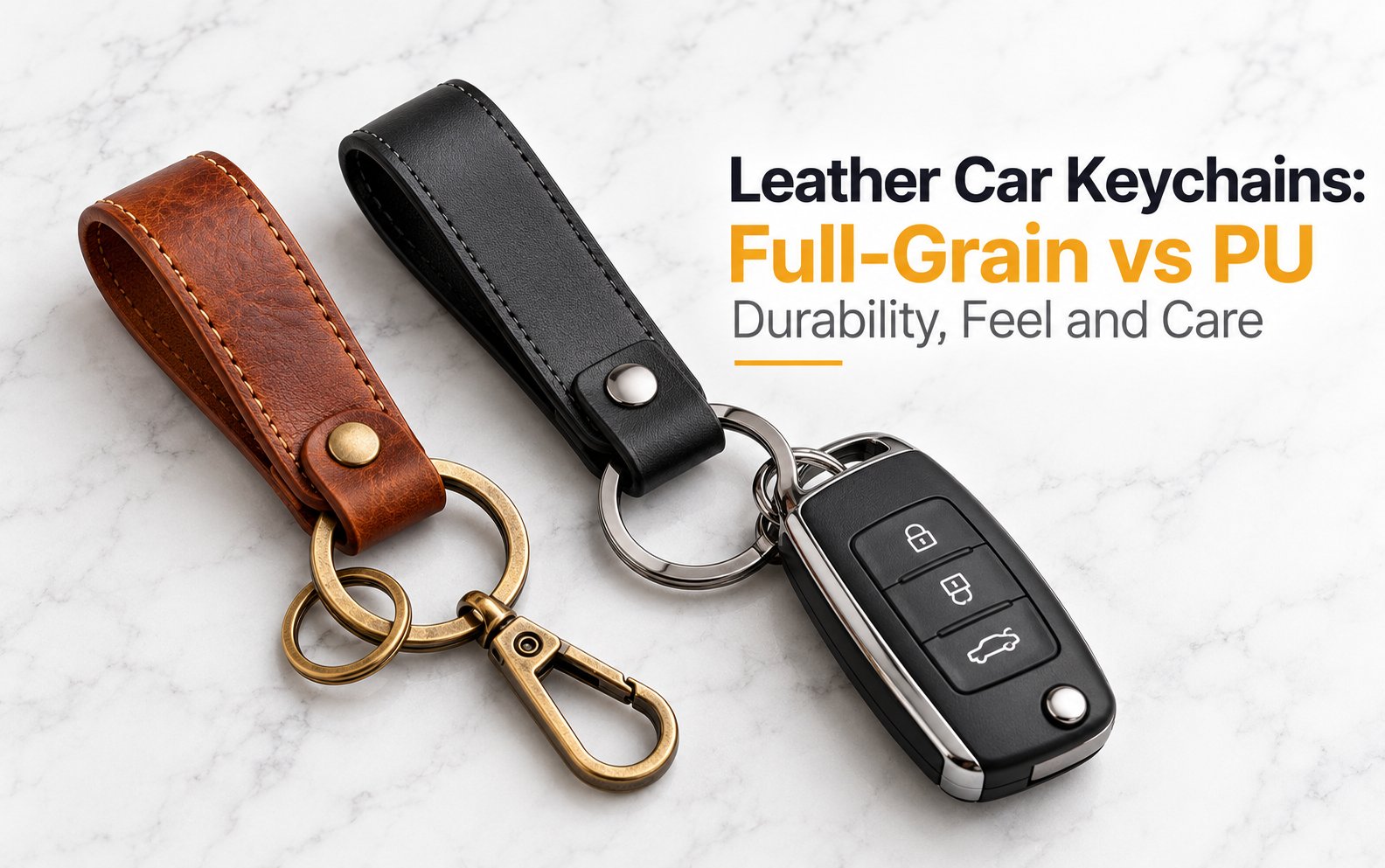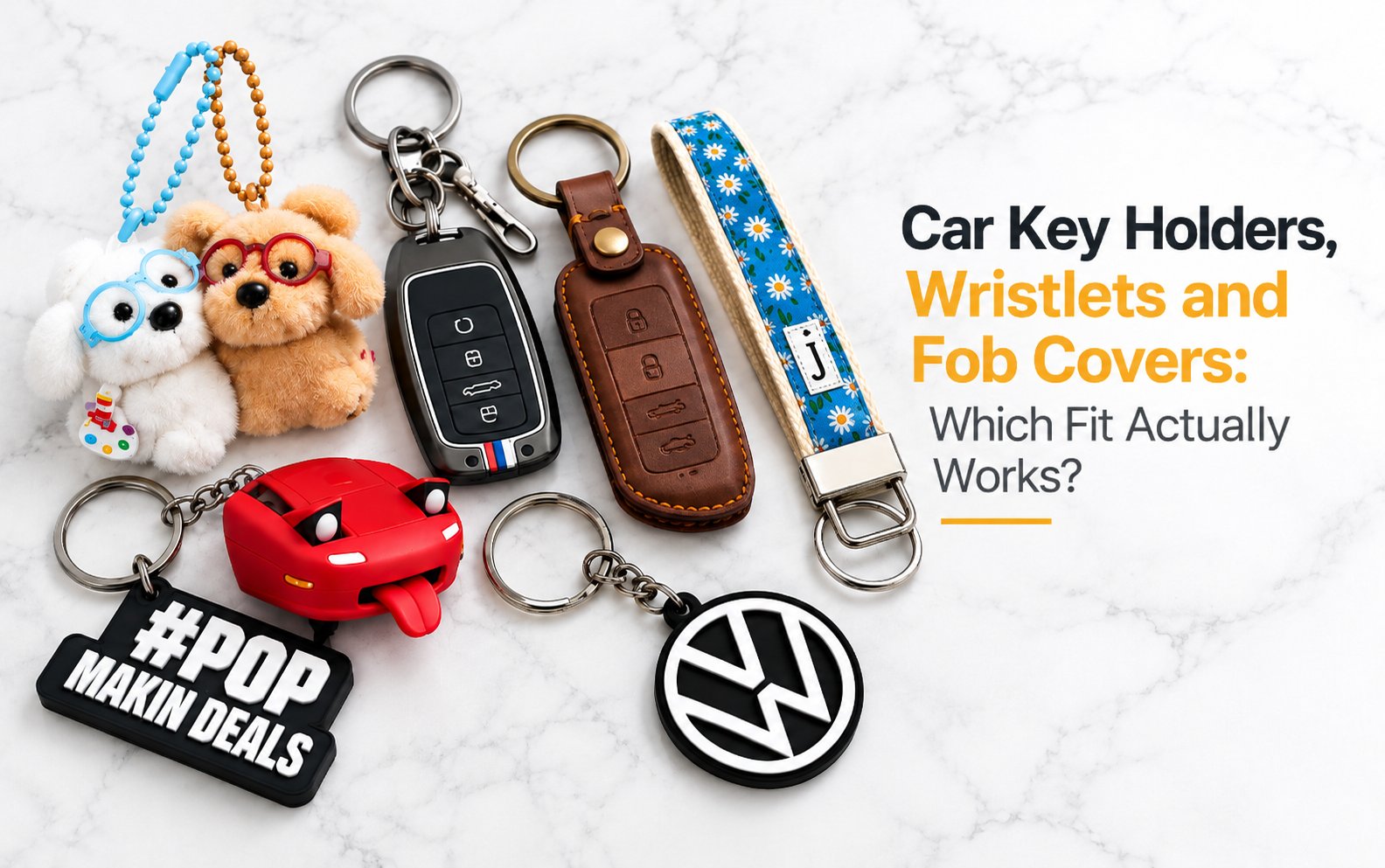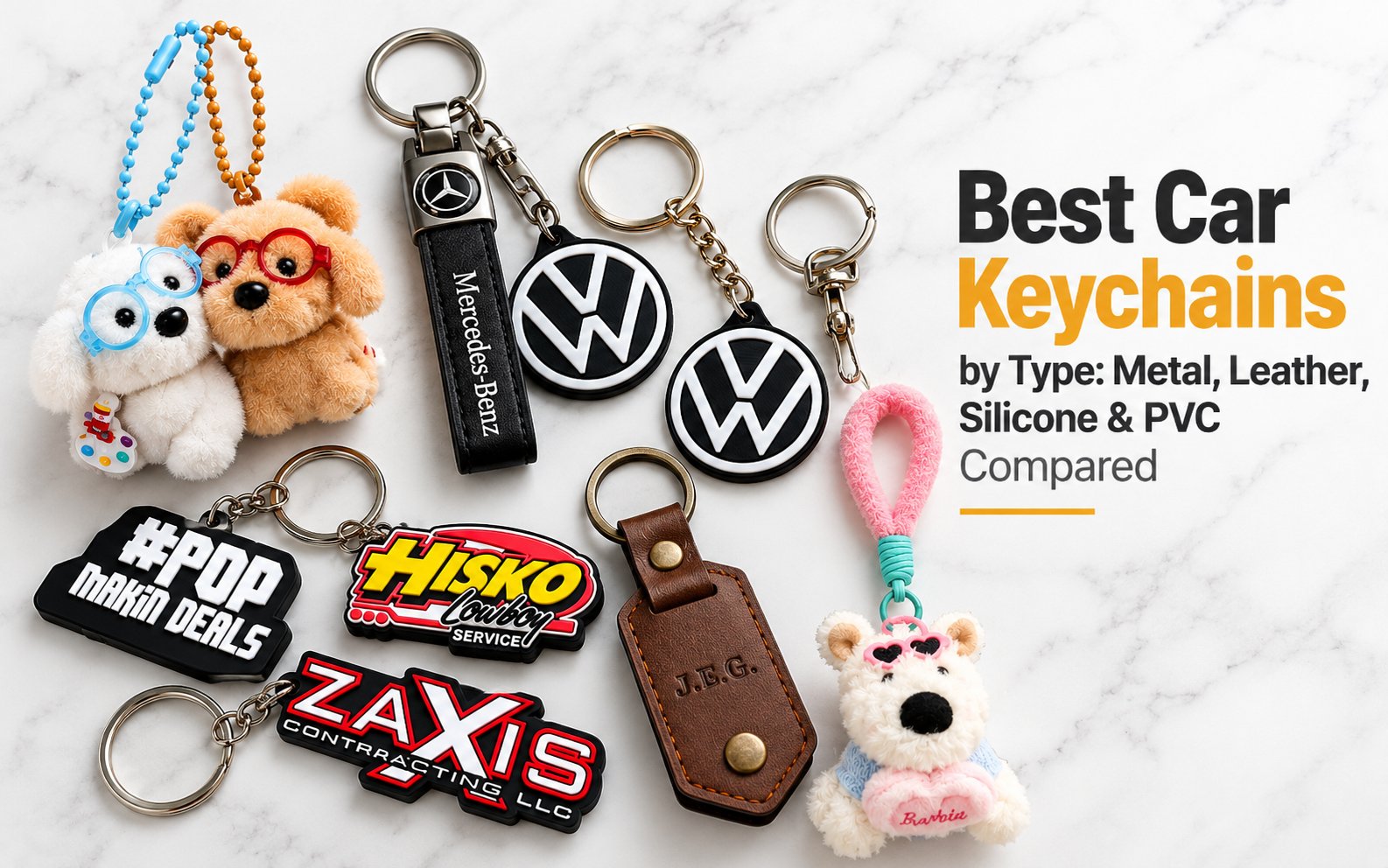
Genuine leather keychains cost more and develop a patina with use, while PU leather keychains cost less and keep a consistent look batch after batch. Which one fits depends on your budget and how the keychain gets used. This guide covers the real material options, a dimensioned DIY pattern, and the custom logo methods a factory can actually do, so you can match the right leather to your project before you order.
Quick Answer: Which Leather Type Fits Your Use
| Material | Best For | Tradeoff |
|---|---|---|
| Genuine leather | Premium gifts, brands wanting a patina that develops with use | Highest cost, natural grain means slight variation piece to piece |
| PU (polyurethane) leather | Budget-conscious bulk orders, consistent color matching | Won’t develop a natural patina, surface can wear differently over time |
| Recycled leather | Brands prioritizing sustainability messaging | Texture and thickness vary more than virgin material |
| Microfiber leather | A lighter-weight alternative with a more uniform surface | Different hand-feel than genuine leather, not a true substitute for buyers who want the real thing |
These four are the real categories a keychain factory works with. You’ll also see leather graded industry-wide (full-grain, top-grain, genuine, bonded), which describes how the hide was processed rather than which finished product it becomes. The comparison below covers both.
Leather Keychain Types & Styles
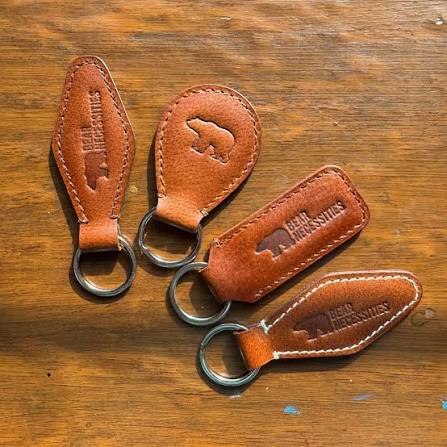
Pick a rounded or squared tag if you want the simplest leather keychain shape, since it pairs well with a debossed or embossed logo and shows the mark cleanly on a flat surface. Go with an animal silhouette or novelty shape instead for a more playful brand or retail gift line. It’s cut from a die rather than freehand, so the edges stay consistent across a production run.
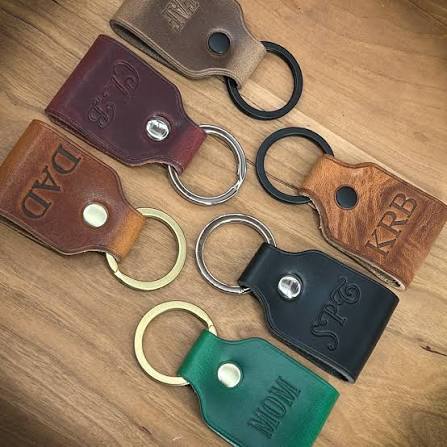
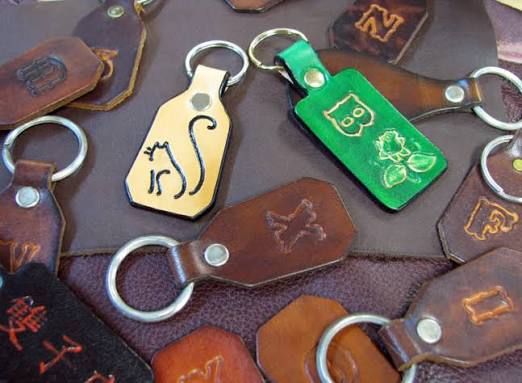
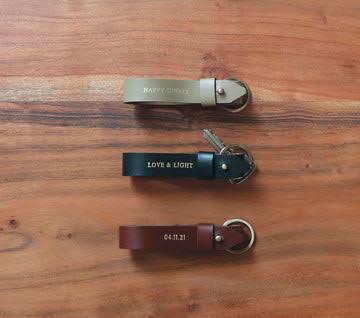
If you want a thicker, more tactile feel than a flat tag, go with a braided cord or wrap style instead, made from leather strips woven or wrapped around a core. Pair these with a lobster clasp or trigger snap rather than a plain split ring, since a thick braid doesn’t thread through a narrow ring easily, and match your hardware to the leather’s thickness before you finalize a design.
Genuine vs. PU Leather for Keychains
Genuine leather is real hide, the only one of the four that develops a patina, the darkening and softening that comes from handling over time. PU leather is a polyurethane-coated fabric made to look like leather, and you’ll find it stays visually consistent since there’s no natural grain to account for.
The U.S. Federal Trade Commission’s leather labeling guide requires a product to be “composed in all substantial parts of leather” before it’s called “leather” without qualification, and a material that “appears to be leather” but isn’t needs a disclosure such as “Not leather” or “Imitation leather” (FTC leather and imitation leather guides, 16 C.F.R. Part 24, accessed October 2026). Part 24 enumerates the specific product categories this applies to, including trunks, suitcases, wallets, key cases, footwear, and belts. Keychains aren’t named directly on that list. In practice, the FTC Act’s broader prohibition on deceptive claims still covers them, so if you’re selling into the U.S. market, label PU leather as imitation leather under this rule, not “leather” outright, even where Part 24 doesn’t name the product by name.
You’ll pay more for genuine leather and see more natural variation between units, since no two hides are identical. PU costs less and matches color consistently at volume. Pick recycled or microfiber leather instead if sustainability messaging or a lighter feel matters more to your brand than natural grain.
Go with PVC or soft rubber instead when you need bright, saturated color, fine printed detail, or a lower cost at high volume. Leather works best for solid-color, debossed, or embossed branding rather than full-color artwork. Check the PVC keychain materials guide and the metal vs. PVC comparison before you commit to leather if your logo has more than one or two colors.
Free Leather Keychain Pattern & DIY Basics
A basic leather keychain is two pieces: a rounded or squared tag body, and a strap loop that wraps around your keyring. The pattern below is dimensioned, not a trace-it-yourself shape: the tag body runs roughly 55mm by 35mm (adjust to your logo size), and the strap loop finishes at about 16mm folded width, wide enough to pass a standard 25mm or 30mm split ring without forcing it.
Tools you need: a sharp utility or leather knife, a stitching awl or diamond-shaped pricking iron for even stitch holes, waxed thread, and two needles for a saddle stitch. Use the saddle stitch rather than a single-needle machine stitch, threading both needles through the same holes from opposite sides, since it won’t fully unravel if one stitch breaks. Most keychain-weight leather runs 1.2 to 1.8mm (roughly 3-4oz), and a pricking iron spaced 4 to 5mm apart keeps stitch holes even on a tag this small.
Cutting order:
- Cut the tag body first, on the straight grain where possible.
- Cut the strap loop from a thinner offcut (1.0-1.4mm) so it folds without cracking.
- Punch the top slot in the tag body before stitching, not after.
- Mark stitch holes with a pricking iron before threading, so both layers line up.
Edge finishing: sand raw edges smooth, then burnish with a smooth tool and a few drops of water, which closes up the fibers and stops fraying.
Set your expectations honestly: your first attempt will probably come out a little crooked, usually from stitch holes that drift or a fold line that isn’t quite straight. That’s normal. The second one you make, following this cutting order, comes out noticeably cleaner. For more styles and materials side by side, including how a factory pairs hardware and finishing at scale, check the full keychain-making guide.
Custom Logo Leather Keychains: 8 Real Finishing Methods
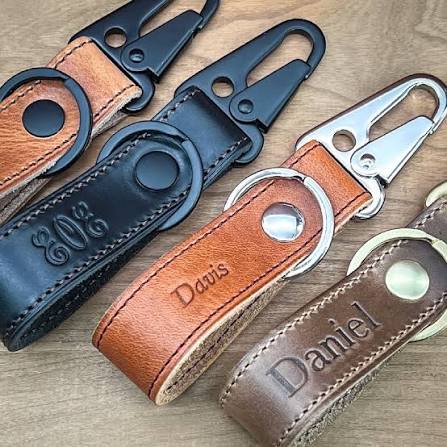
A factory with real leather-finishing capability should show you more than one logo method, since each fits different artwork. Huasan’s own leather line lists eight surface processes:
| Method | How It Works | Best Artwork For | Cost & Limits |
|---|---|---|---|
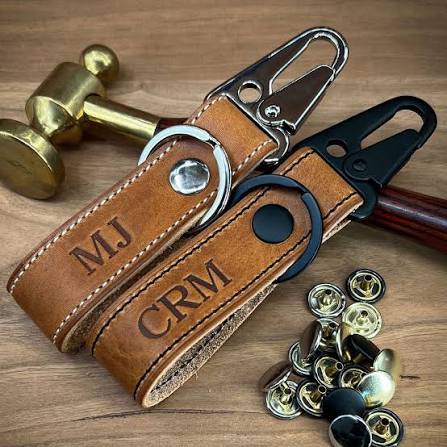
| Debossing | Presses a recessed mark into the leather, no added ink | Minimal logos, initials | Lower cost, single color only (the leather’s own) |
| Embossing | Forms a raised logo with matched dies | Wordmarks, emblems with depth | Needs a matched die set, adds setup cost |
| Screen printing | Transfers solid ink through a mesh screen | Bold one- or two-color artwork | Clean edges, limited to flat color blocks |
| Digital printing | Reproduces full-color artwork directly | Photos, multi-color graphics | Best color range, higher per-unit cost |
| Foil stamping | Bonds metallic or colored foil with heat and pressure | Premium contrast on luxury gifts | Strong shine, not suited to fine detail |
| Embroidery | Adds a threaded, textured accent | Fashion labels, club logos | Textured feel, limited to simpler shapes |
| UV printing | Cures ink into a crisp, wear-resistant finish | Fine lines, small text | Holds detail well, cost rises with color count |
| Heat transfer | Applies printed artwork with controlled heat | Complex colors on shorter runs | Flexible for small batches, less durable than UV |
Scope note: method descriptions and use-case fit are from Huasan’s own leather product page, verified live October 7, 2026. Exact cost tiers and minimum line-width limits aren’t published there, so confirm those against your specific logo when you request a quote rather than treating “Cost & Limits” above as fixed pricing.
Tell your supplier which of these your logo needs (one color, full color, textured, or metallic), and they can point you to the two or three methods that actually fit.
MOQ for a custom leather keychain depends on the leather type, logo process, hardware, and packaging you choose, so there’s no single number that applies across every design. Confirm the minimum for your exact combination when you request a quote. Send your logo and your preferred finishing method for a free design mockup before you commit to a full order.
Care & Maintenance for Leather Keychains
Keep your genuine leather away from prolonged water and direct heat, since both can crack or stiffen the surface, and wipe it with a dry or barely damp cloth rather than soaking it. Condition it occasionally if you carry it daily, which keeps it supple. PU, recycled, and microfiber leather need less upkeep, usually just a damp cloth and mild soap, since there’s no natural grain to dry out. Skip the washing machine for any leather keychain you own, genuine or PU, since the stitching and edge finish aren’t built for that kind of agitation.
FAQ
What type of leather is best for keychains?
Choose genuine leather if you want a premium gift that develops a patina with handling, or PU leather if you want a consistent look at a lower cost across a large order. Send your target quantity and budget and a supplier can recommend which fits better.
Is PU leather good for keychains?
Yes, for most promotional and retail uses. It costs less, matches color consistently, and holds up fine for day-to-day carry, though it won’t develop the natural patina genuine leather does. If you’re selling into the U.S. market, label it as imitation or PU leather under FTC rules rather than calling it “leather” outright.
How do you emboss a logo on leather?
A factory presses your logo into the leather using matched dies, forming a raised, dimensional mark without added ink. It works best for wordmarks and emblems rather than fine detail or multiple colors. Send vector artwork of your logo to get an accurate mockup before production.
How long do leather keychains last?
It depends on the material and how you handle it rather than a fixed number of years. Genuine leather tends to age well with normal use and actually looks better as it develops a patina, while PU leather holds its original look longer but doesn’t age the same way. Daily heavy use on any material shortens its life compared to occasional carry.
How do you clean a leather keychain?
Wipe genuine leather with a dry or barely damp cloth and apply a leather conditioner occasionally if you carry it daily. PU, recycled, and microfiber leather clean easily with a damp cloth and mild soap. Avoid soaking or machine washing any leather keychain.
What is the MOQ for custom leather keychains?
It depends on the leather type, logo process, hardware, and packaging you choose, so there’s no single number across every design. Ask for the minimum on your specific combination when you request a quote.
Get a Custom Leather Keychain Quote
Huasan has run a custom keychain factory in Shenzhen since 2011, working with genuine, PU, recycled, and microfiber leather across all eight finishing methods above. RoHS test reports are available for leather exports. Confirm which report your destination market requires.