The right material for a souvenir fridge magnet depends on three things: what the artwork actually needs to show, how much handling the piece has to survive between the factory and someone’s fridge door, and how it needs to hold on once it gets there. Get those three right first, and the finish, the color effects and the backing all follow logically. Get them wrong, and even a beautiful design can peel, fade or fall off within a season.
This guide walks through that decision in order, from matching material to artwork through picking the right magnetic backing, so you can brief a factory with confidence instead of guessing.
Start With What the Design Actually Needs to Show
Different artwork styles suit different materials, and this is the first fork in the decision, before cost or finish even come into it.
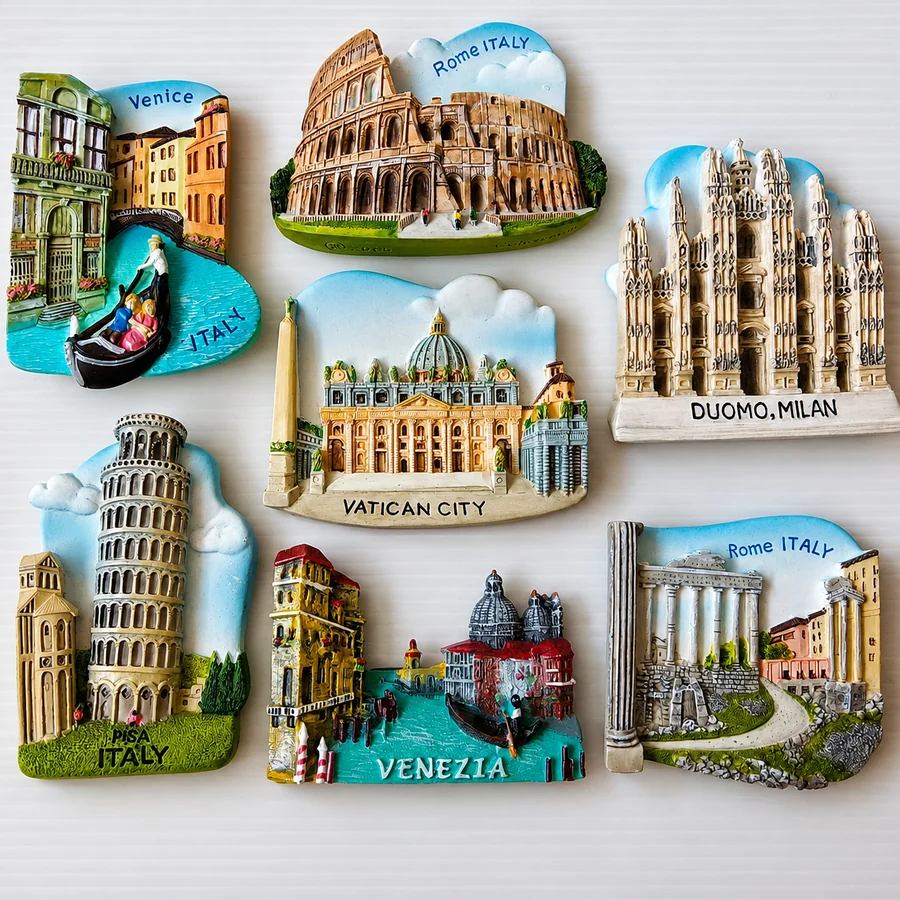
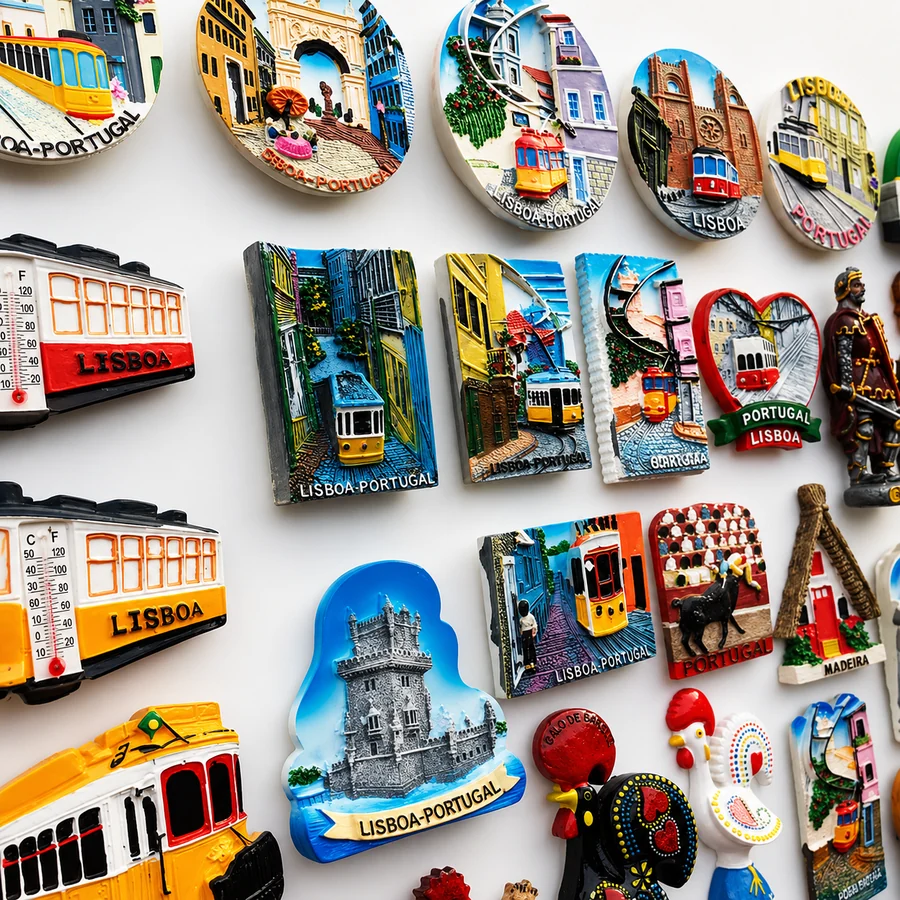
If the design is a photograph, a gradient sky, or fine detail like a cityscape or a painted landmark, you need a material that can reproduce that level of resolution. Resin and acrylic both handle digital printing well, since the image sits under a clear, glossy layer that keeps colors sharp and protects the print underneath. A resin piece can also carry real dimensional relief, so a skyline or a mountain range can stand slightly proud of the surface rather than sitting flat.
If the design is a bold logo, a flag, a mascot or a landmark silhouette in a handful of solid colors, metal is usually the stronger choice. Die-struck metal with enamel fill gives you crisp, separated color fields with a slightly recessed, glossy finish, which is the classic look most people associate with a “real” souvenir pin or magnet. Molded PVC or rubber does something similar at a lower cost, with the color poured into a raised or recessed outline instead of enamel.
If you want a small sculptural object rather than a flat printed piece, polymer clay or clay construction gives you a handcrafted, miniature look, good for things like a tiny loaf of bread, a cartoon mascot or a piece of local food shaped in 3D. It won’t reproduce fine printed detail the way resin or acrylic will, but it reads as a physical object rather than a picture.
Match the Material to How It Will Be Handled
A souvenir magnet gets picked up, dropped, packed in a suitcase and eventually stuck to a fridge that gets wiped down with a wet cloth. Material choice should account for that handling, not just how the design looks under studio lighting.
Moisture resistance matters more than people expect for a product that lives in a kitchen. Acrylic, resin, ceramic and glass all resist fading and surface damage from humidity and occasional wiping. Paper-based or laminate finishes are the ones that tend to peel or discolor once they’ve been through a few humid seasons, so if a design brief calls for a laminated print finish, ask specifically how it holds up in a kitchen environment before committing to it for a souvenir line.
Drop and shipping durability is the other practical factor. Metal and molded PVC or rubber both tolerate being packed loosely, dropped, or knocked against other stock on a shelf. Ceramic and glass carry more visual weight and a premium feel, but they’re also the two materials most likely to chip or crack if a box gets mishandled in transit, which matters if you’re shipping finished stock internationally rather than having it made close to the point of sale.
Weight is worth thinking about too, since it directly affects what kind of magnet backing the piece will need, covered below. A large resin or ceramic piece with real thickness needs a stronger magnet than a thin flat PVC piece of the same footprint.
This table reflects material properties as commonly described across custom fridge magnet manufacturers and cross-checked against huasancustom.com’s own listed material options, current as of August 2026. Confirm the specific behavior of your chosen material with a physical sample, since finish quality varies between factories even for the same material name.
| Material | Best for | Watch out for |
|---|---|---|
| Metal (die-struck, enamel or plated finish) | Bold logos, flags, landmark silhouettes, the classic "collectible pin" look | Higher tooling cost for a new die if the shape is complex |
| Resin (3D relief, epoxy-coated) | Photographic detail, dimensional landmarks, richly textured designs | Adds weight, needs a stronger magnet backing on larger pieces |
| Acrylic | Clear, glossy, full-color photographic or graphic art on a flat piece | Can show scratches on the surface over heavy handling |
| PVC or soft rubber | Bold flat-color designs, playful shapes, budget-friendly runs | Less able to reproduce fine photographic detail than resin or acrylic |
| Polymer clay or clay | Miniature sculptural objects, handcrafted or novelty shapes | Not suited to flat printed detail or large batches of identical fine artwork |
| Ceramic or glass | A premium, display-quality piece meant to feel like a keepsake | More fragile in shipping, generally a higher price point |
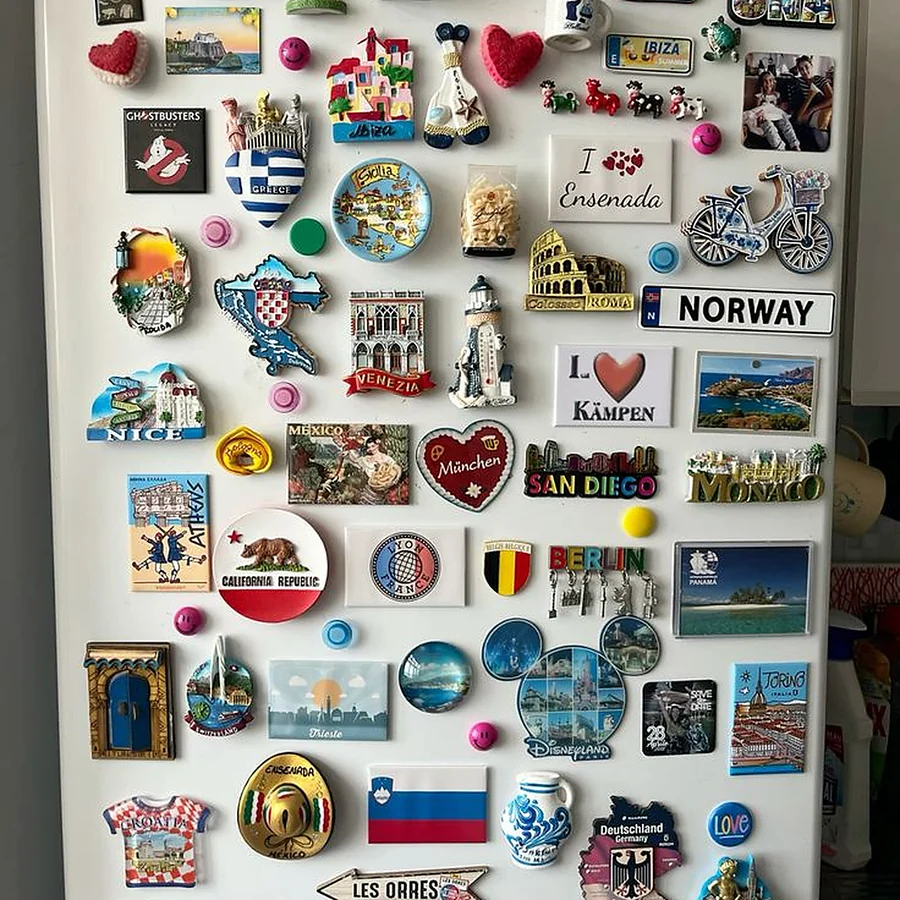
Choose the Right Finish and Effect
Once the material is set, the finish is what makes the piece feel deliberate rather than generic.
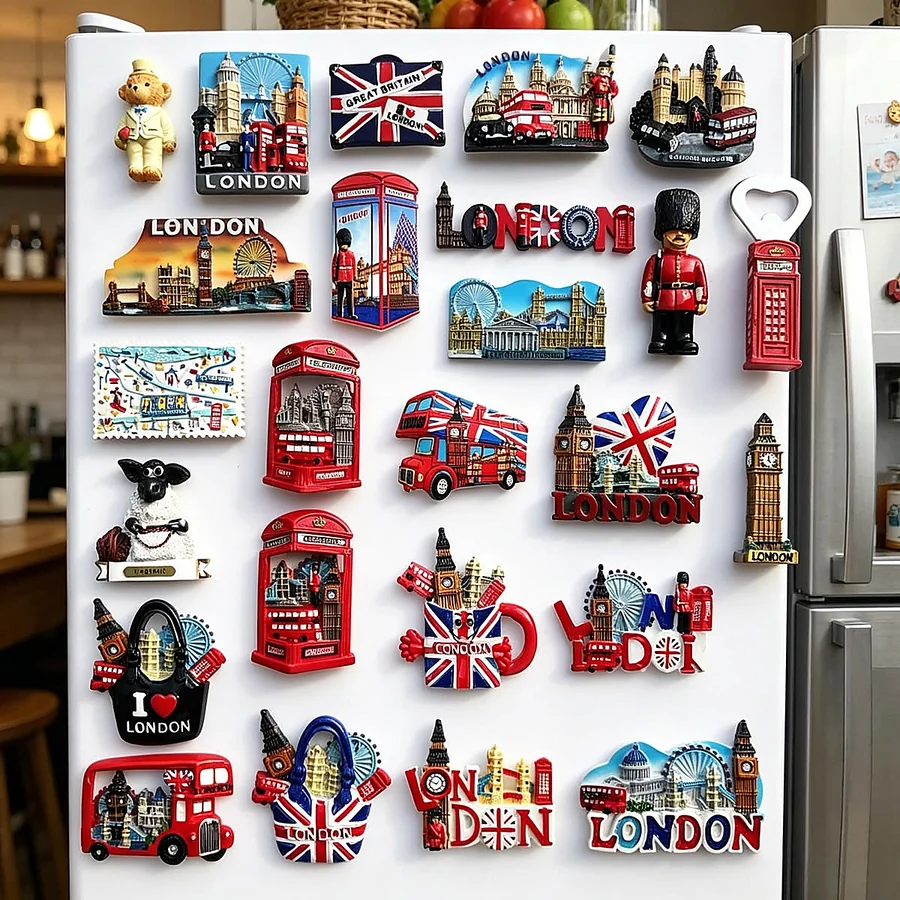
Enamel filling is specific to metal pieces and gives you a smooth, slightly recessed color fill inside a raised metal outline, in either soft enamel (a gentle texture you can feel) or hard enamel (polished flat and glassy). Glossy and matte are available across most materials and change how the piece reads under kitchen lighting, glossy tends to make colors look more saturated, matte reads as more understated and premium. Hand-painted detailing adds a manual finishing pass for small highlights or shading a mold alone can’t capture, and Pantone color matching keeps a brand’s exact colors consistent if the magnet needs to match a logo elsewhere in a product line.
A few effects are worth knowing about specifically because they change what the piece can do rather than just how it looks. Glow-in-the-dark elements work well on a night-sky or lighthouse-style design, since they add a second visual state without changing the base artwork. Quicksand or liquid-motion inserts, where a small sealed compartment has particles or glitter suspended in liquid, add movement and are usually reserved for a small accent area rather than the whole piece. Hollow cutouts and raised relief add shadow and depth, particularly useful for designs like lattice-work architecture or filigree patterns where negative space is part of the design.
Not every finish suits every material. Enamel filling only works on metal, and quicksand or liquid inserts need a rigid material with a sealed cavity, so it’s worth confirming with your manufacturer early which finishes are compatible with the material you’ve already chosen for the artwork.
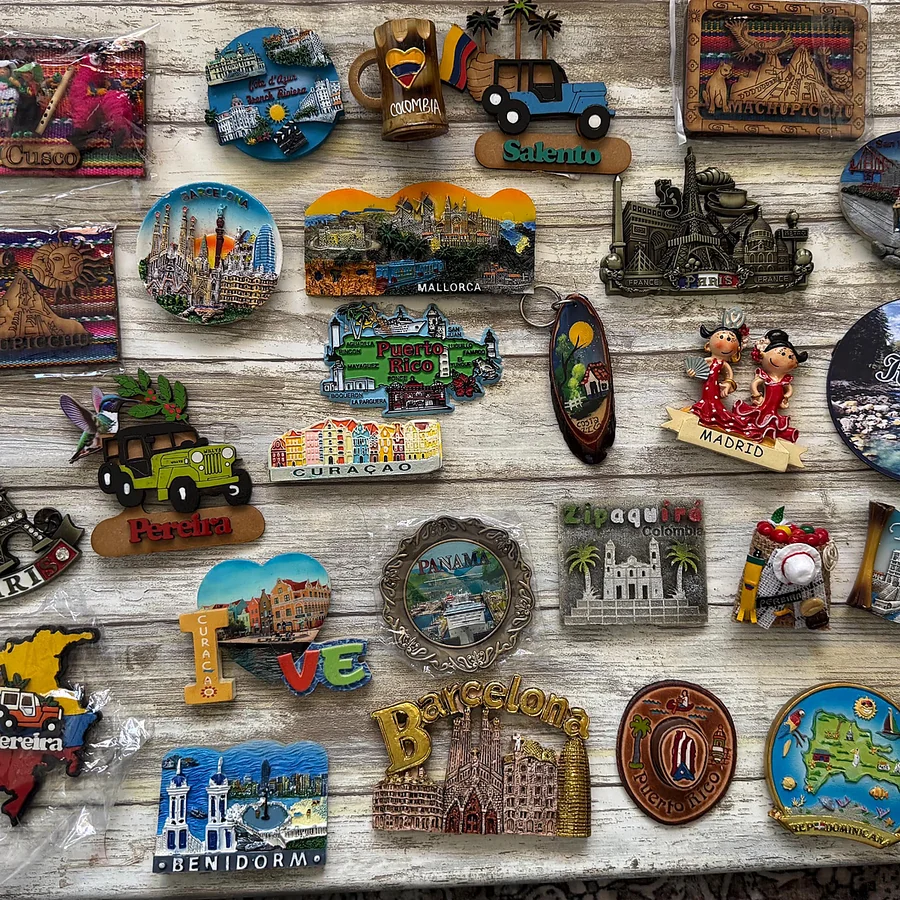
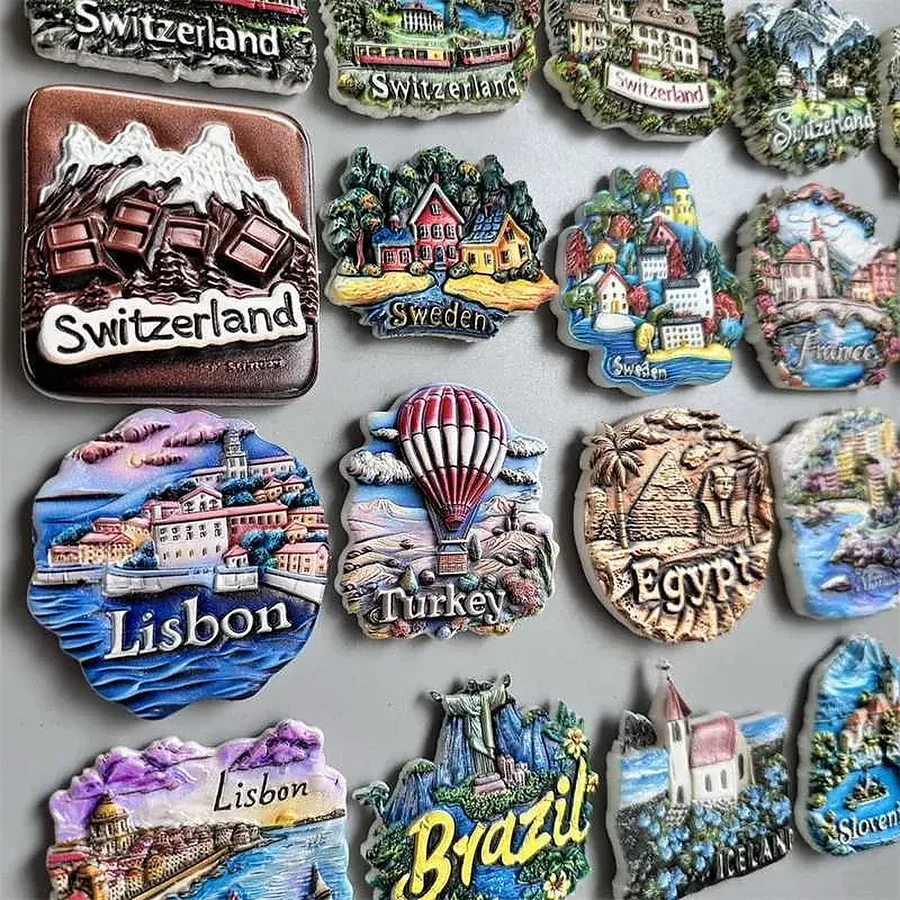
Pick the Right Magnetic Backing
This is the step that gets skipped most often, and it’s the one that determines whether a beautifully finished magnet actually stays on the fridge.
A flexible magnetic sheet, where the entire back of the piece is magnetic rubber-composite material, gives you a large contact area and enough friction to resist sliding down a smooth door. It’s the standard, most economical backing for lighter, flatter pieces like PVC, thin acrylic or standard metal magnets.
A ferrite (ceramic) button magnet is a small, rigid disc glued to the back of the piece instead of covering the whole surface. It concentrates the magnetic field into a smaller area, which gives heavier or thicker 3D pieces, like a chunky resin relief or a ceramic piece, enough holding strength without needing to cover the entire back.
A neodymium magnet is the strongest option for its size, used either when a piece is too heavy for a standard ferrite button or when the magnet needs to stay small and hidden behind a delicate design. Magnets don’t meaningfully weaken from age alone under normal household conditions, a well-made magnet loses only a small fraction of its strength over a decade, but they do weaken from heat, sharp impacts, or corrosion if moisture reaches an unprotected metal magnet, so backing quality and how well it’s sealed against the piece matters more than the backing type alone.
Note that “flexible magnet” also appears as a face material in its own right, a thin printed magnetic sheet that is both the design surface and the backing in one piece. That’s a different product from adding a flexible magnetic backing to a rigid material like resin or ceramic, even though the backing itself is the same type.
Moving From Design to a Finished Magnet
Settle the artwork style first. Decide whether the design is photographic, bold and flat, or sculptural, since this determines which materials are even viable.
Match a material to that style, weighing how it will be shipped, handled and displayed against how it looks on screen.
Choose a finish that suits the material, confirming with the factory which effects are compatible with your chosen material before finalizing artwork.
Select the backing type based on the piece’s weight and thickness, not just its face size.
Confirm size and minimum order quantity for the specific material and finish combination, since these can shift depending on artwork complexity and are usually only firm after the factory reviews your actual design.
Approve a physical or rendered sample before committing to a full production run, especially if this is the first time you’ve used a given material or finish combination.
What to Send Before You Request a Quote
A factory can quote faster and more accurately with specifics up front. Before reaching out, have ready: the artwork or reference image, your target size, whether you have a material or finish preference already or want a recommendation, your expected order quantity, and how the pieces will be sold or displayed, since gift-shop retail packaging is a different requirement from a bulk giveaway.
If you already have artwork and a rough idea of quantity, send it to Huasan's custom fridge magnets page for a material and finish recommendation before committing to a full production run.
FAQ
What size should a souvenir fridge magnet be?
It depends on the format. Small circular gift-with-purchase style magnets commonly run around 1 to 1.5 inches across, while decorative or collectible souvenir magnets meant to stand on their own are more often in the 2 to 3 inch range. Photo or landmark-style rectangular pieces can run larger, up to postcard-sized formats, though anything much bigger starts to compete with other magnets for space on a typical fridge door.
Does a magnet's holding strength weaken over time just from being on the fridge?
Not meaningfully from age alone under normal household use. A well-made magnet can lose less than one percent of its strength over a decade sitting on a fridge. What actually weakens a magnet is heat exposure, a sharp physical impact like being dropped, or corrosion if moisture reaches an unprotected metal magnet, so backing quality and how well it's sealed matter more than how long it's been in use.
Can I get a sample made in more than one material before choosing one for a full production run?
Most manufacturers can produce a small sample run across a couple of material options before you commit to bulk quantities, though this is worth confirming directly since it affects sample lead time and cost. Comparing a physical resin sample against a physical metal sample side by side is a more reliable way to choose than comparing renderings on a screen.
Do glow-in-the-dark or hand-painted finishes add significant cost or lead time?
They typically do add cost and production time compared to a standard printed or enameled finish, since both require an extra process step, an added glow-pigment layer or a manual painting pass. The exact impact depends on how much of the design uses the effect, so ask your manufacturer to quote it specifically against a standard finish on the same design before deciding it's worth the difference.
Is there a minimum order quantity for souvenir fridge magnets?
Most manufacturers set a minimum, and it typically varies by material and finish complexity rather than being a single fixed number across every product. Treat any minimum you're quoted before your artwork has been reviewed as a planning estimate, and confirm the firm number once the factory has seen your actual design.
Can the same design be produced in a cheaper material later if the premium version sells well?
Often yes, since the artwork itself can usually be adapted across materials once it exists, though color separation, relief depth and finish details may need to be adjusted for the new material rather than reused exactly as is. Flag this possibility to your manufacturer up front if you're testing a premium version before deciding whether to scale into a lower-cost material for a larger run.