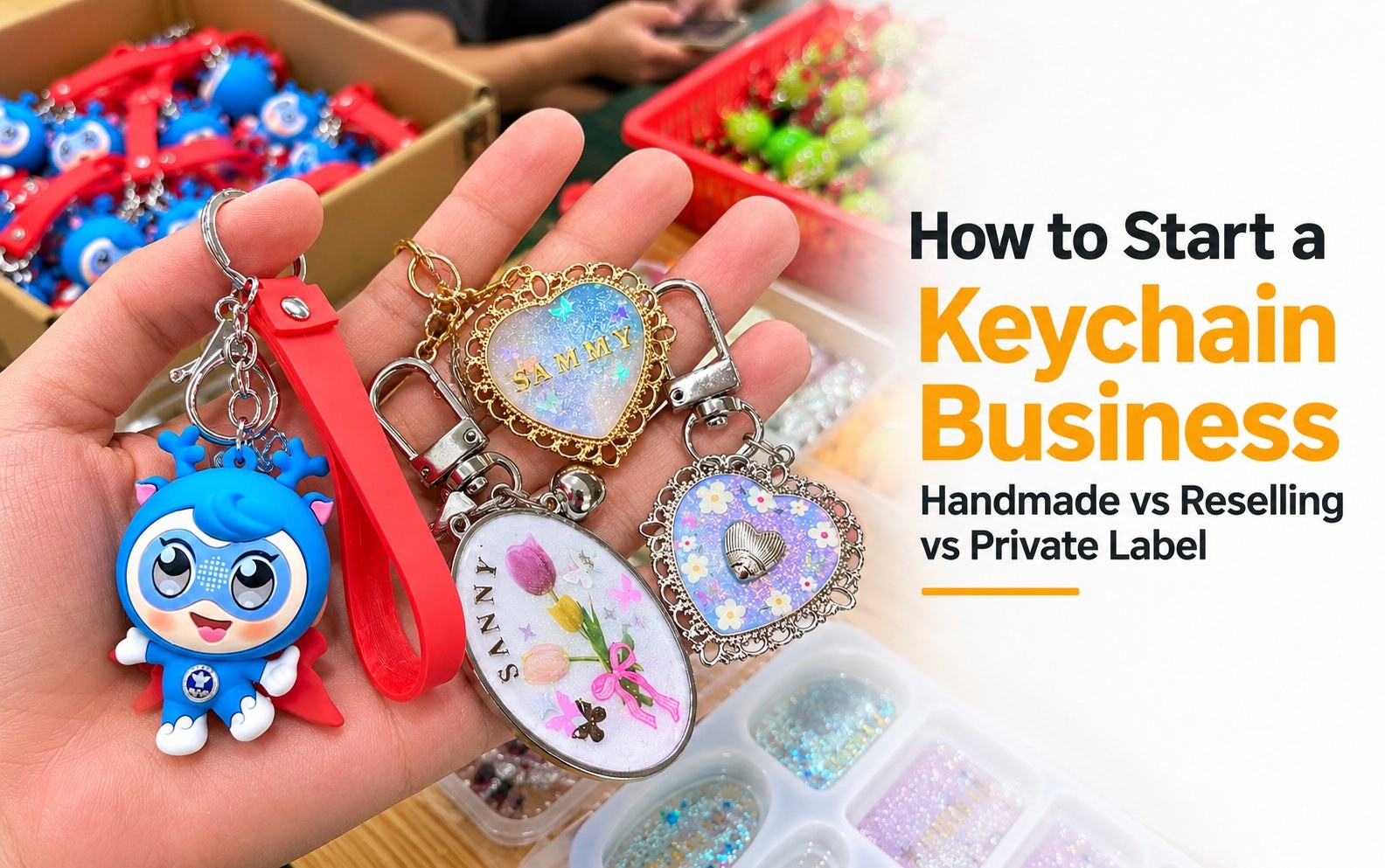
There are three ways to start a keychain business, and the one that fits you depends on your budget and how far you want to scale. You can make keychains by hand and sell them, you can buy wholesale stock and resell it, or you can order private-label custom keychains from a factory with your own logo. Each path has a different startup cost, a different margin, and a different ceiling on how big it can grow.
This guide breaks down all three with real numbers, then walks through the exact factory onboarding flow so you know what ordering a custom run actually involves before you request a quote.
Which Path Fits Your Budget
If you want the short version: handmade is the cheapest way to test an idea but caps out fast, reselling is quick to launch but hard to differentiate, and private-label manufacturing costs more upfront but is the only path that scales into a real brand. Here is how the three compare on the numbers that decide your first move.
| Path | Startup cost | Typical gross margin | Effort per unit | Scaling ceiling |
|---|---|---|---|---|
| Handmade | $50–$300 (materials and basic tools) | 50–70%, but low dollars per unit | High: 15–40 minutes per piece | Low, capped by your own hands |
| Buy wholesale and resell | $200–$1,000 (opening inventory) | 20–40% | Low per unit, but thin differentiation | Medium, squeezed by competition |
| Private label from a factory | $300–$2,000 (mold plus first order) | 40–70% at volume | Low, the factory produces | High, reorder and expand the line |
Scope note: the startup and margin ranges above reflect general small-business figures for the keychain category, not Huasan-published data. The private-label startup range combines a real mold fee and a small first-order quantity, detailed in the unit economics section below.
Most people start on Path 1 or Path 2 to learn what sells, then move to Path 3 once a design proves itself. You do not have to pick one forever.
Path 1: Handmade Keychains to Sell
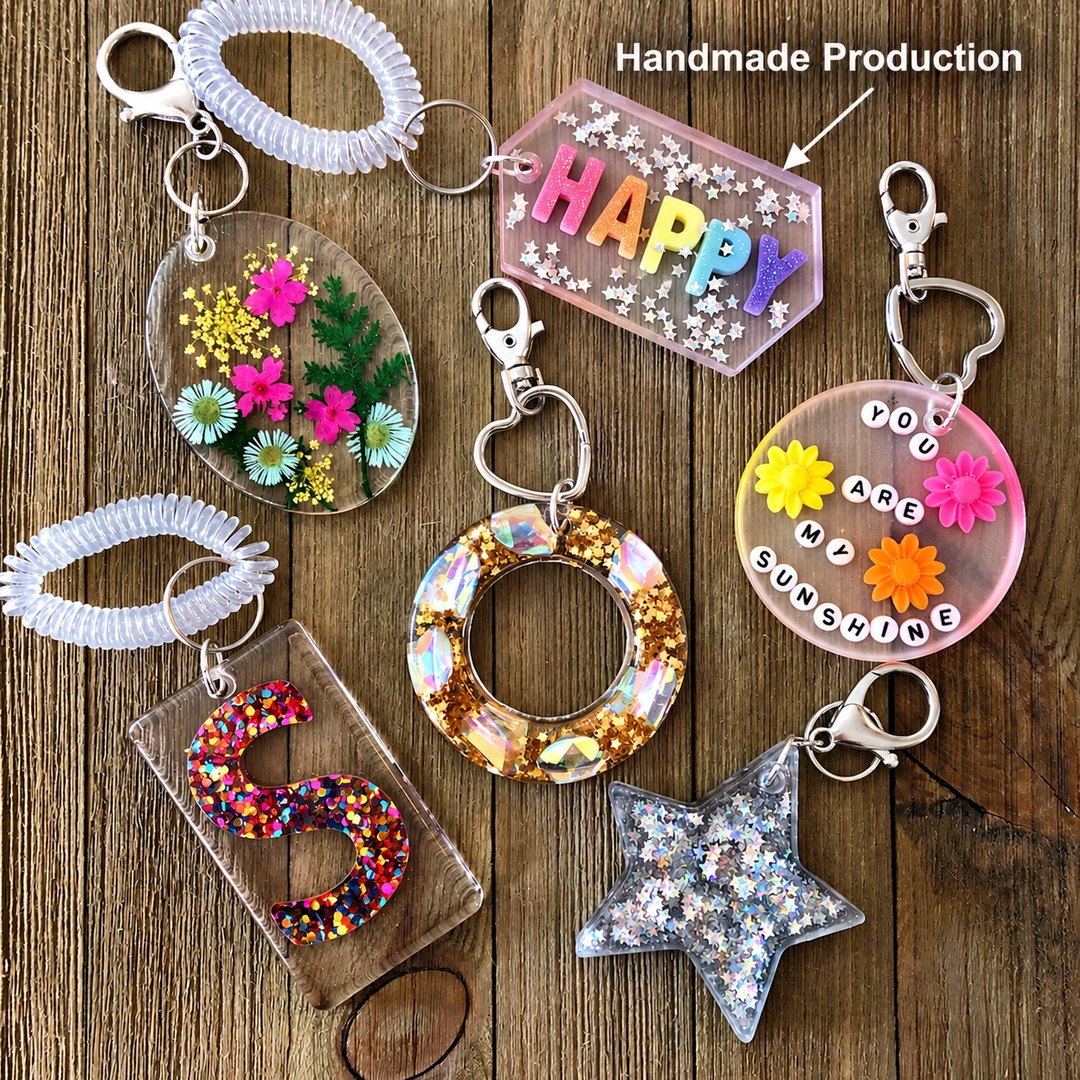
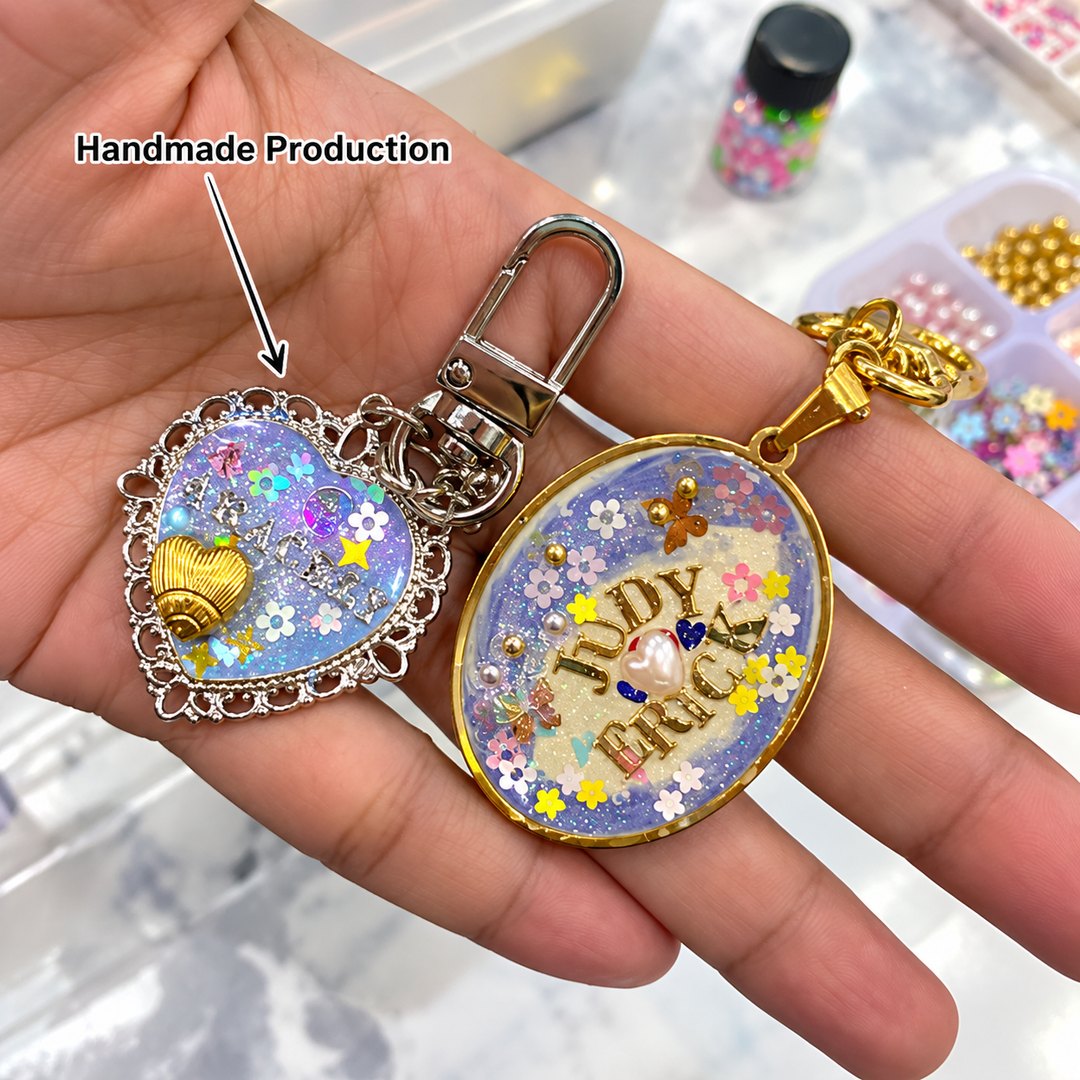
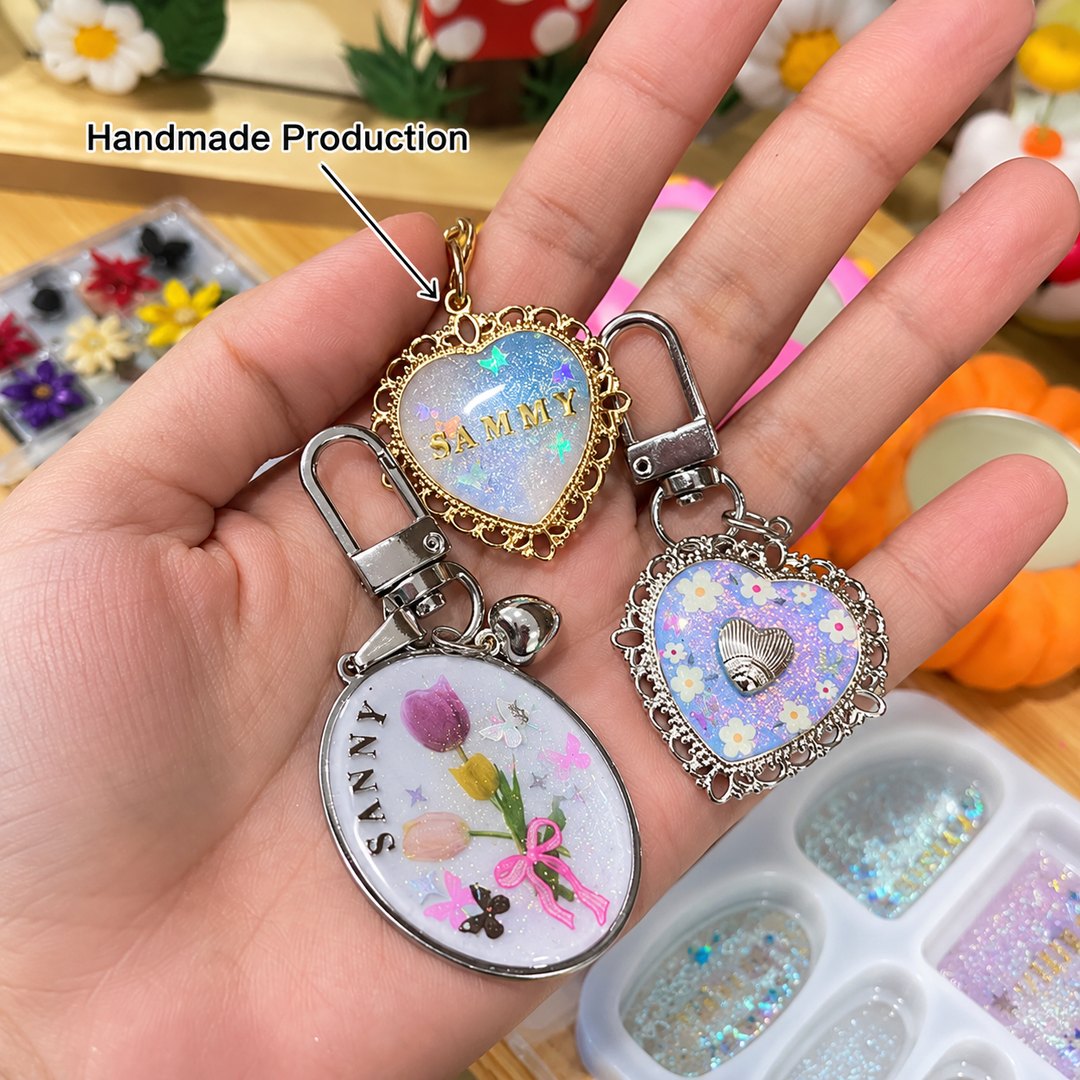
Handmade is where most keychain sellers start, because your entry cost is almost nothing. You buy beads, resin, acrylic blanks, or leather offcuts, a few findings and jump rings, and you are producing within a day. Figuring out how to make keychains to sell at a small scale is mostly a pricing problem, not a production one.
Your pricing formula is straightforward: take your material cost per piece and multiply by four. A keychain that costs you $1.50 in materials sells at roughly $6. That multiple has to absorb your marketplace fees, your packaging, and your time. On Etsy you pay a $0.20 listing fee plus around 6.5% transaction fee and roughly 3% payment processing, so close to 10% of each sale leaves before you count materials.
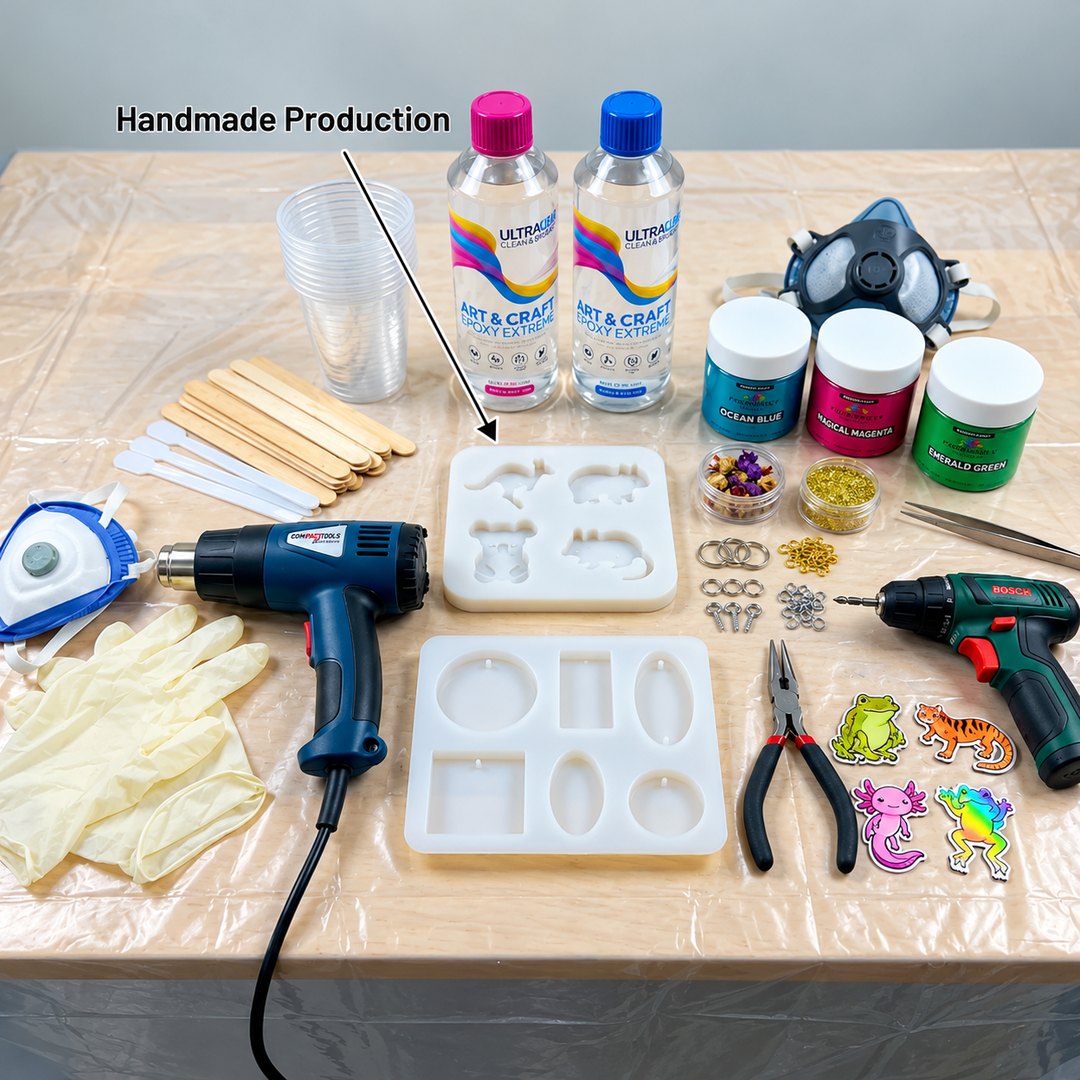
The honest limit is time. If a resin keychain takes you 25 minutes start to finish and sells for $6, you are earning a few dollars an hour before fees. That math works for a side income or a craft-market table. It does not work the moment demand outgrows your evenings.
The sellers who hit that ceiling and want to keep growing almost always move to a factory for their best-selling designs, which is Path 3. Until then, the handmade route is the cheapest market research you will ever buy: you learn which shapes, colors and price points move without committing to tooling.
Path 2: Buying Wholesale and Reselling
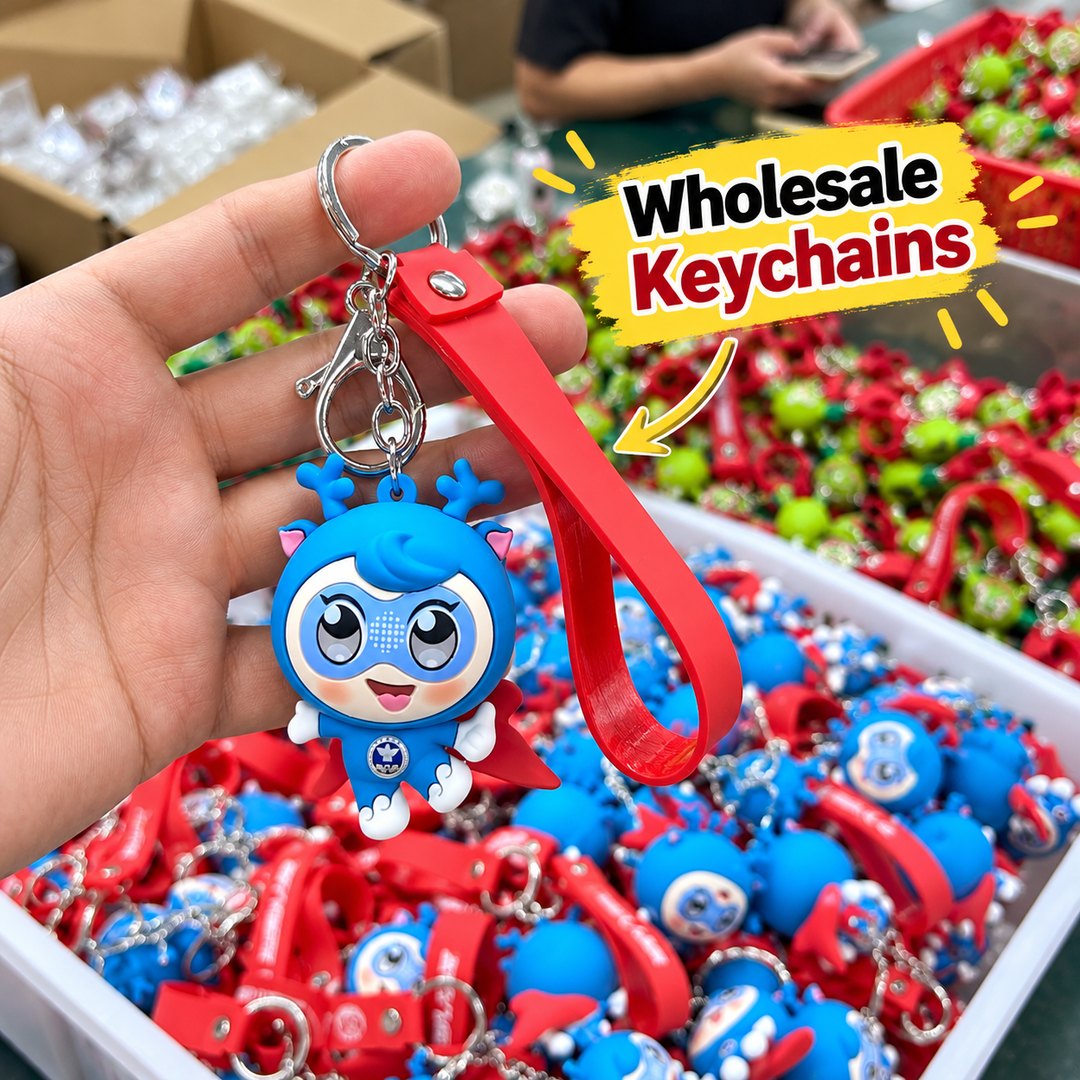
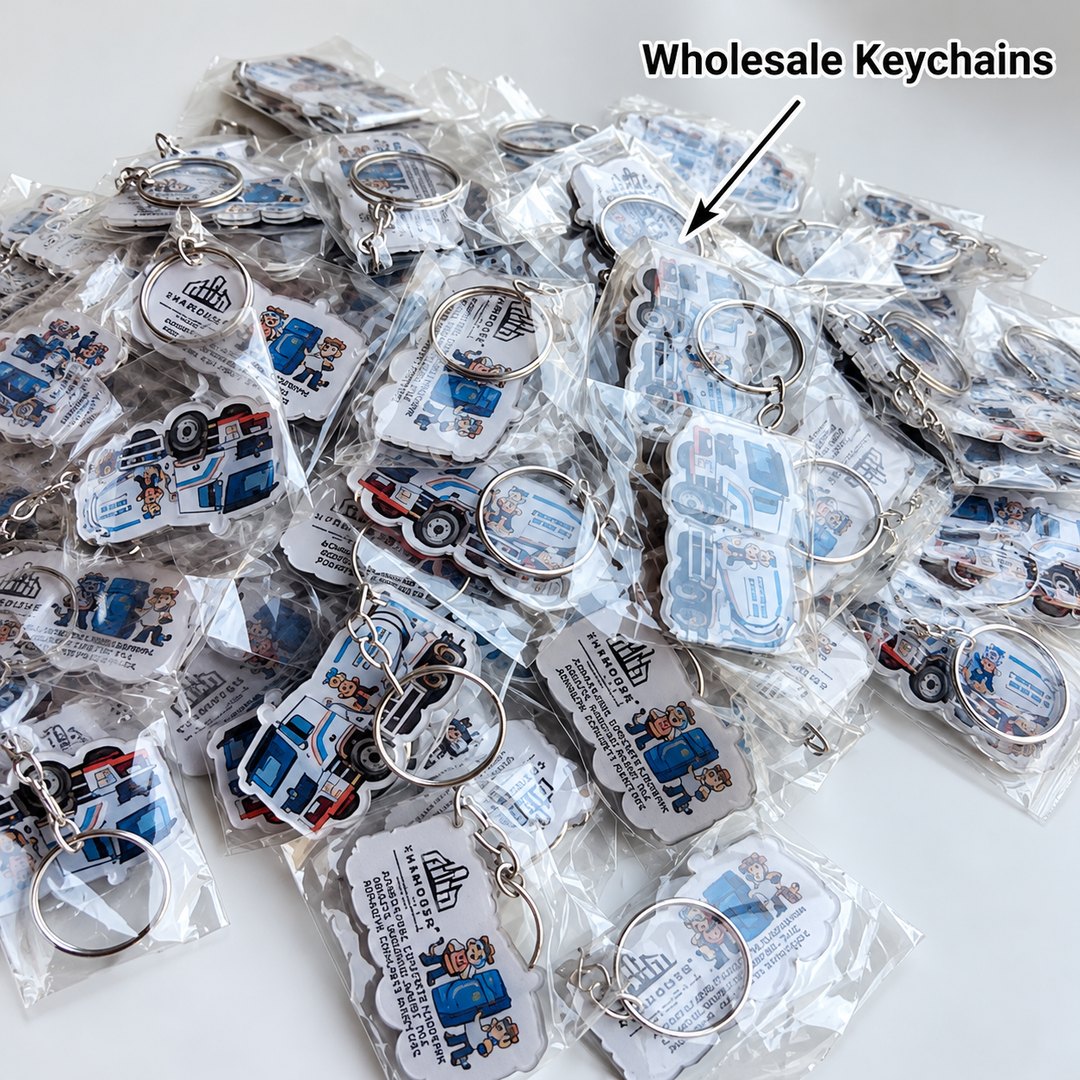
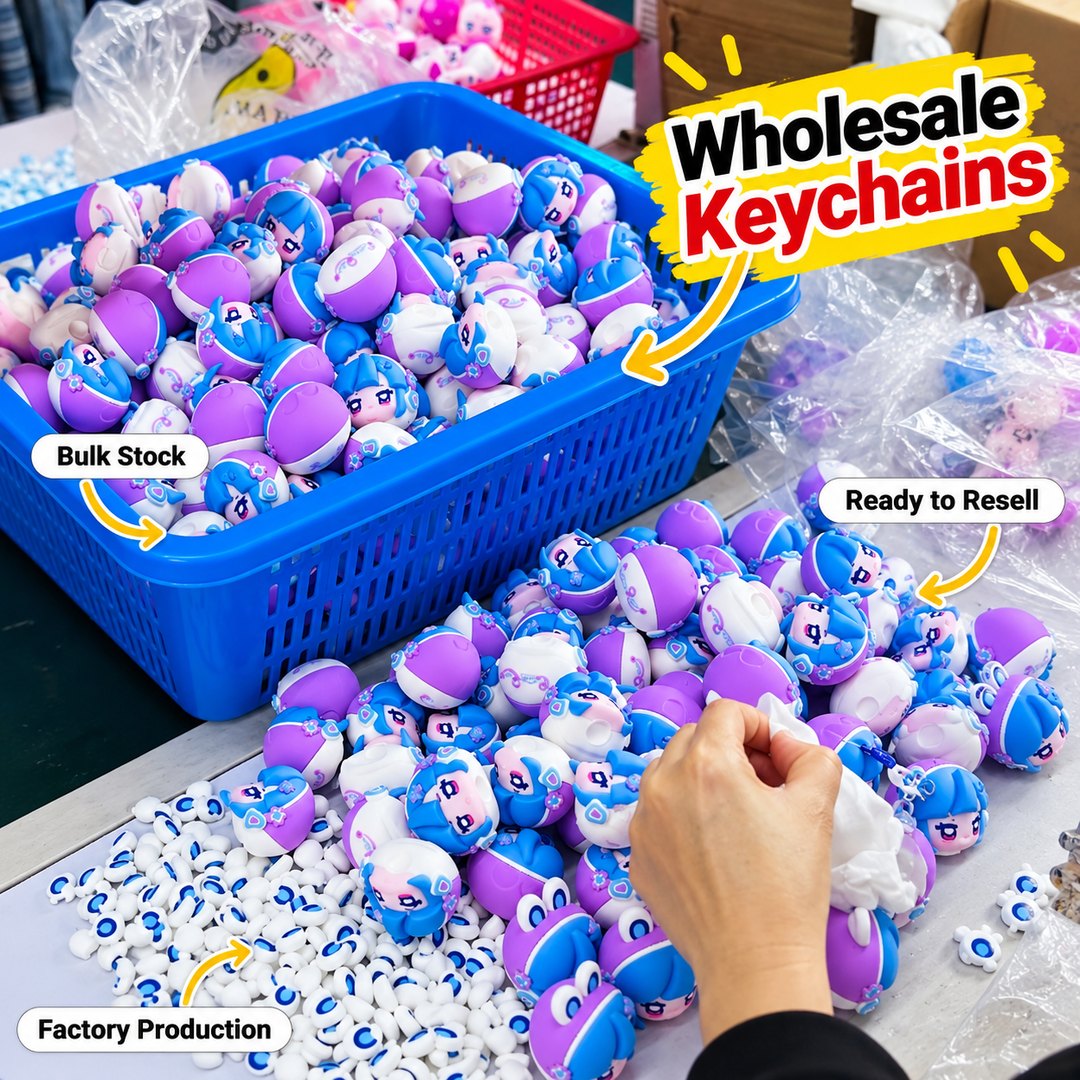
Reselling means you buy finished keychains in bulk from a wholesaler or factory, then sell them individually through your own store or a marketplace. You skip production entirely. Your startup cost is your opening inventory, usually a few hundred dollars, and you can list the same day stock arrives.
The catch is differentiation. If you buy a generic acrylic keychain that a hundred other sellers also buy, you compete on price alone, and your margin gets squeezed every time someone undercuts you. After marketplace fees and shipping, a reseller margin on generic stock often lands between 20 and 40%.
| Cost line | Typical share of sale price |
|---|---|
| Product cost (wholesale) | 30–45% |
| Marketplace or platform fee | 10–15% |
| Shipping and packaging | 10–20% |
| Your gross margin | 20–40% |
Scope note: figures are typical marketplace-reseller cost splits for low-cost accessories, not Huasan data. Your actual split depends on platform, product cost, and whether you offer free shipping.
Reselling teaches you what sells without any design or tooling risk. If you want to understand the sourcing tiers behind this path, from retail packs to wholesale lots to ordering direct from a factory, the guide on where to buy keychains lays out what each tier costs and when to graduate to the next. The resellers who build a real margin eventually stop buying what everyone else sells and start making something only they have, which is the private-label path.
Two things decide whether wholesale stock is worth reselling. The first is whether the factory can package it for retail: individually poly-bagged, with a backing card or hangtag you supply, the same stock lists at a higher price without costing you more. Our packaging requirements guide covers what a retail-ready run needs.
The second is lead time. Stock you can reorder fast beats stock you bought cheaply once, because a sold-out listing costs you the ranking you spent months building.
Path 3: Private Label From a Factory, the Scalable Path
Private label means the factory produces keychains to your design, with your logo, your colors, and your packaging. This is the path that turns a side hustle into a brand, because you own the product and nobody else can list it. It also carries the highest upfront cost, since you pay for a mold once and a minimum order quantity.
Here is what the unit economics look like for a two-color soft PVC keychain, the most common starter product, as your order volume climbs.
| Cantidad de pedido | Precio unitario | Cuota de molde | Mold cost per unit | Effective cost per unit |
|---|---|---|---|---|
| 100 pcs (PVC 2D) | ~$0.80 | from $120 (one-time) | $1.20 | ~$2.00 |
| 500 pcs (PVC 2D) | ~$0.45 | paid | $0.24 | ~$0.69 |
| 1,000 pzas | $0.40–$0.75 | paid | $0.12 | ~$0.52–$0.87 |
| 5,000+ pcs | $0.25–$0.55 | paid | $0.02 | ~$0.27–$0.57 |
Scope note: the 100- and 500-piece PVC figures and the from-$120 two-color mold cost come from Huasan’s own PVC production process guide. The 1,000- and 5,000-piece ladder is the general range published in our Sacatepéquez, which covers all materials; the mold range there is $50–$300. Effective cost per unit adds the amortized mold fee and excludes freight and other charges. Your exact figures move with color count, size, shape and hardware, so confirm them at quote.
Two things fall out of that table. Your mold fee stops mattering almost immediately, since it spreads to pennies by 1,000 pieces and to nothing by 5,000. And your per-unit cost roughly halves between a 500-piece test run and a 5,000-piece reorder, which is where your margin comes from once a design sells.
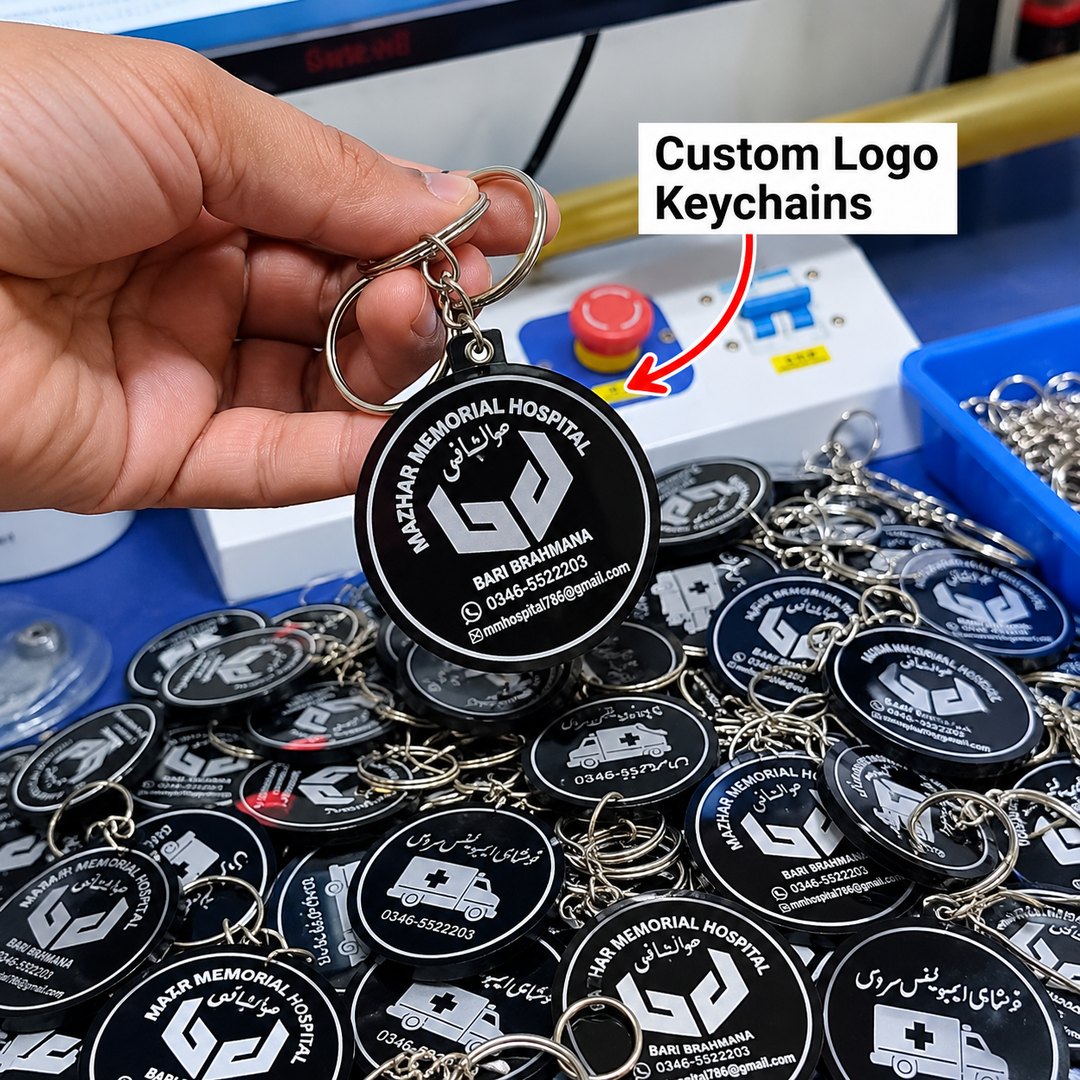
On the brand side, private label is where you add the details that justify a higher retail price: a custom logo molded or printed into the piece, a backing card with your brand, a hangtag, retail-ready polybagging. Those extras cost very little per unit at volume and lift your perceived value far more than the cost.
This is also the only path where the product itself builds the brand. A handmade piece carries the maker’s name; a resold piece carries whoever made it. A private-label piece carries yours, thousands of times over.
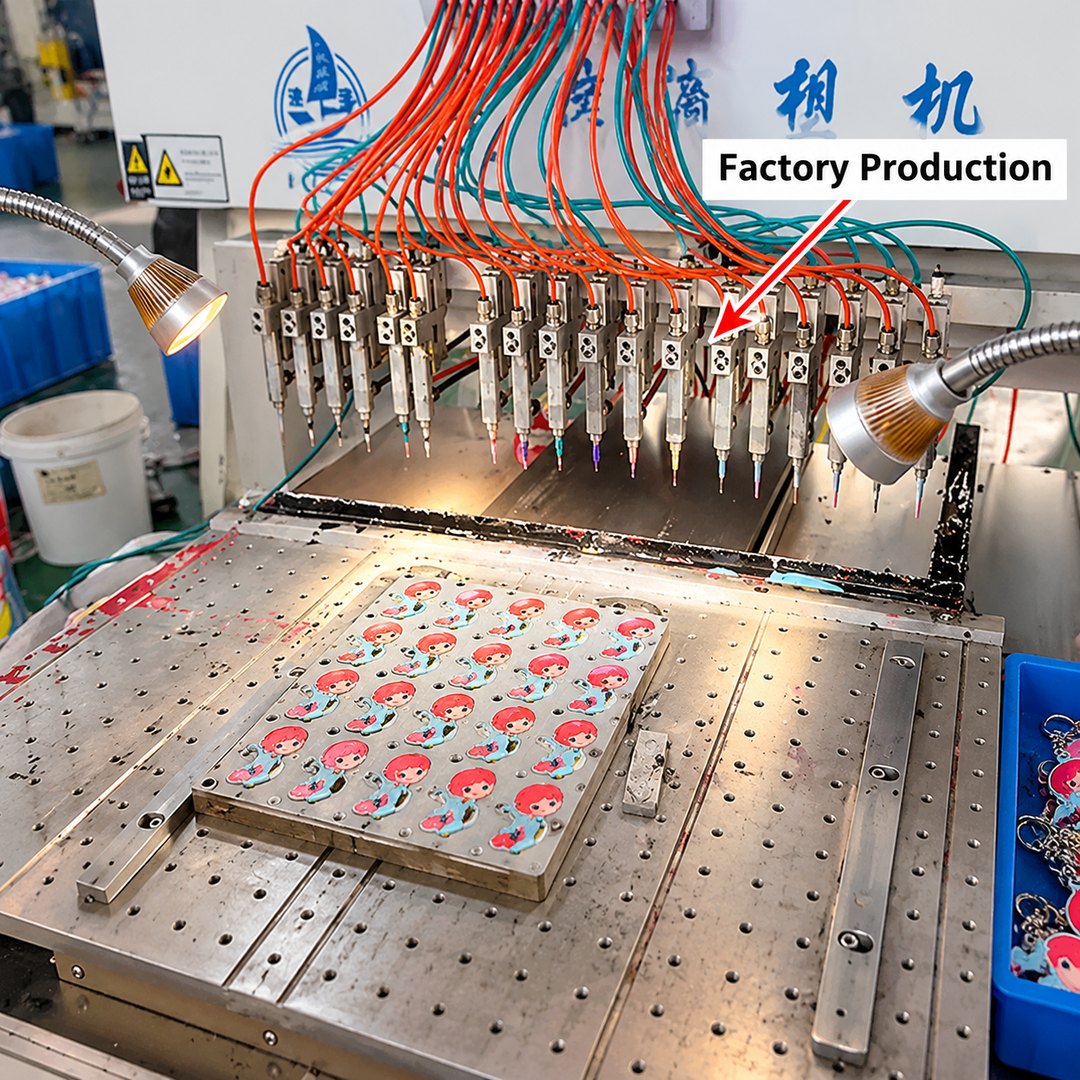
The onboarding flow is simpler than most first-time buyers expect. You send artwork and get a quote, the factory produces a pre-production sample for your approval, you run quality control on the bulk batch, and the order ships. Two of those steps are where new buyers lose money, so each has its own resource: the Sacatepéquez explains how to order a small first batch without overpaying, the Lista de verificación de control de calidad covers what to inspect before you accept a shipment, and the international shipping and customs guide walks through freight, duties, and the paperwork that holds orders at the border.
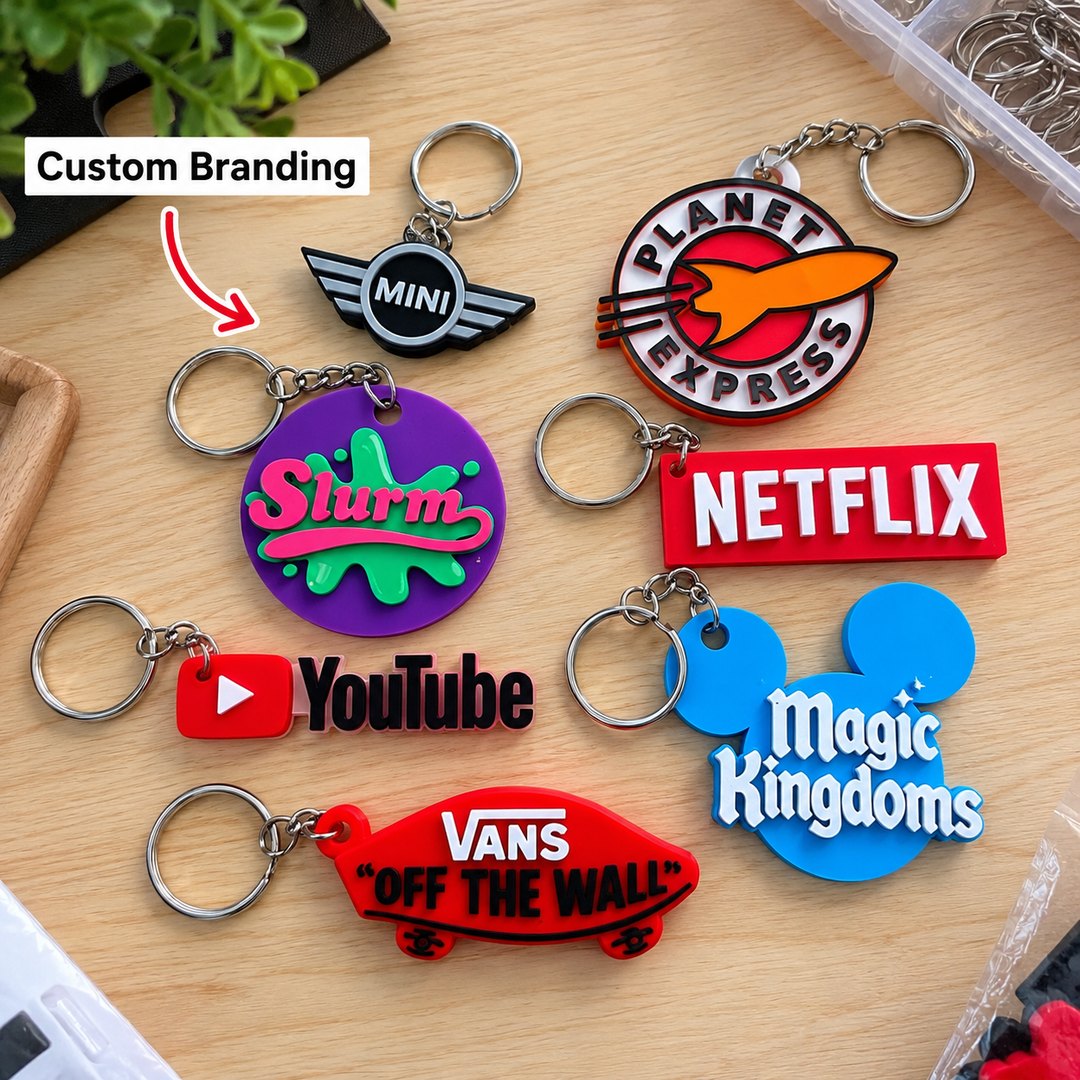
One caution that saves first-time sellers real money: be careful what you put on the product. Trademarked characters, team logos, and brand marks you do not own will get your listing pulled and can get a shipment seized at customs. The same goes for restricted products, including some self-defense keychain styles that many carriers and regions restrict outright. Check your destination rules before you commit to a design, and read our compliance documents checklist if you are shipping into regulated markets.
A factory will produce exactly the artwork you send. The IP responsibility sits with you, not with the maker, so run your own trademark check before the mold is cut.
Pricing and Marketing Basics for Keychain Sellers
Your pricing should anchor high and discount through bundles rather than cutting your single-unit price. A keychain at $8 with a “3 for $20” bundle reads as better value than the same keychain dropped to $6.50, and it lifts your average order. Keychains also sell in sharp seasonal waves, so your biggest window is Q4, running from the holiday gift season back through late autumn. Plan your largest factory order to land in stock before October.
A quick note on naming, since business name ideas are one of the first things new sellers search. Keep the name short and easy to spell, check that the matching .com and the social handles are free before you commit, and run a quick trademark search so you are not building on a name someone already owns. A name that signals the product or a niche, rather than a generic word, tends to be easier to market and rank. Good business keychain ideas here lean into a specific audience, like a name aimed at pet owners, car enthusiasts, or a fandom, because a focused brand sells better than a general one.
On product selection, the keychains that command a premium right now cluster around function and personalization: acrylic photo and name keychains, functional metal pieces like bottle openers and multitools, and characters or mascots people collect. Those categories give you a reason to charge more than a plain charm, and our own best keychains guide y keychain ideas for brands and events cover the styles that hold up across gift, promo and retail use.
Common First-Order Mistakes, From the Factory Side
We see the same few mistakes on first orders, and all of them are avoidable.
1. Skipping the pre-production sample
The biggest one is skipping the sample. A pre-production sample costs a little and adds a few days, but it is the only time you can catch a wrong color, a logo that is too small to read, or a plating that looks cheap, before the whole batch is made. Approving a sample is far cheaper than reprinting 1,000 pieces.
2. Over-ordering a single design
The second is over-ordering a single design. New sellers get excited and order 5,000 of one keychain before they know it sells. Order a smaller first run across two or three designs, see which one moves, then reorder the winner at a volume that earns the real price break.
3. Leaving the plating and material spec vague
The third is ignoring the plating and material spec. “Metal keychain” is not a specification. Bright nickel, black nickel, antique brass, and gold each age differently and photograph differently, and a vague brief means the factory picks for you. The same applies to PVC hardness and leather grade. Spell out the finish you want, and confirm it on the sample.
Preguntas frecuentes
Is selling keychains profitable?
Yes, when you control your cost per unit. Handmade margins look high per piece but cap at the time you can put in. Reselling generic stock runs 20 to 40% and gets squeezed by competition. Private-label keychains at volume reach 40 to 70% margins because your per-unit cost drops sharply once your mold fee amortizes across a few thousand pieces.
How much does it cost to start a keychain business?
As little as $50 to $300 for a handmade setup, a few hundred dollars for opening resale inventory, or roughly $300 to $2,000 to launch a private-label line, which covers a one-time mold fee and your first minimum order. The private-label route costs more upfront but gives you the only product a competitor cannot copy off a wholesale list.
Sing Buri
Minimum order quantity depends on material. Soft PVC and zinc alloy metal commonly start at 100 pieces, while stainless steel sits around 300 and aluminium around 500, which are the figures on our keychain-by-material page. The minimum exists to cover fixed setup costs like the mold and color matching that happen before the first piece is made. Small first batches are workable once you understand what drives the floor.
How do I find a keychain manufacturer?
Look for a factory that makes your specific material in-house, shares real certification and QC information, offers a pre-production sample, and answers process questions clearly rather than only quoting a price. Ask for the MOQ, the mold fee, the sample lead time, and the bulk lead time in writing before you commit.
Can I put trademarked characters on keychains?
No, not without a license. Using characters, team logos, or brand marks you do not own exposes you to takedowns and can get a shipment seized at customs. Design your own artwork or license it properly. A manufacturer will produce what you send, so the IP responsibility sits with you.
How do keychain sellers price their products?
A common formula is material cost times four for handmade pieces, which absorbs fees, packaging, and time. For factory-made product, price against your effective per-unit cost including amortized mold fee, then anchor your retail price high and discount through bundles rather than cutting the single-unit price.
Ready to price a custom run? Send us your design or just a rough idea, and we will come back with a free quote and a free design draft covering material options, mold fee, sample timeline, and your unit price at each volume break.