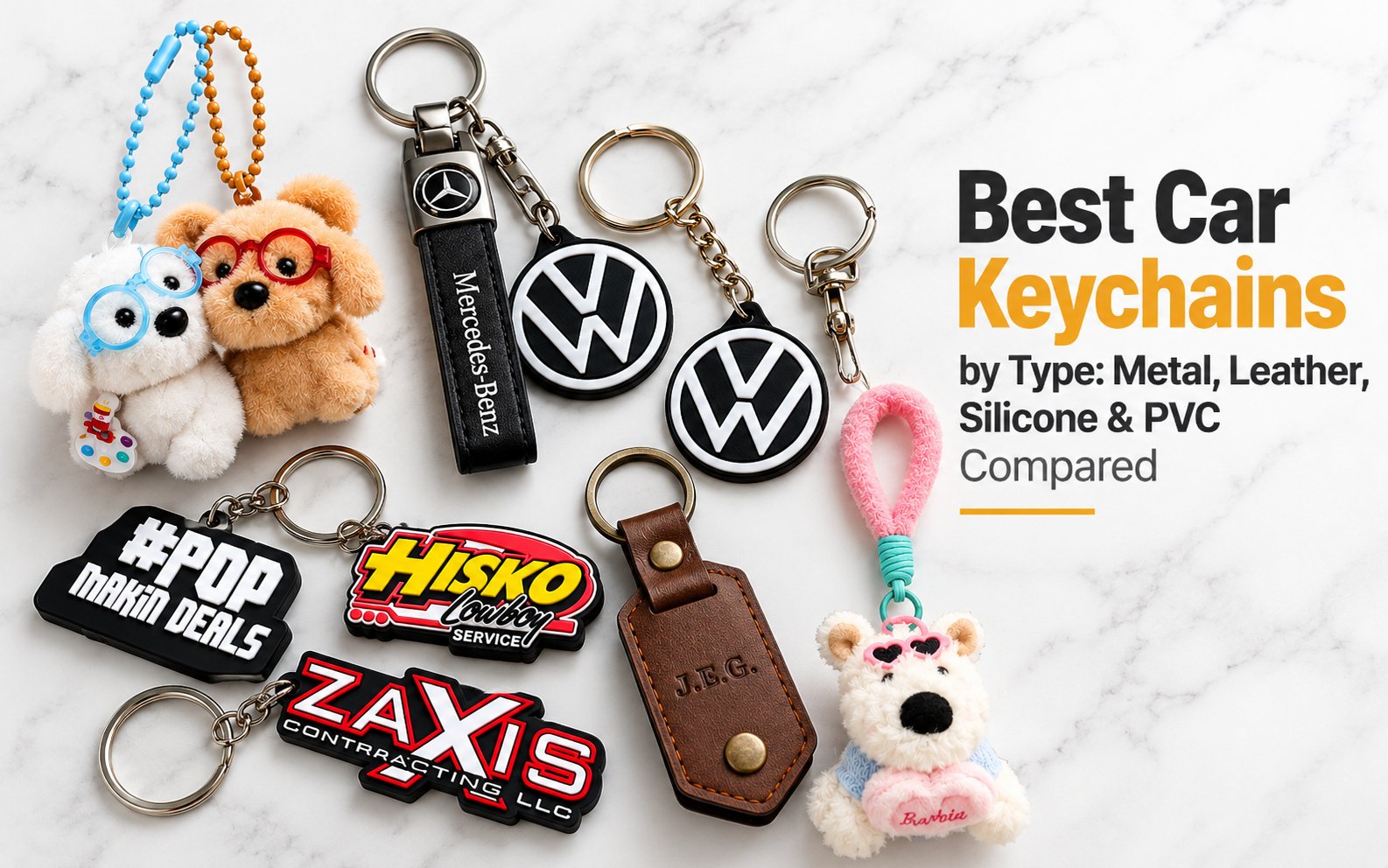
You need custom keychains with your logo on them, and three materials keep coming back: metal, rubber, and acrylic. They are not equal. They differ on process, tooling, minimum order, how your logo reproduces, and how long the piece survives on a keyring.
Quick answer: pick the material from your artwork and your programme, not the price list. Choose soft PVC when your logo is a bold shape and you need volume. Choose metal when the piece must last, carry weight or do a job. Choose acrylic when the artwork is flat or photographic and the campaign is short.
This guide is for importers, distributors, brand teams and sourcing buyers who have to defend the choice internally. It covers what "rubber" means on a quotation, how each material reproduces a logo, which programme suits which, and what to send for an accurate quote.
What Does "Rubber" Mean on a Quotation?
"Rubber" in promotional sourcing almost always means soft PVC, so this article uses soft PVC (commonly called rubber) throughout. Natural rubber and silicone are separate materials, silicone being softer and more heat tolerant but suited to simpler designs. Confirm the exact material on your quotation rather than accepting "rubber" alone.
Compare the Three at a Glance
| Soft PVC (rubber) | Metal | Acrylic | |
|---|---|---|---|
| Best artwork | Bold shapes, blocks of colour | Logos suiting enamel, plating or print | Photographs, gradients, illustration |
| Typical appearance | Soft, flexible, moulded | Heavy, solid, plated finish | Light, rigid, flat printed face |
| 3D capability | Yes, 2D or 3D | Yes, raised and recessed | No, flat face only |
| Durability concern | Wear on thin raised detail | Plating wear on edges | Edge chipping and scratching |
| Tooling | Mould per shape | Mould or die per shape | Usually simpler than a mould |
| Suits quantity | Volume runs | Mid volume upward | Short runs of complex artwork |
| Main limitation | Gradients and very fine text | Unit cost and weight | No depth, no soft feel |
| Supply status | Made in our supply chain | Made in our supply chain | Not a published line, ask first |
These are typical comparisons at similar size, construction and quantity. Change one and the order can shift.
Which Material Suits Your Programme?
Start from what the keychain is for. The same artwork often suits two materials, and the programme breaks the tie.
| Programme | Material | Why it fits | When it does not |
|---|---|---|---|
| Trade show giveaway | Soft PVC | Bold colour, moulded shape, lowest cost at volume | Artwork is photographic or type-heavy |
| Retail merchandise | Soft PVC or metal | Shelf presence and perceived value | Budget is fixed and low |
| Employee or client gift | Metal | Weight signals value, plating matches brand | Recipients carry minimal key fobs |
| Membership or dealership item | Metal | Survives daily use for years | Run is short and artwork complex |
| Automotive key programme | Metal | Handles constant use and weight | Weight is a complaint risk on modern fobs |
| Photographic or gradient artwork | Acrylic, or printed metal | Prints continuous tone moulding cannot | You need 3D depth or soft feel |
Soft PVC: When Colour and Shape Lead
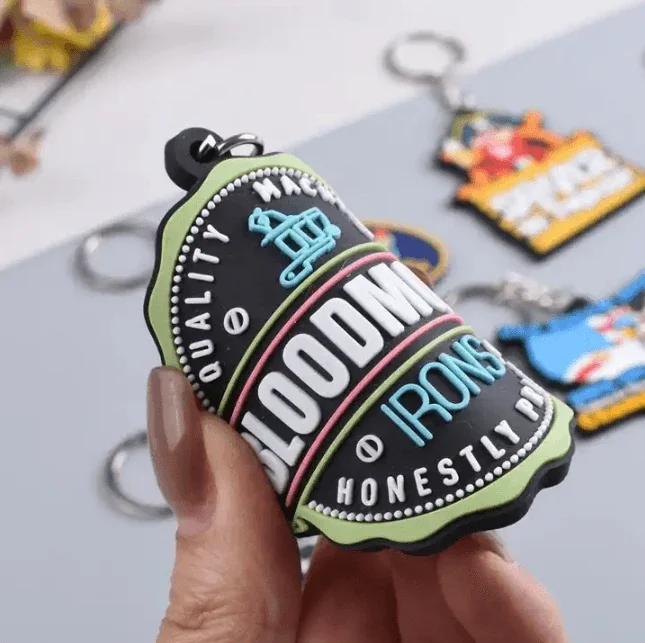
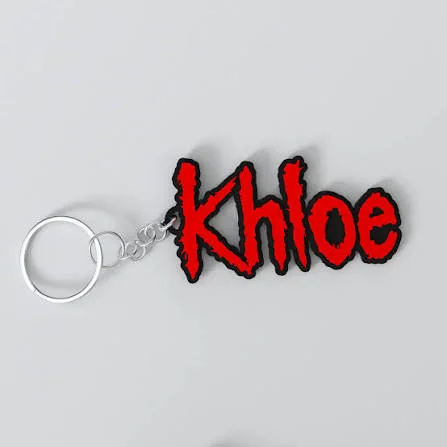
Soft PVC is polyvinyl chloride made flexible with plasticizers. It gives a rubber-like feel, moulded colour areas and raised or recessed detail, at the lowest unit cost of the three at comparable size and quantity.
Our 2D PVC keychain page publishes the working range: 1 to 4 inches with 2.5 inches most popular, thickness in 3mm, 4mm and 5mm, and up to 36 colours with Pantone matching.
The process shapes your artwork. Colours dispense into the mould cavity one at a time, each occupying its own section. Fine detail is often filled by hand while larger areas run by machine, so many small colour areas take more line time and that shows up in the price.
Where it struggles: photographic gradients and very fine text. Raised detail thinner than the surrounding wall wears faster.
Metal: Which Process Do You Actually Need?
Ask for "metal" and you will be quoted six different things. The decoration process decides your price and your look more than the alloy.
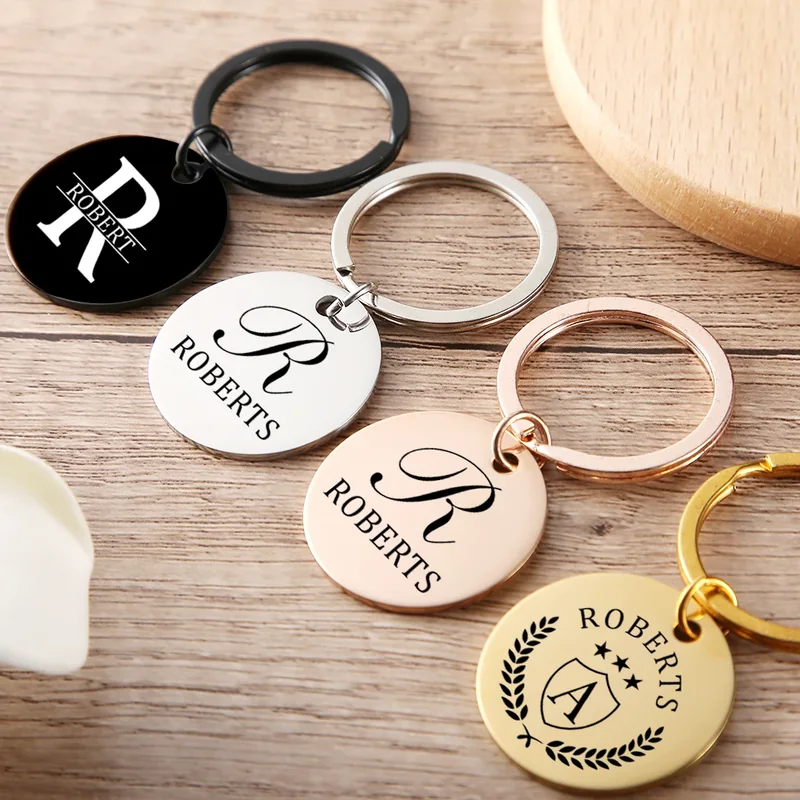
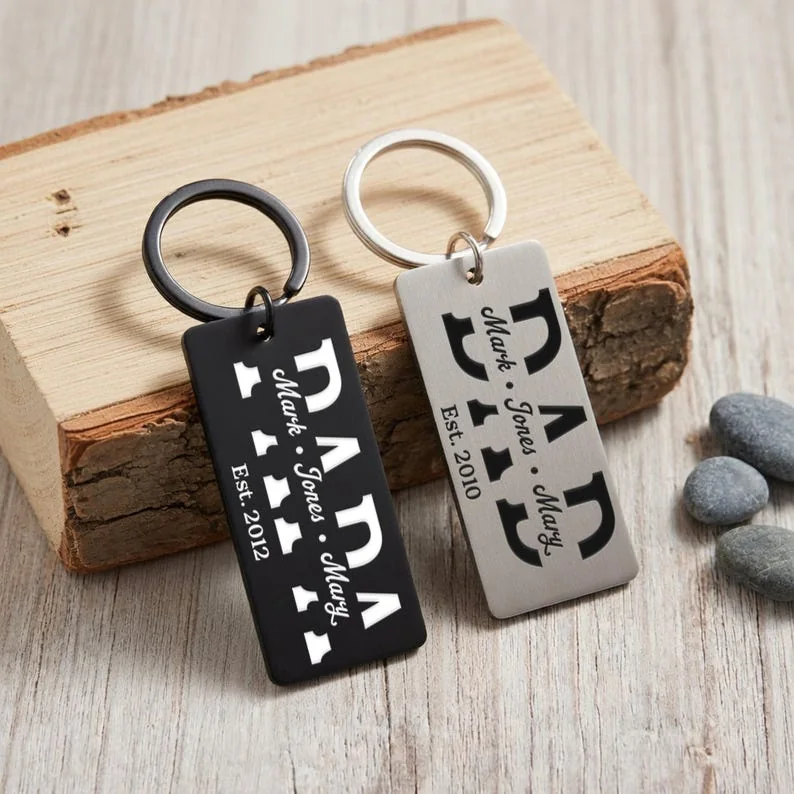
Our custom metal keychains page lists zinc alloy, iron, stainless steel and brass, with zinc alloy standard. Plating covers nickel, gold, antique bronze, black nickel, rose gold, matte silver and two-tone. Decoration covers die casting, stamping, baked enamel, imitation enamel, epoxy and UV colour printing.
Sculpted or 3D shape. Die casting, zinc alloy best suited.
Flat, thin, simple outline. Stamping, usually cheaper.
Solid colour blocks in recesses. Baked or imitation enamel.
Photographic or gradient artwork. UV colour printing.
A domed protective surface. Epoxy over the decorated face.
Metal also opens up function. A bottle opener gets used, and a keychain that gets used gets kept. Put these on your purchase order so a reorder matches: base alloy, dimensions and tolerance, unit weight and tolerance, decoration process, plating and finish standard, Pantone per colour, attachment type and dimensions, surface defect limits, and which approved sample governs.
Where it struggles: unit cost and weight. A heavy piece annoys some users on a modern fob.
Acrylic: Flat Full Colour on Short Campaigns
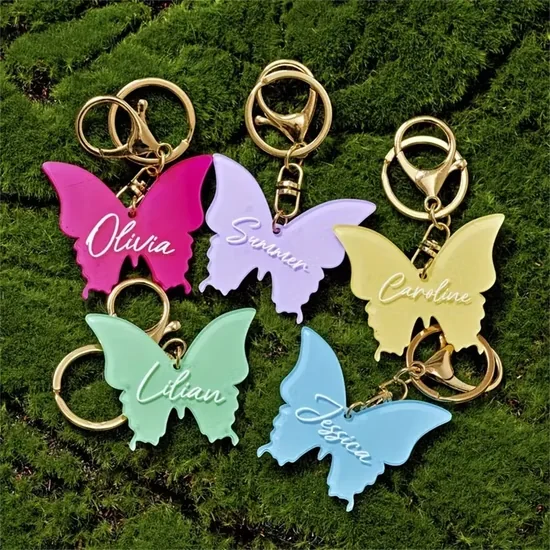
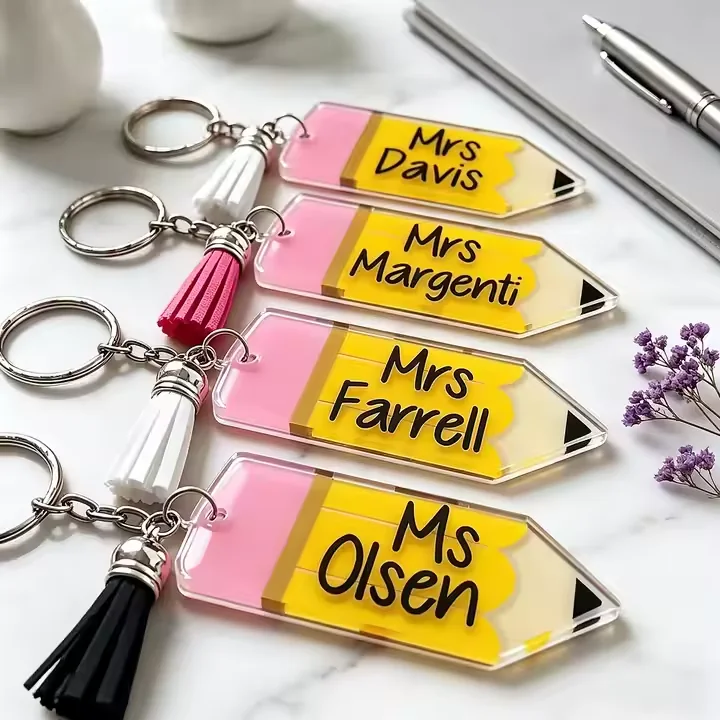
Acrylic is a rigid sheet plastic. The shape is cut, then artwork prints onto one or both flat faces, so photographs, gradients and illustration reproduce cleanly without moulding each colour. Tooling is usually simpler than a mould, which makes short runs of complex artwork attractive. The trade-off is the piece itself: acrylic stays flat and rigid, so you lose 3D depth and soft feel.
Ask your acrylic supplier to confirm five things in writing:
- Sheet thickness, and whether it suits the piece size without flexing
- Surface protection on both faces, and whether print sits under a coating
- Hole construction at the ring point, where a rigid material fails first
- Edge chipping after cutting, and how edges are finished
- Scratch testing results, with the method and acceptance criterion
We do not publish an acrylic keychain line, so we make no performance claim about it here. If acrylic fits your artwork and campaign, buy it from a supplier who makes it and can show that data.
How Does Each Material Fail?
"Which lasts longest" is the wrong question, because keychains fail in different ways. Compare the four that matter to your programme.
Scratch and surface wear. Acrylic scratches most visibly on a printed face. Metal plating wears at edges first. Soft PVC hides scuffs well, but thin raised detail flattens over time.
Flexibility. Soft PVC bends and returns. Metal deforms permanently under enough force. Acrylic does not bend, it cracks.
Hole and ring strength. A moulded PVC hole tears if the wall is thin. A rigid acrylic hole chips or splits. A cast or stamped metal hole is usually strongest.
Colour retention. Moulded PVC colour runs through the section rather than sitting on top. Printed acrylic and metal both depend on the coating over the print.
Ask for the test method, sample size and pass criterion behind any durability claim.
What Will It Actually Cost?
Your real cost has four parts. Buyers usually compare only the third.
Tooling. Our mould fee guide publishes a 2D PVC mould from USD 120, a 3D PVC mould at that fee plus about 30 percent, a zinc alloy mould from USD 100 and a silicone mould from USD 300. Treat these as indicative starting figures for simple constructions, excluding samples, plating, packaging, freight and duty. Size, detail and cavity count all move the number, and every shape needs its own tooling, though colour variants can run from one mould. That guide also publishes 12 months free storage, no mould fee on a reorder while the tool is stored, and free repair if a production mould is damaged in normal handling.
Minimum order. This depends on the process, the size and the number of designs in the run. Ask for a project-specific confirmation in writing rather than working from a published range.
Unit cost. Soft PVC lowest, metal highest, at comparable size and quantity. The gap widens with quantity.
Landed cost. Add sampling, tooling, setup, plating, packaging, inspection, freight, duty and an allowance for rejects. Ask every supplier to break those out, or you are comparing quotations describing different things.
Request two quantities on every quotation. The per-piece figure at 500 and at 2,000 tells you more than any range.
Hardware and Testing: Where Complaints Start
Treat split rings, chains and clasps as part of the tested product, not as accessories. Check them for sharp edges, closure, pull strength and coating, attached to the body rather than alone.
A pull test means something only when the specification names the ring gauge and diameter, the attachment construction, the test method, the sampling level and the pass criterion. Agree that protocol before sample approval. Use the custom keychain quality-control checklist to document the approved method and evidence.
Attachment options on our 2D PVC range include split rings, jump rings, lobster claws, swivel connectors, curb and link chains, beaded cord, cell phone string and keychain hooks. We do not publish wire gauges or ring diameters, so state your requirement.
Artwork Rights and Child-Directed Orders
Send artwork you have the right to use. You confirm you own or are licensed to use every logo, mark and character in your design. We may decline artwork that appears to use a protected character or third-party mark without authorisation, and our approval is a production check, not legal clearance.
If your keychain targets children, say so before quotation. Age grading, small parts, coatings, labelling and market testing can all apply, and they change the construction, not just the paperwork. Review the custom keychain compliance-document checklist before confirming the order scope.
This is general buyer information, not legal advice. Confirm product-safety and labelling requirements for your destination market, and importer obligations with your customs broker, before you order.
What to Send Us
- Your logo in vector format, or the highest resolution file you have
- Material preference, or a request for a recommendation
- Rough size, and whether you want 2D or 3D
- Quantity, plus a second quantity to compare
- Pantone references per colour, and your colour tolerance
- Ring, clasp or strap preference, and any plating requirement
- Intended user, including whether it targets children
- Destination market, ship-to city, Incoterm and required date
- Packaging preference, and whether you need a barcode
When the same artwork suits both soft PVC and metal, HuaSan Custom can quote both at the same size and quantity, so you compare tooling, unit price and finished weight side by side.
Get Your Logo Quoted
Send your artwork, your quantity and your intended use. Torn between two materials? Send both and compare real numbers instead of guessing.
Custom Keychains with Logo FAQs
Which material holds small text best?
Metal, through stamping or die casting with a crisp edge, and UV printing for very fine type. Moulded soft PVC needs each colour area to hold its own section, so small text closes up. Acrylic prints small text cleanly but stays flat.
Which material works for gradients and photographs?
Printed materials, not moulded ones. Acrylic and UV-printed metal reproduce continuous tone. Moulded soft PVC builds colour in discrete sections, so a gradient becomes visible steps. Send the file for review.
Do I pay the tooling fee again on a reorder?
Not while the mould is still in storage. The published term is 12 months free storage, after which the tool may be scrapped unless you arrange an extension. Confirm storage status before planning a reorder.
How many colours can a soft PVC keychain hold?
Up to 36, with Pantone matching. More colour sections mean more production time and a higher unit price.
What compliance documents can you provide?
That depends on your destination market, your intended user and your own protocol. State those three at quotation and we will confirm which material declarations, test reports and inspection records apply.