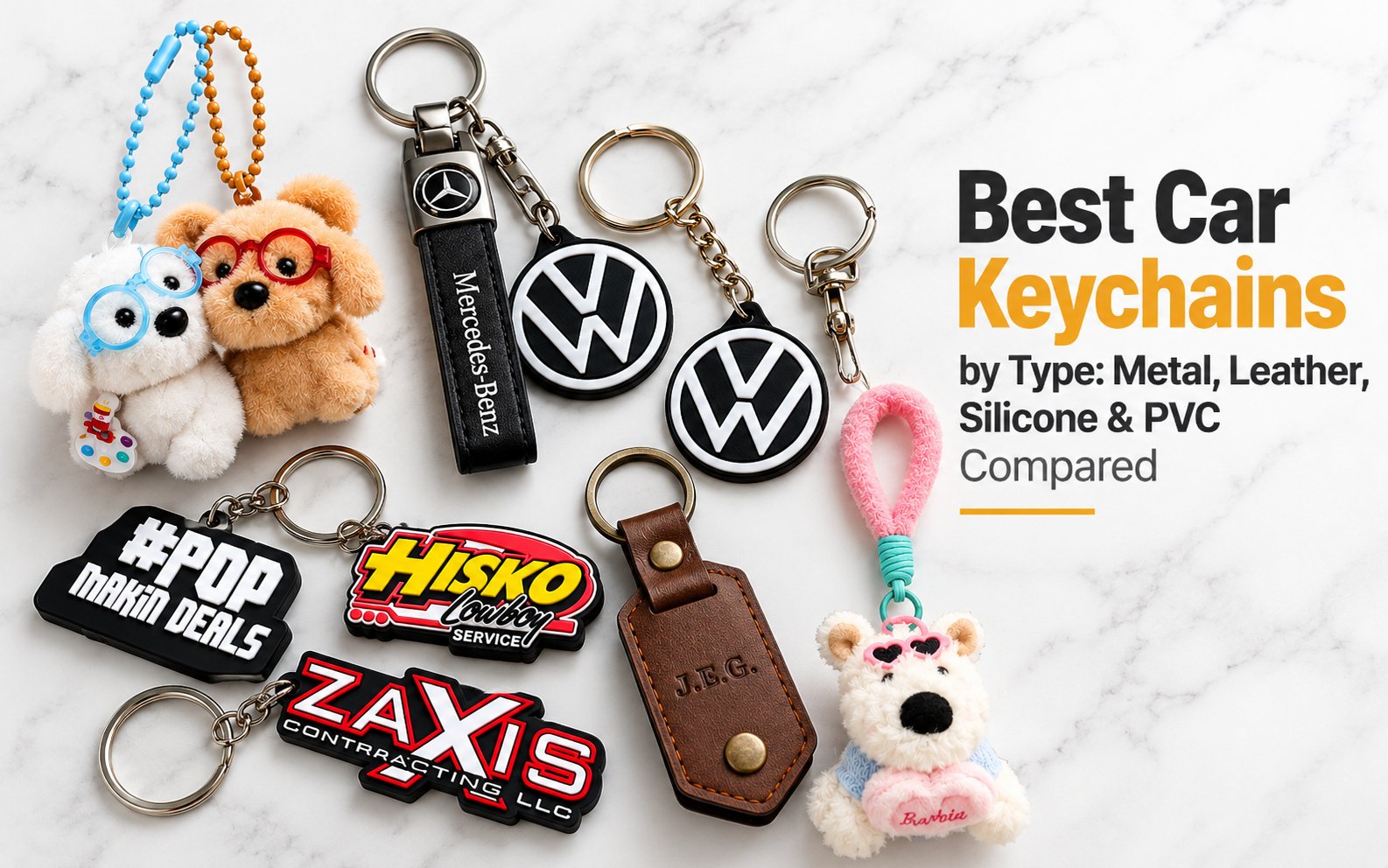
Your keychains are molded, trimmed, and packed. Now they have to clear customs.
Customs officers work from your paperwork, not your artwork. They want fast answers to five questions: material, use, origin, value, and importer. Answer all five consistently and your shipment moves. Leave one vague and it waits.
Requirements vary by destination, shipping mode, and value, and they change. This guide explains what to prepare and who typically prepares it. It is not customs or legal advice. Confirm current rules for your exact product and market with your broker before you ship.
Who Is Responsible for What
Confusing these roles is a common cause of avoidable delay.
| Task | Typically handled by | Note |
|---|---|---|
| Product spec and material breakdown | Your supplier | Confirm it matches the finished goods, not the quotation |
| HS code confirmation | Your broker or importer of record | Final declaration responsibility sits with the importer and its authorized representative, not the factory |
| Commercial invoice and packing list | Supplier, reviewed by you | Check every line before it ships |
| Transport document | Your forwarder | Issued once cargo is booked |
| Compliance documents | You, with your adviser | Market and product specific |
| Import entry and duty | You or your broker | Varies by market and Incoterm |
A supplier can provide specifications, packing data, and photographs, but cannot classify your goods or clear them through customs.
Describe Your Keychain the Way Customs Reads It
"Keychain" tells an officer almost nothing. "Gift item" tells them less. Write it like this: soft PVC keychain, 2D single-sided, 60mm, with split ring, packed in polybag.
Three details do most of the work.
Material. Soft PVC, zinc alloy, stainless iron, brass, fabric, silicone. Name it exactly. If the design mixes materials, list both and state which dominates by weight and value.
Hardware. A split ring, lobster clasp, ball chain, or carabiner changes the description. Metal hardware attached to a PVC body can affect how the whole item is classified.
Intended use. Promotional giveaway, retail sale, or corporate gift. Retail packaging brings in labeling rules that a plain bulk polybag does not.
Use the same wording on your invoice, packing list, and carton marks. Three documents describing the goods three different ways commonly draws questions.

What Decides Your HS Code
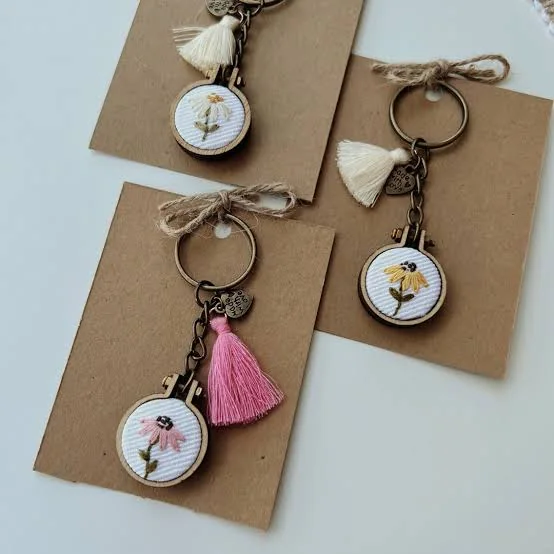
There is no single HS code for "keychains." Classification follows what the item is made of and how it is built, not what it is called.
A soft PVC keychain and a stainless steel keyring sit under different headings. Published customs rulings show this split: plastic key tags classified as articles of plastics, wire key rings and key holders of iron or steel under a base metal heading, each with its own duty rate. Mixed materials add another layer of judgment.
Two things to do about that:
Send your broker the full spec before production. Material, weight, hardware, packaging, and a photo.
Get the classification confirmed in writing. Your broker or importer of record makes that call for your destination market, and it can differ by country even for an identical product.
Ask your supplier for a written material breakdown and unit weight for every item on the order, so your broker has something to work from.
Documents That May Move With Your Cargo
Which documents you need depends on the destination, the value, and whether a preferential trade agreement applies. Not every shipment needs all of these, and requirements change, so confirm with your broker before you rely on this list.
| Document | Prepared by | When required | Verify |
|---|---|---|---|
| Commercial invoice | Supplier | Nearly every shipment | Description, quantity, price, value, currency, Incoterm, both parties. Undervaluing it creates a bigger problem than it solves. |
| Packing list | Supplier | Nearly every shipment | Pieces per polybag and carton, dimensions, net and gross weight, carton count |
| Bill of lading / air waybill | Forwarder | Once cargo is booked | Matches invoice and packing list exactly |
| Certificate of origin | Supplier or broker | Some destinations, or preferential rates | Whether your lane actually requires one |
| Test report or declaration | You, with a lab or adviser | Depends on market and materials | Whether it matches this product's actual construction |
Carton Marks and the Packing List
Agree these before packing starts. Reworking cartons at the port costs days.
Standard shipping marks usually carry the company name or code, destination port or city, carton number in a run (3 of 40), and PO number. Side marks add item description, quantity per carton, net and gross weight, and carton dimensions.
For keychains specifically, watch three things.
Carton weight. Keep cartons at a weight one person can lift. Overloaded cartons split in transit and slow inspection.
Mixed designs. If the order runs several designs, state whether each carton holds one design or an assortment, on the carton and again on the packing list.
Barcodes. Retail-bound keychains need the barcode confirmed and placed before mass production, not after.
Mark the Country of Origin on the Product
Cartons alone are often not enough. In the United States, imported articles generally must be marked with the country of origin in a conspicuous place, as legibly, indelibly, and permanently as reasonably allows, under rules administered by U.S. Customs and Border Protection. Other markets set their own rules.
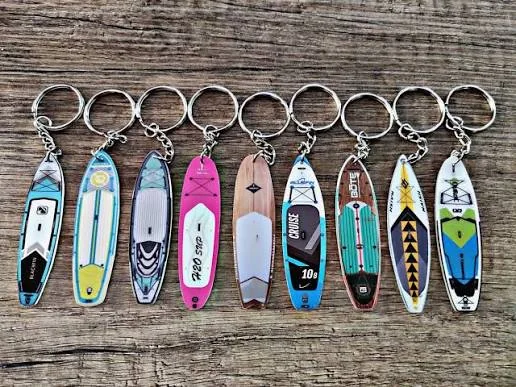
On a 50mm keychain, plan the marking at the mold stage. Each option changes your tooling:
Mold "Made in China" into the back of a PVC keychain
Stamp or engrave it on the reverse of a metal keychain
Print it on the backing card or hang tag, where the destination rules allow marking the packaging rather than the product
Decide this before the mold is cut, since adding origin marking later usually means a modification. Ask for confirmation of where the marking sits, shown on the sample before approval.
Pick the Freight Method That Fits Your Deadline
| Method | Best for | What to watch |
|---|---|---|
| Express courier | Samples, urgent small orders | Door to door, highest cost per kg, duties often billed after delivery |
| Air freight | Tight deadlines, mid-size orders | Cheaper than express, airport to airport, you arrange clearance |
| Sea LCL | Mid-size orders with time to spare | Shared container, low freight cost, budget for port charges |
| Sea FCL | Large or repeat orders | Best cost per piece at volume, you pay for the whole container |
| Rail to Europe | European buyers, between air and sea | Faster than sea, cheaper than air, schedules vary by route |
Depending on lane, carrier, and pack-out, volumetric weight can decide your air cost rather than actual weight, since keychains are small and light. A tight pack-out can keep a large PVC order affordable by air. Request an air and a sea quote side by side before assuming sea wins, since port fees, clearance, and inland trucking often narrow the gap. Tell your supplier your deadline early so the pack-out can be adjusted.
Agree Your Incoterm Before You Pay the Deposit
State the Incoterms® 2020 rule explicitly, because cost allocation and risk transfer are not the same point.
EXW. You take over at the factory door and arrange everything after, including export clearance.
FOB. Common on China orders. The seller delivers to the port and clears export; risk and most costs transfer once loaded. Sea and inland waterway only.
CIF. The seller covers sea freight and insurance to your port, but risk transfers earlier than delivery. You handle import clearance, duties, and inland delivery. Sea and inland waterway only.
DDP. The seller delivers duty paid. Confirm in writing which charges are included, who is importer of record, and whether that suits your destination's local tax rules, with your forwarder or broker.
A quote is not comparable until you know the Incoterms rule behind it. FOB Shenzhen and DDP New York aren't the same number.
Confirm Destination Requirements Before Production Starts
Every market sets its own rules for the finished product, not just the paperwork. Confirm these with your compliance team or broker before you approve the sample.
Age grading, and children's product rules in that market
Restricted substance limits, and which test reports your destination expects
Product and retail-pack labeling, including local responsible-party contact details
Import licensing or registration, if required
A labeling requirement found after 20,000 pieces are packed means relabeling, and delay.
Low-Value Shipments Cost More Than They Used To
Rules on low-value imports have tightened in several markets and keep changing, so confirm the current position with your broker before shipping, especially for samples.
In the United States, the administrative exemption for merchandise valued at $800 or less was suspended, effective 24 June 2026, for goods arriving through all modes other than the international postal network, under a separate rule covering postal shipments too. Shipments that once qualified generally need a standard entry instead. This is a fast-moving area, so verify the current rule before every low-value shipment, not just your first.
In practice, budget duty and clearance costs into sample shipments as well as bulk orders, and expect more paperwork on small parcels, not less.
Pre-Shipment Checklist
Share this with your supplier, buyer, and forwarder.
Before production: material and construction confirmed in writing; origin marking built into the mold; destination compliance documents confirmed with your broker.
At sample approval: origin marking legible on the sample; quality-control checkpoints agreed; barcode placement approved, if retail-bound; golden sample retained as reference.
Before shipment: product checked against the golden sample; carton count, marks, and weights match the packing list; cartons and marks photographed before loading.
Before clearance: invoice, packing list, and carton marks match; HS code confirmed in writing; Incoterm, importer of record, and low-value entry status confirmed.
Send This and You'll Get an Accurate Quote
Provide these six things for a shipping-inclusive quote on the first pass.
Artwork. Vector file, Pantone codes, and any text that must appear on the product.
Specification. Material, size, thickness, hardware type, single or double sided.
Quantity and design split. Total pieces, and how many of each design.
Packaging. Bulk polybag, individual polybag, backing card, or full retail pack, with barcode requirements.
Destination. City, port or airport, and target arrival date.
Incoterm. EXW, FOB, CIF, or DDP.
You should get back a unit price, a pack-out plan, a freight estimate, and a production and shipping timeline.
HuaSan Custom can provide material descriptions, packing data, commercial invoices, and packing photos, and coordinate with your forwarder under the agreed trade term. HS classification, duty, and import compliance stay subject to confirmation by you and your professional representatives.
Send your artwork, quantity, destination, and target date to start.
International Keychain Shipping and Customs FAQs
Do you handle shipping, or do I arrange it myself?
Both work. Tell your supplier the Incoterms rule you want. On FOB, the seller delivers to the port and clears export, then your forwarder takes over. On DDP, get in writing what the price covers and who is named importer of record.
What HS code should I use for my keychains?
There is no universal keychain code. Classification follows material and construction, confirmed by your broker or importer of record for your destination. A supplier can provide the material breakdown, weight, and photos needed, but cannot make the classification decision.
How long does shipping add to my lead time?
It depends on lane, carrier, and season. Express runs a few days, air adds transit plus clearance, and sea varies by lane. Chinese New Year compresses capacity industry-wide, so book early if your delivery lands near it.
Can you print my barcode and label the retail packs?
A supplier can print and place barcodes and labels once you approve the file. Confirm the number, symbology, and artwork before mass production, since adding labels after packing costs more.