Custom fridge magnets get made from six common materials, and the one you pick shapes your cost, your look, and how the product feels in a customer’s hand. If you’re new to sourcing them, this guide introduces all six in plain terms so you can shortlist two or three before you ask anyone for a price.
Start with five questions, in this order:
- Where does the magnet end up? A trade-show giveaway, a retail souvenir, a corporate gift, and a hotel welcome item usually suit different materials.
- What does your design need? A moulded 3D shape, fine printed detail, and a flat printed sheet are different production routes.
- How many do you need? Quantity affects which material makes sense — see the cost-factors guide for how tooling and volume interact.
- What surface must it hold onto? Weight and door material both matter.
- Who’s the end user, and where does it ship? Compliance, packaging, and timeline follow from that — the supplier checklist covers what to confirm.
Soft PVC
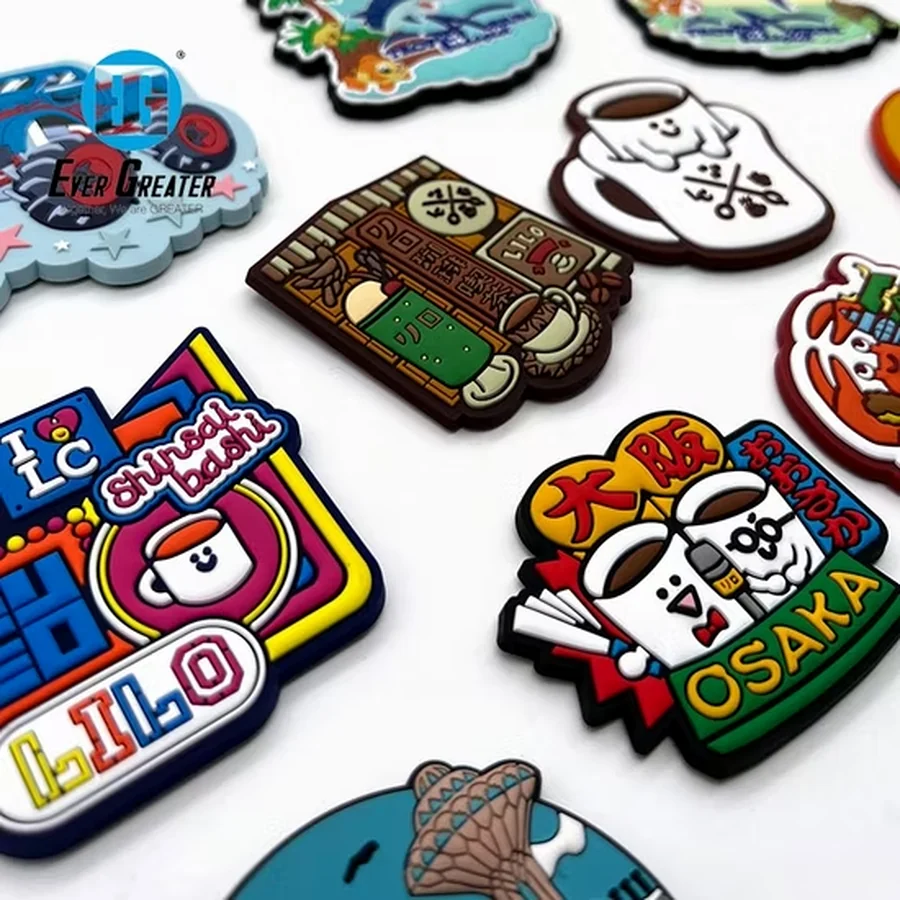
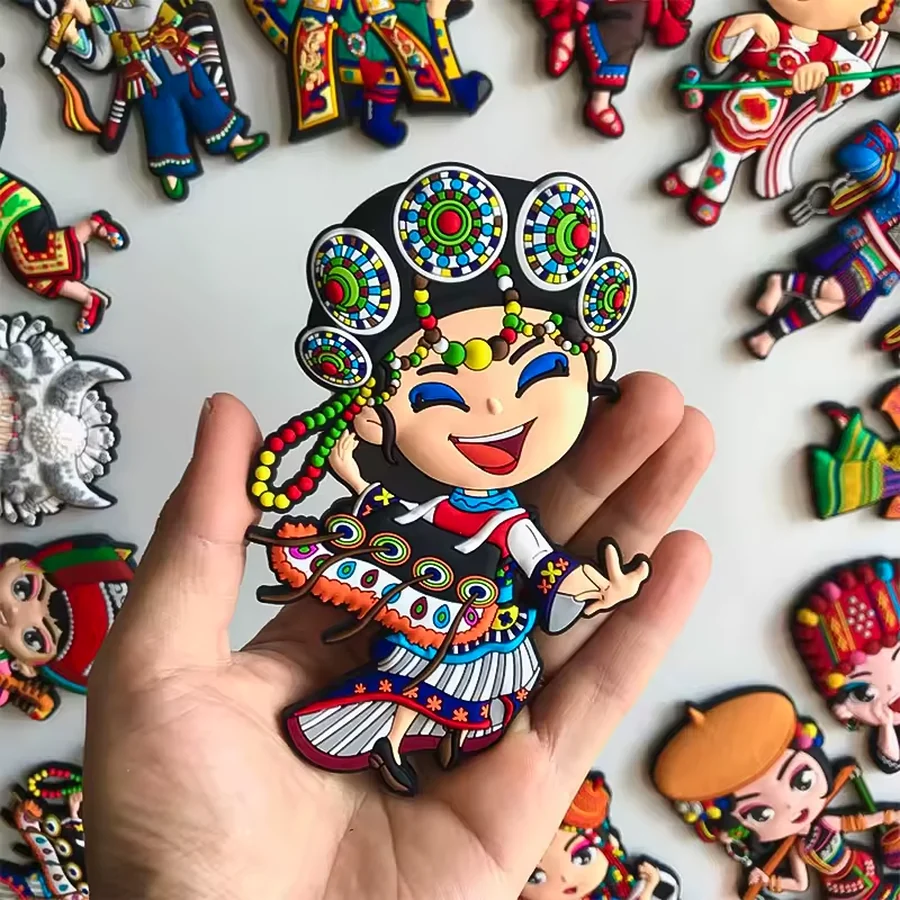
Factories mould soft PVC into shape, so it handles custom outlines well — characters, buildings, food shapes, mascots. It feels slightly rubbery and soft, and it generally holds up against drops, moisture, and everyday kitchen conditions.
It suits bold artwork better than fine detail: thin lines and small text can lose definition in a soft mould. Because each new outline needs its own mould, it tends to work best when you’re ordering in quantity.
One caution: don’t select soft PVC for children’s use based on softness alone. The complete product, including any separable magnet, needs assessing against your destination market’s requirements — the supplier checklist covers what to ask for and confirm.
Metal
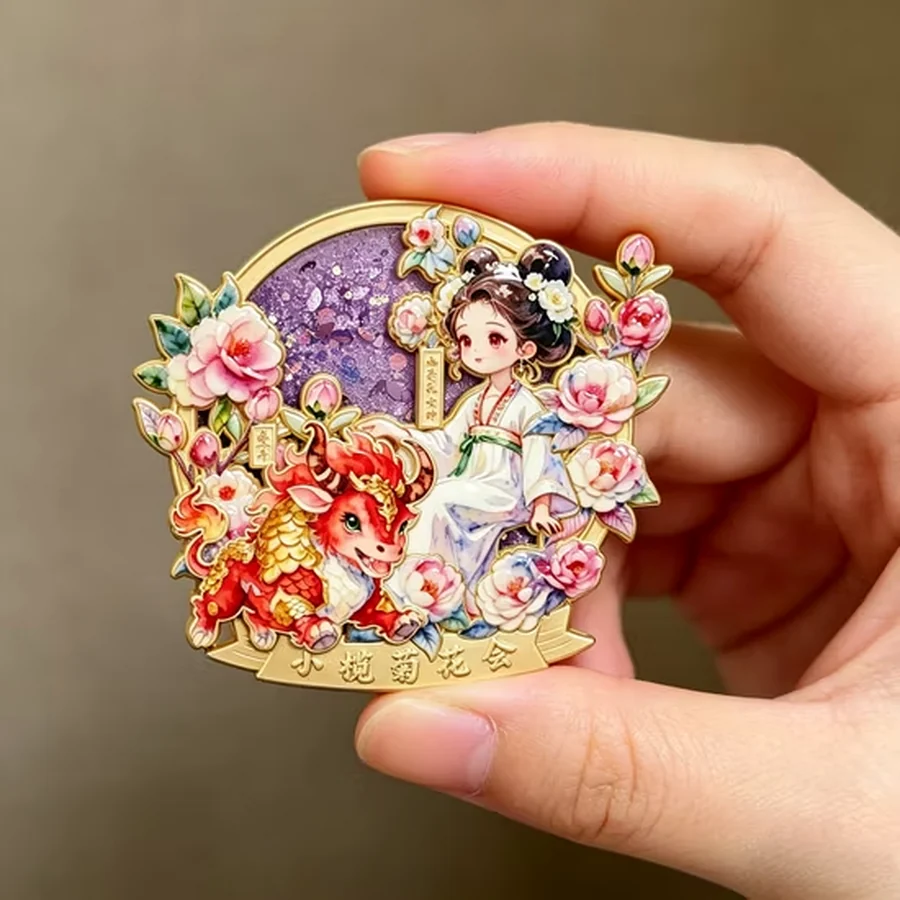
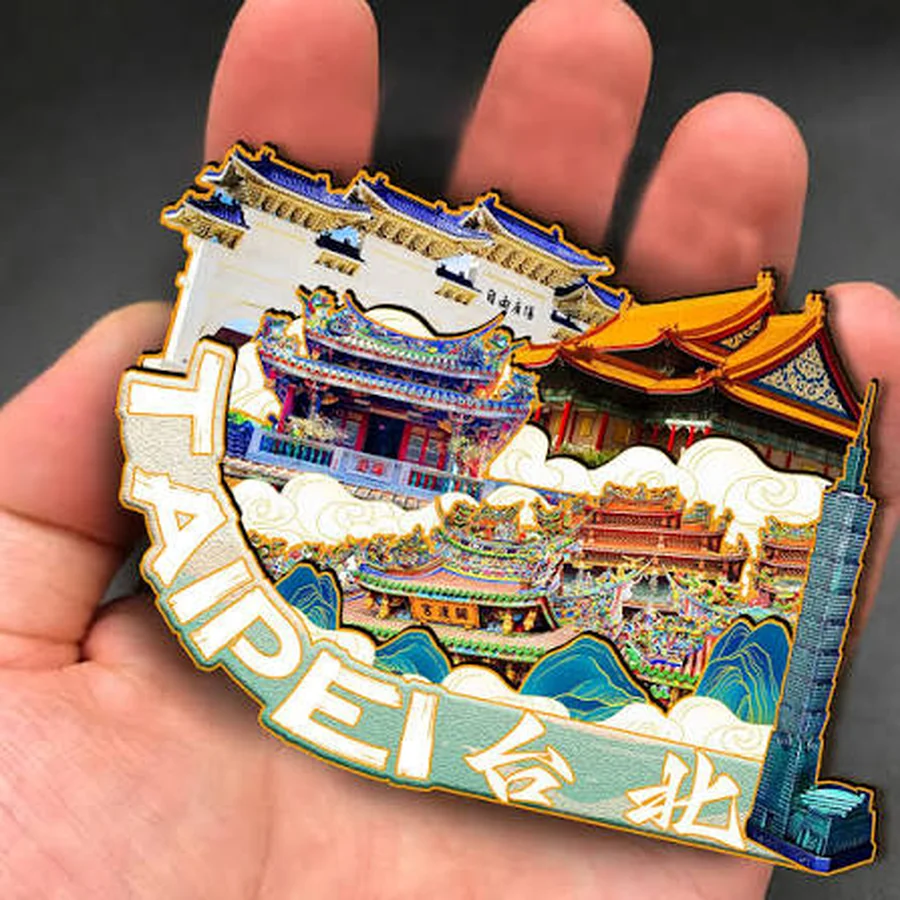
Metal reads as the most substantial of the six in hand — cold, solid, and generally perceived as a higher-value item. It’s produced through a few different routes, including die-cast zinc alloy with enamel fill, stamped or etched sheet metal, and printed metal, each with its own cost and finish characteristics.
It gives sharp edges and crisp logo reproduction, with plating options like gold, silver, black nickel, and rose gold. Because a metal piece is heavier, the magnetic backing has to match that weight or the magnet slides. Our custom metal products page shows the base metals and plating finishes available.
Acrylic
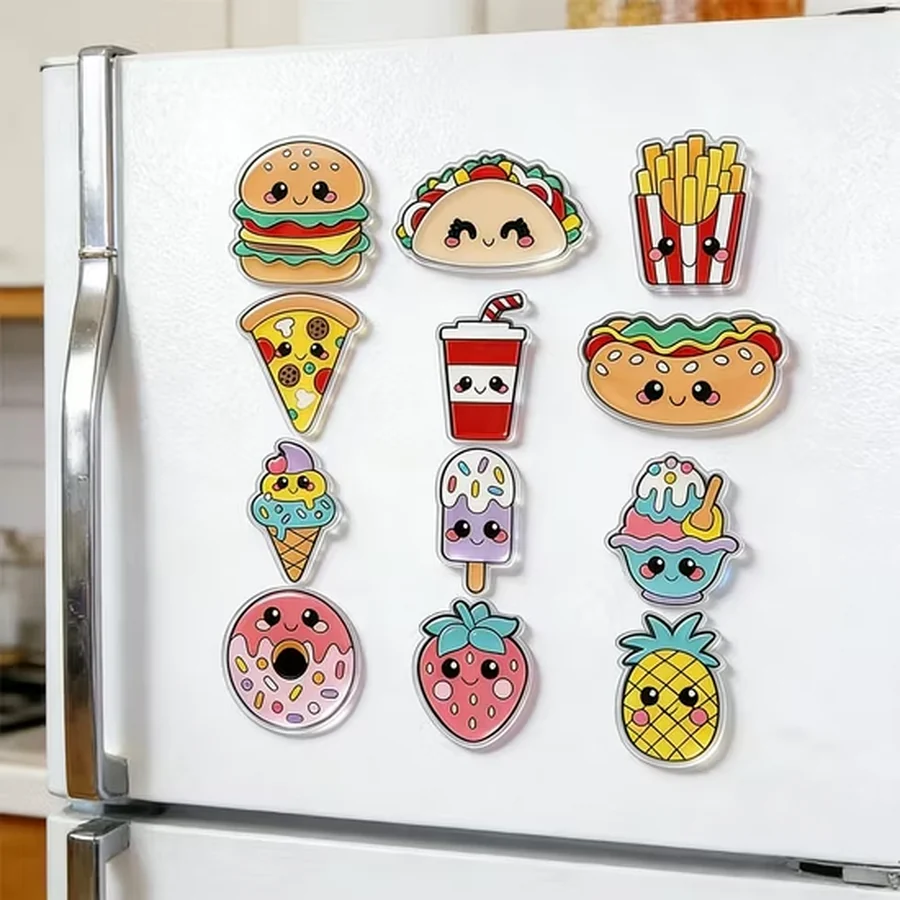
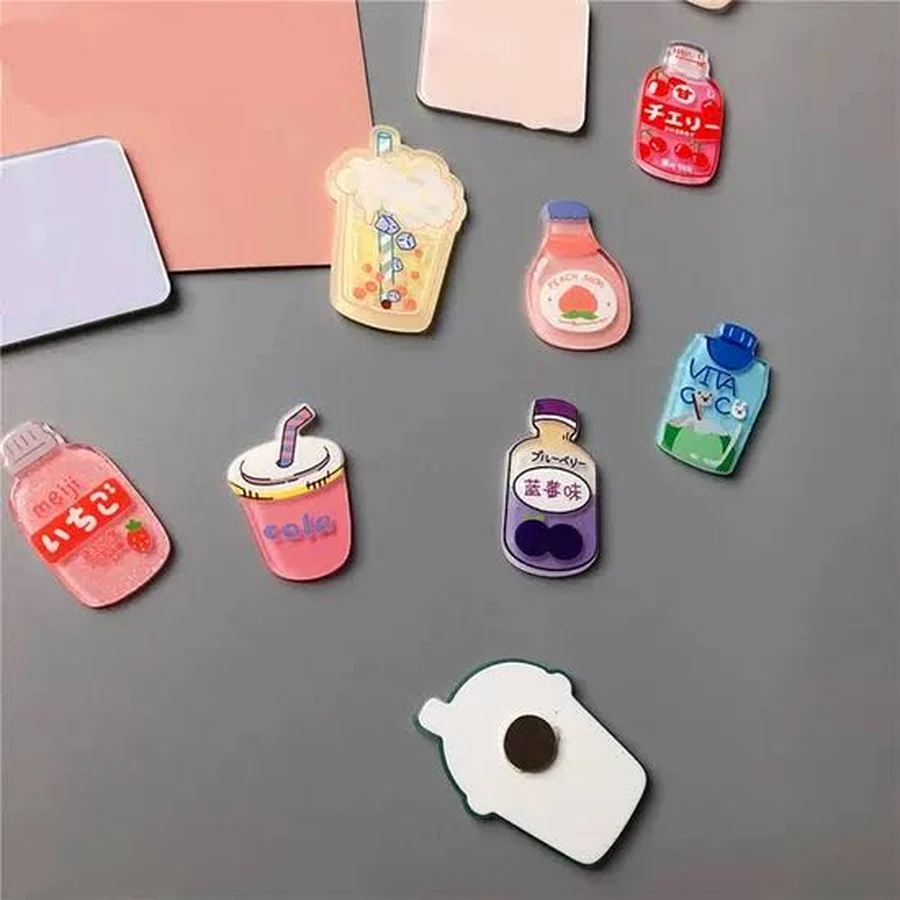
Acrylic is cut to shape and printed rather than moulded, which means simpler designs often skip a mould entirely. That makes it a common starting point for small runs and first orders.
It handles full-colour artwork, photographs, and gradients well, and it’s the only one of the six that offers genuine transparency — clear panels, frosted effects, layered graphics. It scratches more easily than metal, and thin sections can crack, so confirm thickness and check the cut edges on your sample.
For a detailed head-to-head comparison of these three materials, see PVC vs. Metal vs. Acrylic Fridge Magnets.
Resin
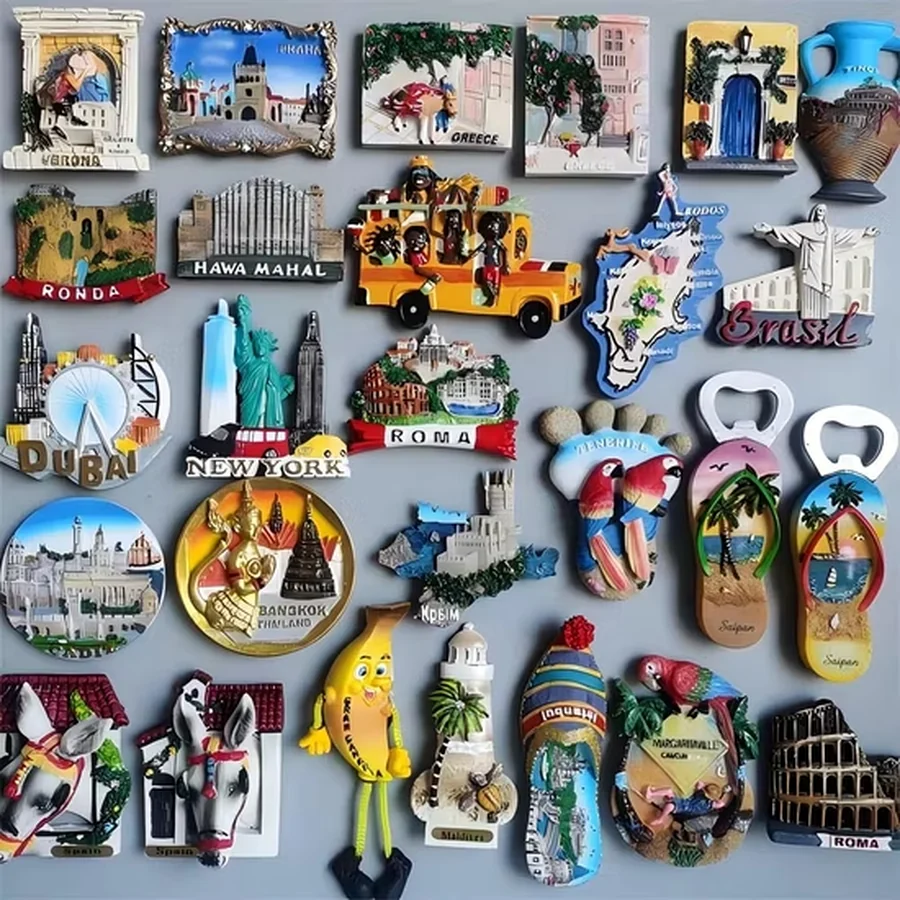
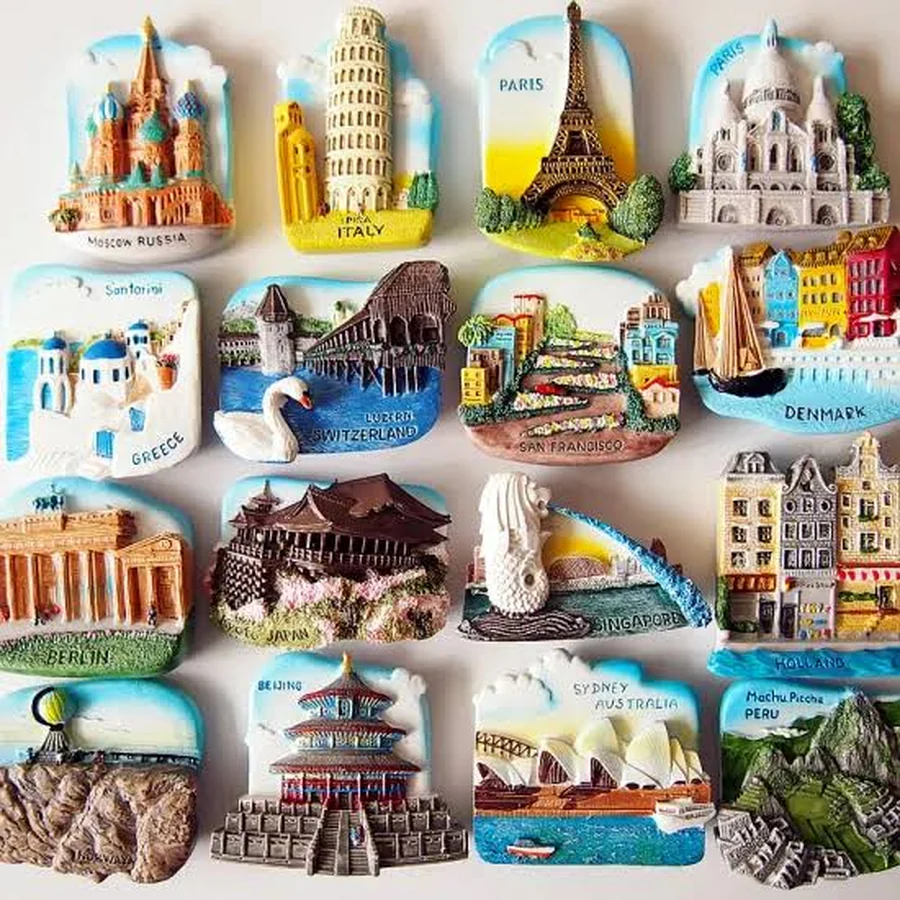
Resin captures detail that a soft mould generally can’t — fine architectural lines, small facial features, layered textures. Manufacturers cast it in a mould and then finish details by hand or through additional processes, and the amount of that hand-work varies by supplier and design.
It feels hard, smooth, and slightly glossy, closer to a collectible than a giveaway. That finishing labour is usually what drives the price: because a person spends similar time on each piece, the unit cost tends to drop less sharply with volume than a simpler moulded material.
Resin is hard but can be brittle — a drop onto a hard floor can chip it — and hand-finished surfaces may wear differently from moulded-in colour. Ask how much of your specific design is hand-finished versus moulded, since that affects both price and how consistent the batch looks. Request photos from your actual production run, not only the approved sample.
Resin commonly suits tourist attractions, museums, and gift shops, where detail justifies a real retail price.
Wood
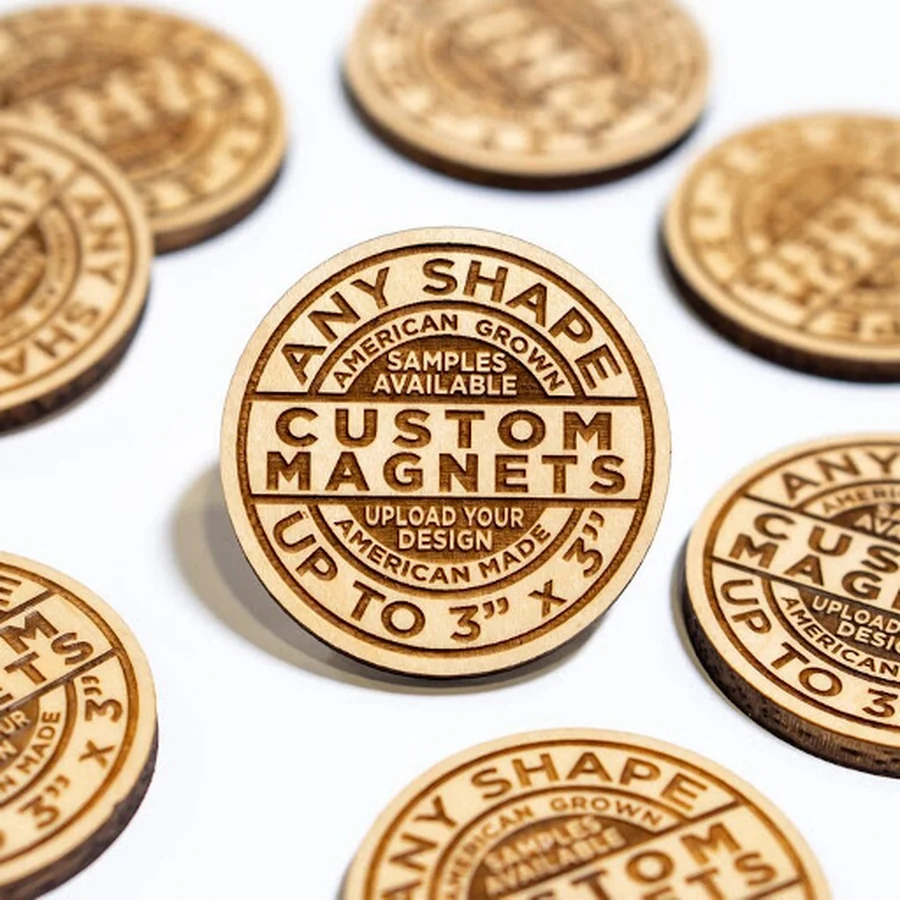
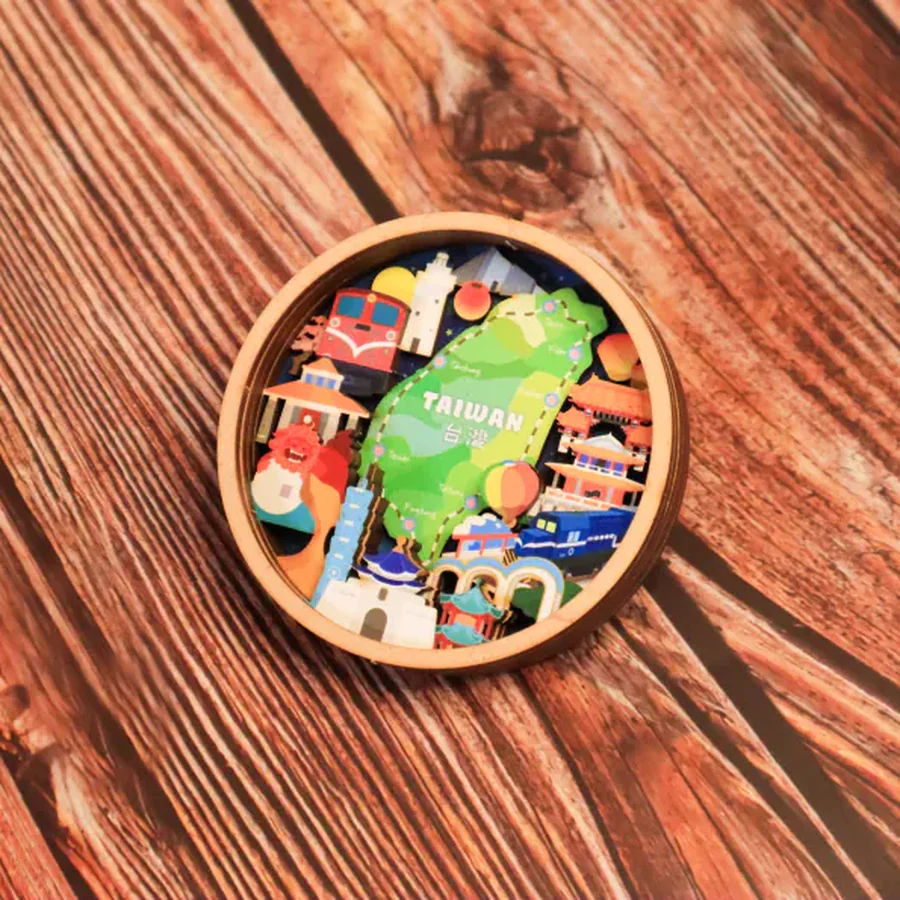
Wood gives a warm, natural look that some buyers specifically request. A natural appearance on its own doesn’t establish a lower environmental impact, though — the actual footprint depends on the timber source, any chain-of-custody certification, the adhesives and coatings used, the magnet component, packaging, and transport. If sustainability is part of your brand story, ask for verifiable sourcing documentation, and use a specific certification claim like FSC only when you can show valid supporting paperwork.
Grain varies from piece to piece. Some buyers value that; others read it as inconsistency, so set expectations with your own client before production.
Laser engraving is typically less expensive than full-colour UV printing on wood. Wood generally handles normal indoor use but doesn’t hold up well to sustained moisture, so ask about a sealed finish if your order ships to a humid or coastal market.
Flexible Magnetic Sheet
Also called magnetic rubber, this is the flat, flexible sheet material common on delivery and business-card magnets. The sheet itself is magnetic — often ferrite-loaded — rather than a separate magnet glued to the back of a printed piece.
It’s thin and flexible, with a matte or glossy finish depending on the print lamination. Because the route typically skips both mould and assembly — print, cut, ship — it’s generally among the lower-cost options at volume, though the exact price still depends on size, print complexity, and quantity.
It holds up well for typical fridge use, but folding creases it permanently, and an unlaminated printed surface can scratch. Holding performance depends on sheet thickness, magnetic pole pitch, total contact area, and the target surface: a large, thin sheet on a textured or stainless door is more likely to slip than the same sheet on smooth steel. Test your actual size against your actual target surface before committing to a production run.
The Six at a Glance
| Material | Made By | Feel | Commonly Suits |
|---|---|---|---|
| Soft PVC | Moulding | Soft, rubbery | Custom 3D shapes, tourist and family retail |
| Metal | Die-casting, stamping, or printing | Solid, premium | Corporate gifts, premium retail |
| Acrylic | Cutting and printing | Light, glassy, modern | Full-colour art, small runs, first orders |
| Resin | Casting plus hand-finishing | Hard, detailed | Museums, attractions, detailed artwork |
| Wood | Cutting plus engraving or printing | Warm, natural, varied | Sustainability-focused positioning |
| Flexible magnetic sheet | Printing and die-cutting | Thin, flexible | Large promotional runs |
This table is for shortlisting only. Relative cost and durability shift with size, thickness, finish, magnet construction, and quantity — request quotes against the same drawing before comparing numbers.
Before You Order
- Test before you commit to a mould. Proving a design in a no-mould material first is generally lower-risk than tooling up on an untested shape. For how tooling cost behaves across quantities, see the cost-factors guide.
- Match the magnetic backing to the finished weight and target surface, not just to the front design.
- Approve colour from a physical sample, never a screen. Standard plating finishes like gold or rose gold generally can’t be Pantone-matched, since plating comes from a fixed set of finishes rather than mixed ink.
- Confirm compliance and inspection terms in writing before production. The supplier checklist sets out what to ask for.
- Match the material to your buyer’s price point, not only your budget.
Typical Fit by Scenario
- Tourist attractions and souvenir shops: resin for detail, PVC for character shapes, wood for eco-conscious buyers.
- Corporate gifting: metal, generally read as the highest-value option in hand.
- Trade shows and mass promotion: flexible magnetic sheet or PVC, for volume economics.
- Retail and modern design brands: acrylic, for full-colour printing without a tooling commitment.
- Museums and cultural institutions: resin, where craftsmanship justifies the price.
Confirm holding performance, compliance, and packaging for your own project regardless of category — this is a starting shortlist, not a final spec.
Request a Quote
Share your artwork or a rough sketch, approximate size, quantity (or a range), where the magnet will be sold or used, any material preference, and your target cost and deadline. You’ll get a material shortlist and a quote back for comparison.
Fridge Magnet Material FAQs
Which materials need a mould?
Moulded soft PVC, cast resin, and die-cast metal generally do. Acrylic, wood, and flexible magnetic sheet are usually cut or printed instead — though complex shapes can still carry a setup charge. The cost-factors guide explains how that cost behaves.
PVC or resin for a souvenir magnet?
Bold shapes and flat colour blocks suit PVC. Fine detail — small faces, layered texture — needs resin, which usually costs more per piece because of the extra finishing work.
Does wood hold up in humid climates?
Untreated wood can absorb moisture and warp. Ask about a sealed finish if your order ships somewhere tropical or coastal, and flag the destination when you request a quote.
Which material feels most premium?
Metal, largely because of its weight — though design and packaging affect perception too. For how the three most-compared materials differ in practice, see PVC vs. Metal vs. Acrylic.
What magnet strength do you need?
It depends on the finished piece’s weight and the surface it must hold. Ask your supplier to spec the backing to your piece and test it before approving production — the supplier checklist covers how to define that test.
Can you print photographs on a fridge magnet?
Generally yes on acrylic, which handles photographic detail and gradients well. Moulded PVC and enamel-filled metal typically work in defined colour areas instead.