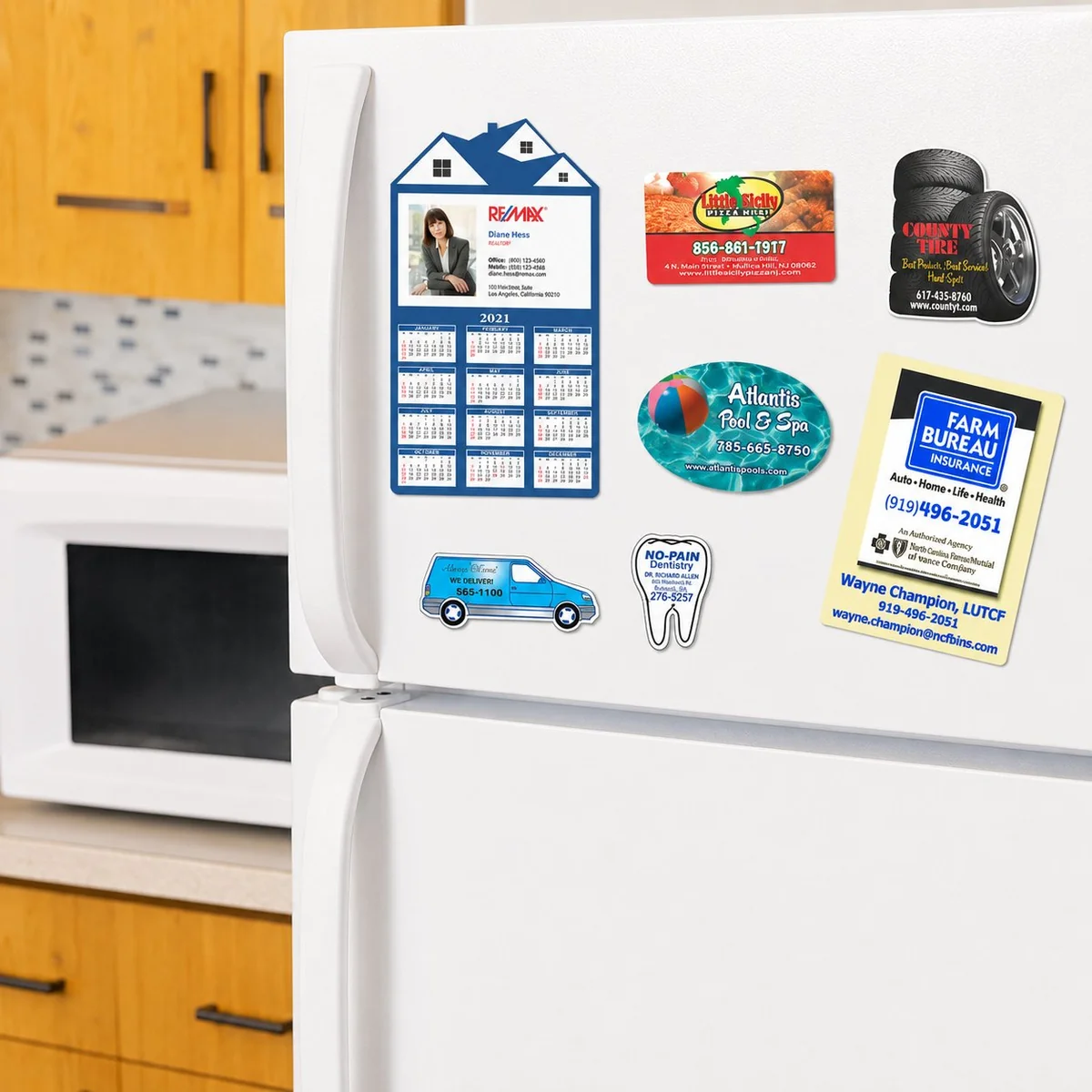
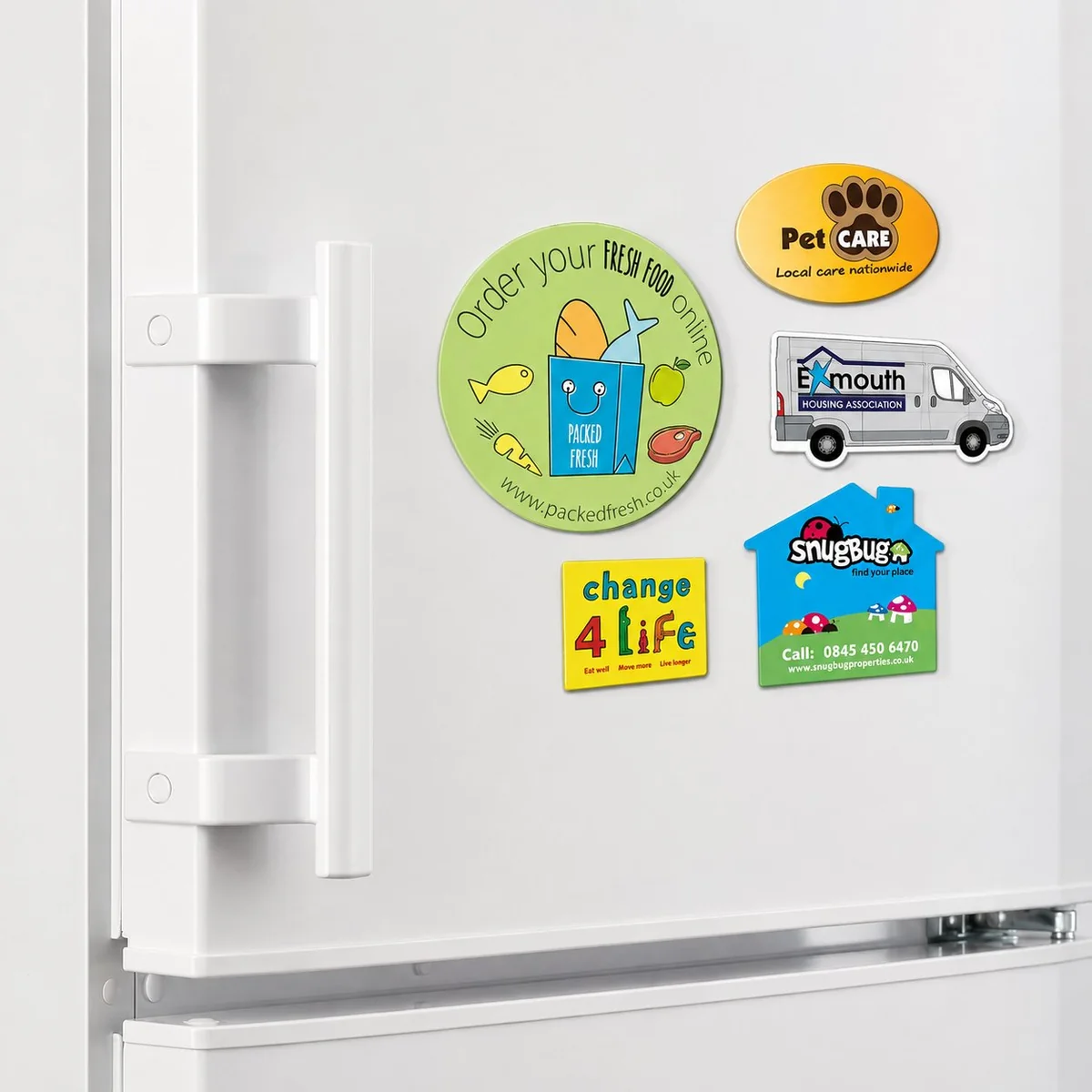
A custom fridge magnet works as marketing because it earns a spot on a surface people look at every day, instead of getting filed, binned or forgotten like most handouts. That’s the entire case for using one: a flyer competes for a few seconds of attention before it’s thrown away, a business card sits in a drawer, but a magnet stays on the door where someone sees it again and again. If you’re weighing custom magnets against another giveaway for your business, here’s how different industries actually use them, and what to think through before you order.
Real Estate: Turning a Listing Touchpoint Into Something a Client Keeps
Agents hand out a lot of paper that gets thrown away the same day – an open house flyer, a listing sheet, a business card. A magnet printed with your contact details, and often something genuinely useful like an emergency-numbers list or a small local-area map, survives that first day because the recipient has a reason to keep it rather than toss it.
This works especially well as a closing gift or an open-house takeaway, since the moment someone remembers your name is usually the moment they, or someone they know, needs an agent again. Put your name and number where a homeowner already looks daily, and you’re the contact they reach for instead of searching for one.
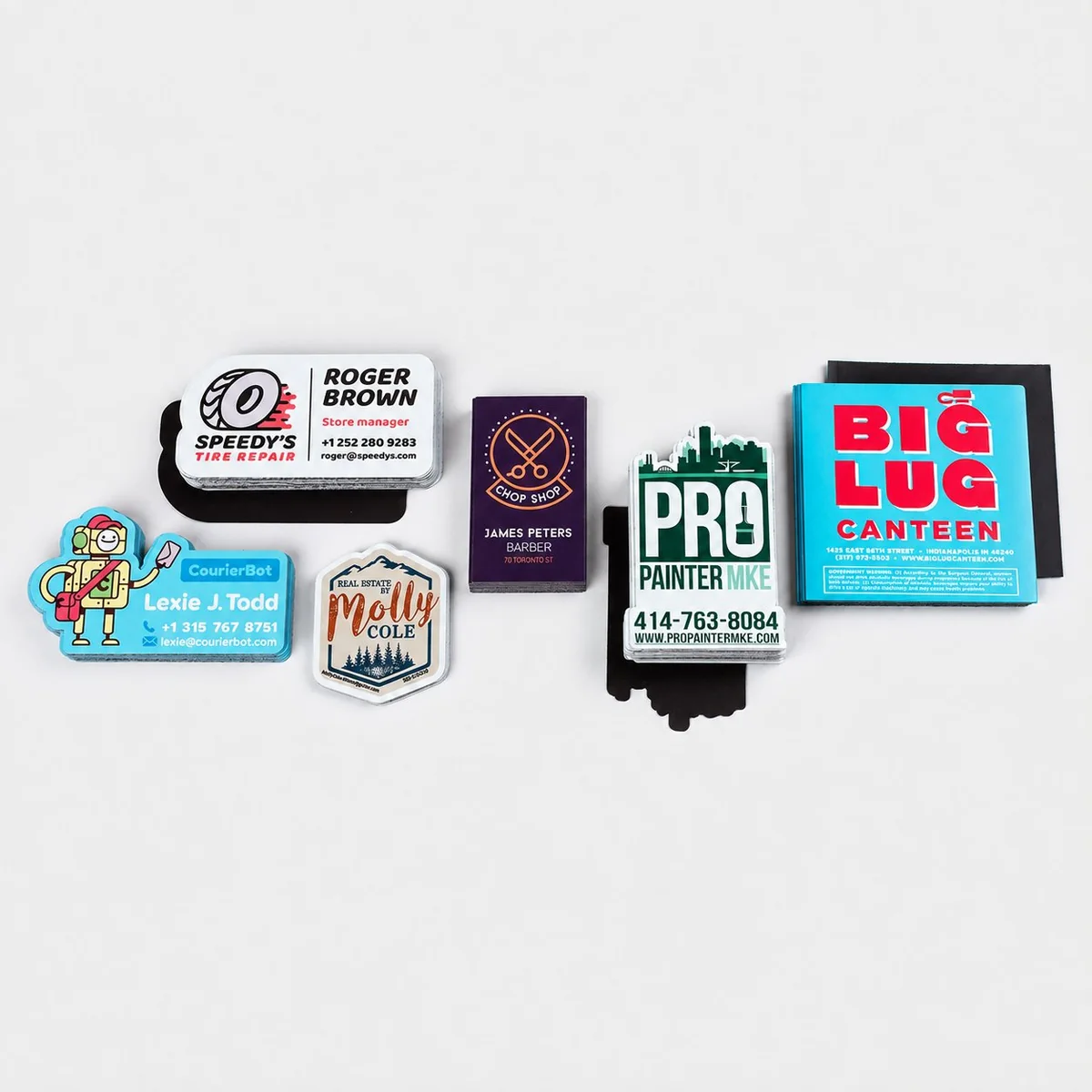
The format that works best here is close to a business card, roughly 2 x 3.5 inches (about 51 x 89mm) – the size magnets.com lists as its standard realtor contact-card magnet, a useful reference point rather than a fixed industry standard. That size is small enough to order cheaply in bulk and still holds your name, number and a one-line reason to keep it without looking cluttered.
Restaurants and Food Businesses: A Menu That Lives Where the Decision Gets Made
The kitchen is where “what should we order tonight” actually gets decided, and a fridge magnet with your delivery number or a QR code to your menu is sitting right there when that conversation happens. Compare that to a paper menu that arrived in the mail once and is probably already gone.
Restaurants commonly use these for delivery and takeout numbers, a short seasonal menu highlight, or a loyalty program reminder. The format works because it’s not asking for attention the way an ad does. It’s just present, in the room, at the exact moment someone’s deciding where dinner comes from.
Because a menu magnet needs to carry more text than a contact card, restaurants typically size it at 4 x 6 inches (about 102 x 152mm), a calendar and menu format magnets.com lists among its standard sizes – again as a reference point rather than a fixed standard – large enough for a delivery number, hours and a short highlight without shrinking the text to the point it’s hard to read from across the kitchen.
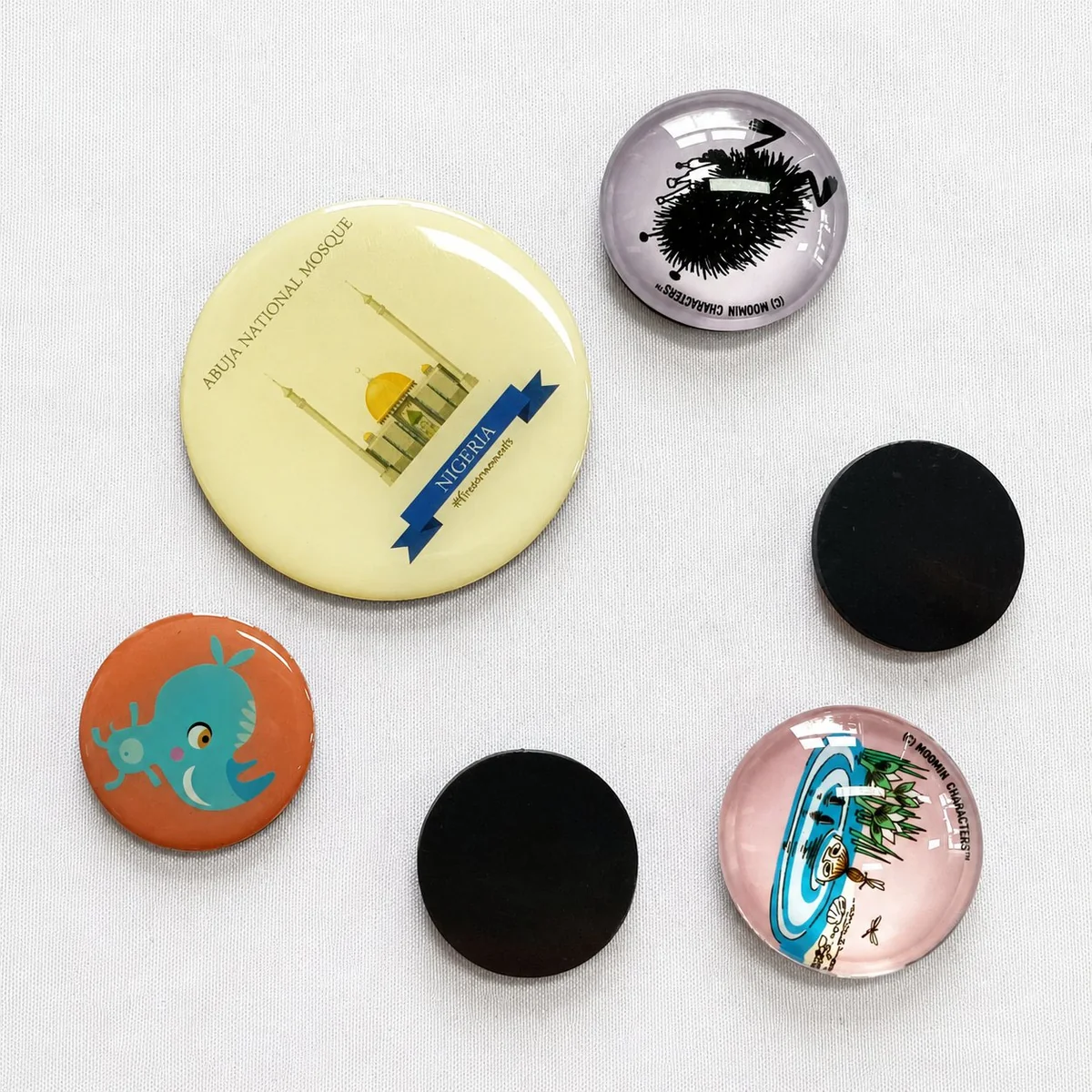
Schools: Calendars, Fundraisers and Spirit Items Parents Actually Use
Schools and parent organizations use custom magnets two ways: as a practical tool – a sports schedule, a school-year calendar, an emergency contact list for the front office – and as a small fundraising or spirit-wear item sold or given out at events. Both work for the same reason: parents need this information visible at home, and a magnet on the fridge is where household schedules already live.
A booster club or PTA selling custom magnets at a set price point is also a straightforward, low-overhead fundraiser compared to organizing an event, since the product itself does the reminding for you every time someone checks the calendar.
Trade Shows and Exhibitions: A Giveaway That Doesn’t Get Left at the Airport
Most booth giveaways – a flyer, a brochure, a pen – don’t survive the trip home. A custom magnet does, because once someone puts it on their fridge it keeps doing its job weeks after the show ends, which a piece of paper in a conference bag never does.
If you’re deciding what to hand out at your next booth, think about what happens to the item 48 hours later. A brochure is recycled. A magnet with your logo and a QR code to your catalog is still on someone’s fridge, still visible, still doing the job you paid for it to do.
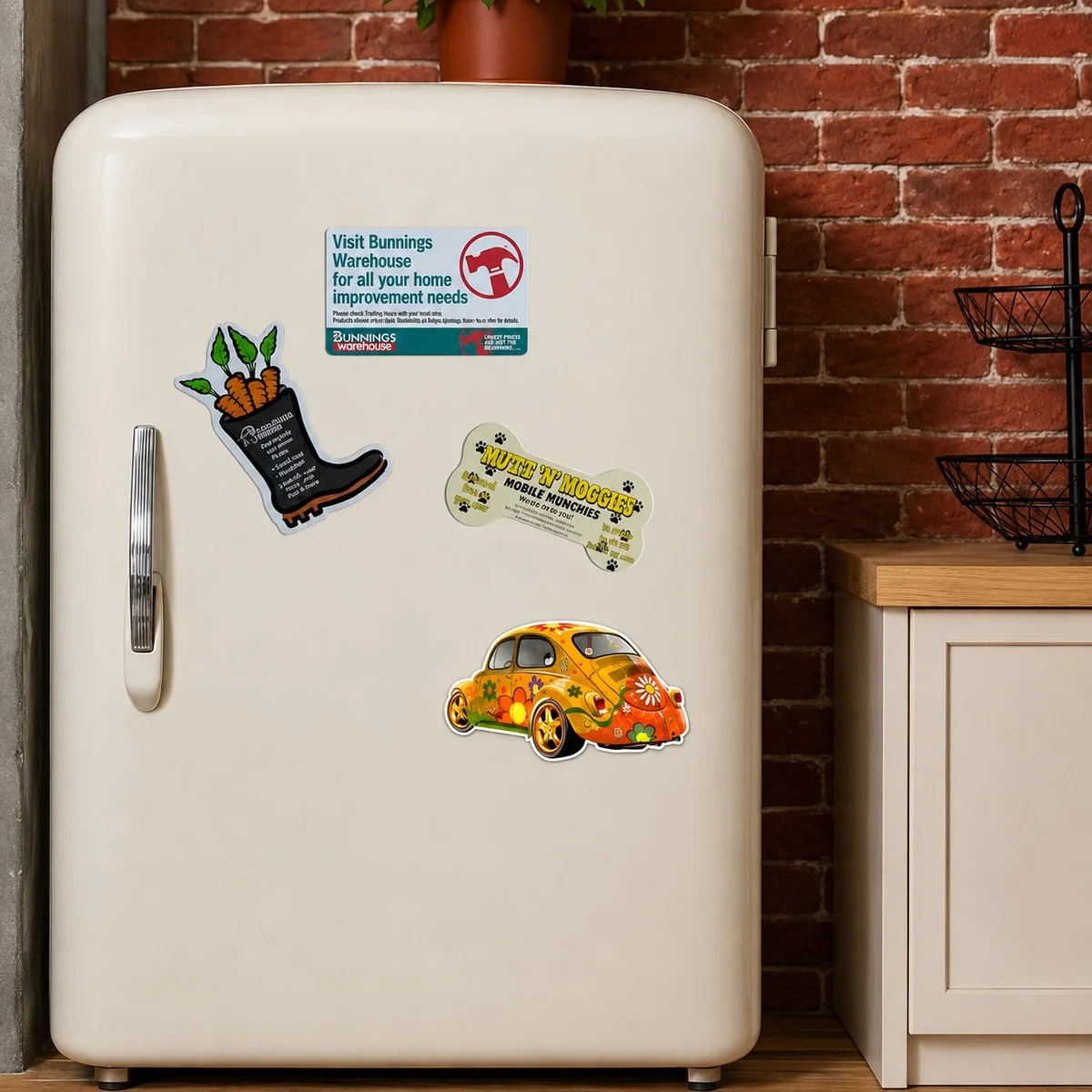
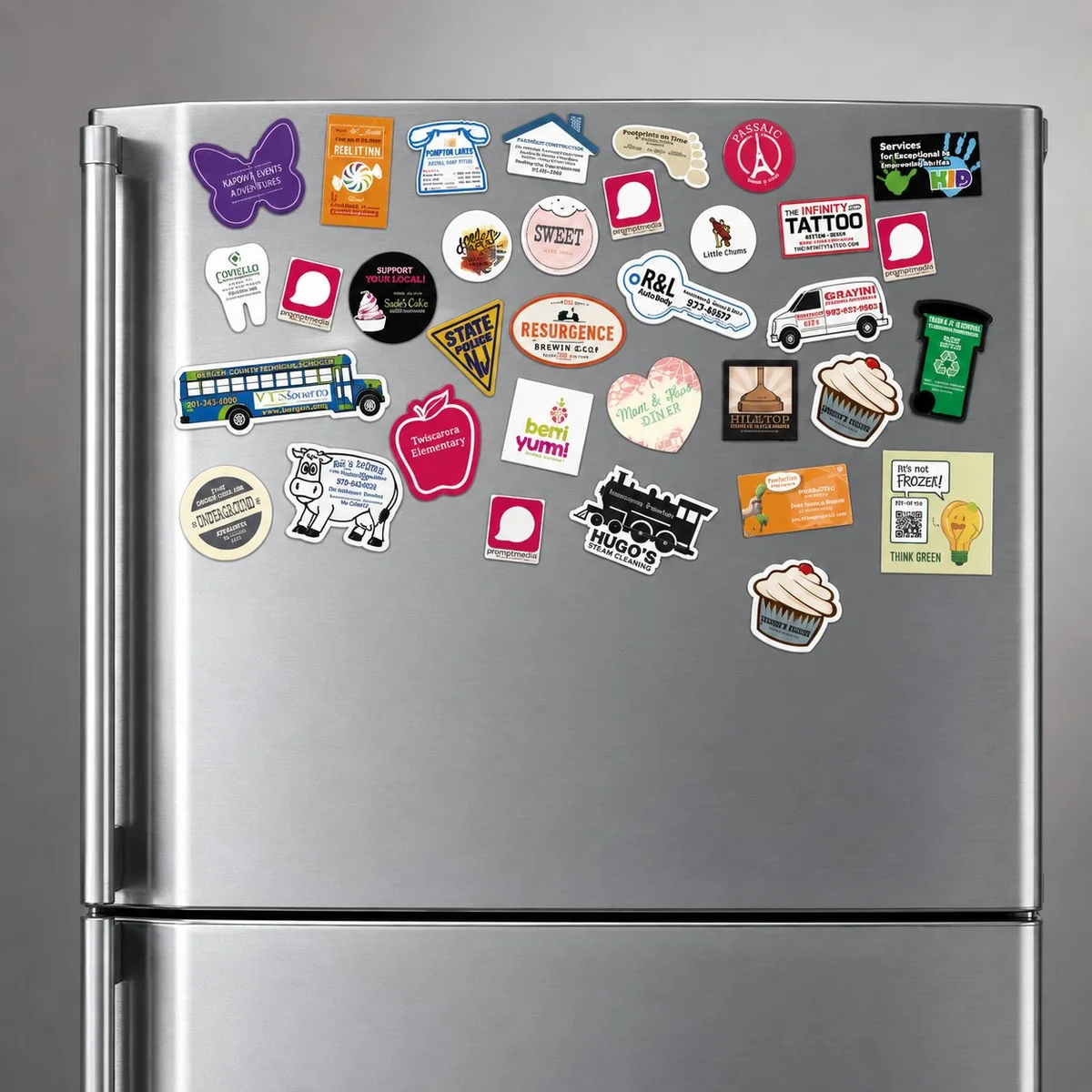
Choosing the Right Format for Your Scenario
The scenarios above call for different formats, not one standard magnet. A real estate agent’s contact magnet is usually small, simple and printed in bulk cheaply. A restaurant’s menu magnet often needs more surface area for text. A school fundraiser item might lean into a more decorative, collectible design people want to display rather than just use. A trade show giveaway needs your branding to read clearly at a glance, since nobody studies a booth giveaway closely in the moment they receive it.
Matching format to scenario comes down to the same material and finish decisions covered in how to choose the right material for custom fridge magnets, and quantities for these scenarios vary widely too – a single open house needs a small run, a district-wide school fundraiser needs a large one – so check how minimum order quantities and lead time work by material in the MOQ, sampling and production lead time guide before you commit to a quantity.
Whatever size you land on, leave the design pitfalls to your supplier’s proof stage, not your fridge. Two mistakes show up over and over: text set small enough to look fine on a screen but that blurs at arm’s length on a fridge door, and a complex photographic gradient that a flat-color print process can’t reproduce cleanly, which shows up as banding or a muddy transition instead of a smooth one. Ask your supplier which text sizes and gradient types their specific material and print process actually hold before you finalize artwork, not after the run is printed.
Common Magnet Materials, and Which Scenario Each Fits
You don’t need a materials background to order the right magnet, just a sense of which material matches your scenario.
You don’t need a materials background to order the right magnet, just a sense of which material matches your scenario. The table below covers the three most common fits for a business order. This cost and durability positioning comes from AHA Custom Shop’s breakdown of fridge magnet materials, an industry supplier resource, not huasancustom.com’s own published spec – confirm against the factory’s actual material offerings before publishing if they differ. For the fuller breakdown of these and other materials, including thickness and finish tradeoffs, see how to choose the right material for custom fridge magnets.
| Material | Best for | Why |
|---|---|---|
| Flexible rubber magnet | Real estate contact cards, restaurant delivery magnets, trade show giveaways | Most economical option for ordering in volume, holds a flat screen-printed design well |
| Tin-plate (hard metal) magnet | Commemorative school fundraiser items, pieces meant to be displayed rather than just used day to day | Costs more, reads as more permanent and premium |
| Acrylic magnet | Restaurant photo magnets, keepsake-style pieces | Resists moisture and fading better than rubber, prints with visible layered depth |
What Ordering Looks Like for a Business Order
Ordering for a business use case usually ties to a date – an open house, a school fundraiser deadline, a trade show – so the sequence below is worth planning backward from that date rather than starting the process and hoping it finishes in time.
| Step | What happens | Watch for in a business order |
|---|---|---|
| 1. Confirm your scenario and quantity | Decide which use case (real estate, restaurant, school, trade show) and how many pieces the campaign actually needs | Tie the quantity to your real event or rollout size, not a round number |
| 2. Send artwork and get a quote | Your supplier quotes against your logo or design file and the material you’ve picked | Confirm the quote is for your specific quantity tier, not just a starting price |
| 3. Review and approve a physical sample | You see and hold an actual sample before the full run goes into production | Check text legibility at arm’s length and test pull strength against your actual target surface; a digital proof can’t confirm either |
| 4. Approve in writing | You sign off on the sample or a revised proof | Lock in any date-sensitive details – an event date, a phone number – before this step; changes after approval usually mean a new round |
| 5. Production | The supplier manufactures the full order | Confirm the production timeline against your event date, not a generic lead-time estimate |
| 6. Delivery and distribution | The order ships and gets handed out, mailed or displayed | For a multi-location rollout or a multi-event campaign, confirm the packaging can survive the order being split and reshipped |
What Can Go Wrong If You Don’t Plan Ahead
A custom magnet is a simple product, but a handful of avoidable problems account for most of the complaints businesses run into after ordering one.
Six failure modes that come up over and over
- Magnetic pull that’s too weak for the piece. A large or heavy magnet – a full calendar format especially – needs enough pull force to hold its own weight against a vertical door. A magnet sized for its message but not checked against its own weight can slide down or fall off within days.
- Chipped edges and corners. Rigid materials – ceramic-backed and hard acrylic pieces in particular – can chip in shipping or after repeated removal and reapplication. A flexible rubber magnet doesn’t have this failure mode, one more reason it’s the default for a high-volume giveaway that gets handled roughly.
- Print fading. An unprotected print exposed to kitchen heat, steam and direct light fades faster than a laminated or coated one. Confirm the finish includes UV protection or lamination if the magnet needs to still look sharp a year after it ships.
- Weight versus surface strength. A magnet’s pull rating is tested against a smooth, clean steel surface. A textured, painted or slightly uneven fridge door reduces actual holding strength, so a magnet rated to hold its weight on paper can still slip once it’s on a real fridge.
- Some fridges aren’t magnetic at all. Whether a stainless steel fridge door holds a magnet depends on the grade, not on whether the steel counts as “ferrous” – most stainless steel is iron-based either way. Appliance manufacturer Whirlpool’s own consumer guidance explains that common appliance-grade stainless (304 and similar) is often non-magnetic for this reason, while other grades hold a magnet fine, and some households don’t have a metal-front fridge in the kitchen at all. A magnet handed to that recipient doesn’t fail, it just never gets used, so if your audience skews toward newer stainless or built-in appliances, weigh that against a format that doesn’t depend on a magnetic surface.
- Shipping damage. Bulk-packed magnets can arrive bent, cracked or stuck together if slip sheets or dividers weren’t used between them, particularly for thinner flexible material shipped in large stacks. Ask your supplier how they pack larger orders before you commit to a quantity.
- High unit price at small volumes. Magnet pricing drops per unit as quantity increases, because a chunk of the cost is a fixed setup charge, a screen, plate or tooling fee, that gets spread across however many pieces you order. Promotional-products manufacturer MFG Merch lays out the mechanism plainly on its own pricing page: a fixed setup fee adds only a few cents per unit on a run of hundreds, but the same fee adds several times as much per unit on a run of a few dozen. The exact numbers vary by supplier and material, but the mechanism is the same for magnets, so if you’re testing a design before committing to a full campaign, ask for a small-batch or sample price rather than assuming the quoted bulk rate applies at low quantities. See custom fridge magnet cost: 9 factors behind a supplier quote for how that pricing curve works.
Frequently Asked Questions
Are custom fridge magnets actually a good marketing investment for a small business?
For businesses whose customers make repeat or considered decisions – ordering food, calling an agent, checking a school calendar – yes, because the value comes from staying visible in a place people look at regularly, not from one-time impact. It’s a weaker fit for a business with no repeat-contact use case for the recipient.
How many magnets should I order for an event or campaign?
It depends entirely on your scenario. A single open house or a small trade show booth needs far fewer than a school-wide fundraiser or a multi-location restaurant rollout. Confirm quantity against your actual campaign size rather than picking a round number, and check the MOQ guide linked above for how minimums work by material.
Can I order different magnet designs for different campaigns from one supplier?
Yes, this is normal. A single supplier relationship can cover a real estate contact magnet, a restaurant delivery magnet and a trade show giveaway as separate orders with separate artwork, rather than requiring you to find a new source for each use case.
Do custom magnets work better than other promotional items for a trade show giveaway?
The advantage is durability of exposure, not proven recall data. A flyer or a generic pen usually gets tossed within days, while a magnet that earns a spot on someone’s fridge stays visible for weeks or months after the event. Whether that’s worth it for your specific goal depends on your budget and how directly a longer-lived item connects to your product.