Choosing the right custom PVC keychain manufacturer protects your tooling budget, brand colors, delivery date, and finished-product quality. A new design commits real money to artwork preparation and a mold before you can inspect the bulk order. The best factory gives you clear process evidence, a manufacturability review, a physical sample, an itemized quote, written quality criteria, and documentation support matched to the destination market.
Quick answer: Score every supplier on nine points: in-house molding, 2D and 3D capability, color matching, artwork review, physical sampling, quote transparency, stage-by-stage lead time, documented quality control, and export or market support. Ask for evidence instead of accepting claims, and never release tooling or mass production without a written specification and approved sample.
This guide is written for brands, promotional distributors, resellers, event teams, retailers, and procurement buyers comparing a custom PVC keychain manufacturer for bulk designs. Use it as a supplier scorecard before you commit mold fees or production deposits.
1. Custom PVC Keychain Manufacturer Scorecard
Score each candidate against the same criteria and record the evidence received. A polished website or a low unit price does not prove that a supplier controls molding, color, inspection, or export packing. A comparable scorecard exposes gaps before they become production problems.
| What to check | Evidence to request | Why it matters |
|---|---|---|
| Real in-house molding | Dated mold-making and color-dispensing video; production address | Shows who controls the core process |
| 2D and 3D capability | Finished samples in flat and raised styles | Confirms the factory can execute your design |
| Color matching | Physical sample against your Pantone references | Protects brand consistency |
| Artwork review | Digital proof plus manufacturability notes | Prevents weak lines and unreadable details |
| MOQ and pricing | Itemized quotes at two or three quantities | Makes supplier comparisons fair |
| Quality control | Written inspection criteria and sample report | Defines acceptable bulk quality |
| Lead time | Schedule for artwork, mold, sample, production, QC, packing | Reveals the real critical path |
| Export and packing | Pack specification, carton data, document responsibility | Reduces freight and clearance surprises |
| Market support | Test-support options for the final design and destination | Connects documentation to the actual SKU |
2. Is It a Real Factory or a Trading Company?
Confirm who actually makes the keychains. Request the legal supplier name, production-site address, and a dated video showing mold preparation, color dispensing, baking or curing, trimming, and hardware assembly. A direct factory should identify its own production line. A trading company should state which factory produces the order and who owns quality decisions.
| Factor | Factory direct | Trading company |
|---|---|---|
| Process visibility | Usually direct access to the production line | Depends on its factory relationship |
| Accountability | One organization owns production | Adds a coordination layer |
| What to verify | Production address, equipment, process owner | Named factory, inspection role, escalation owner |
| Decision rule | Choose the supplier that answers transparently and documents responsibility | |
Neither business model is automatically wrong. Transparency, process access, response quality, and accountability matter more than the label. See the HUASAN factory overview and our custom 2D PVC keychains for production examples.
3. Can the Factory Handle Your Design Type?
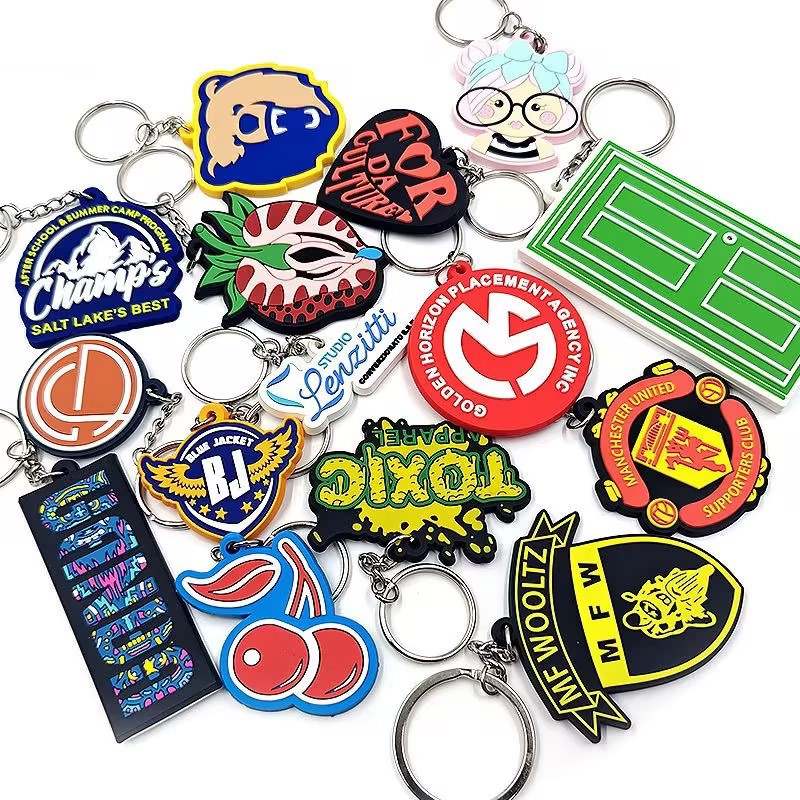
Match the artwork to the correct production method, then verify that the custom PVC keychain manufacturer operates that method. Use 2D molding for flat color logos, 3D or multi-level relief for characters and dimensional artwork, and printing for gradients or details too fine to mold cleanly.
2D PVC keychains
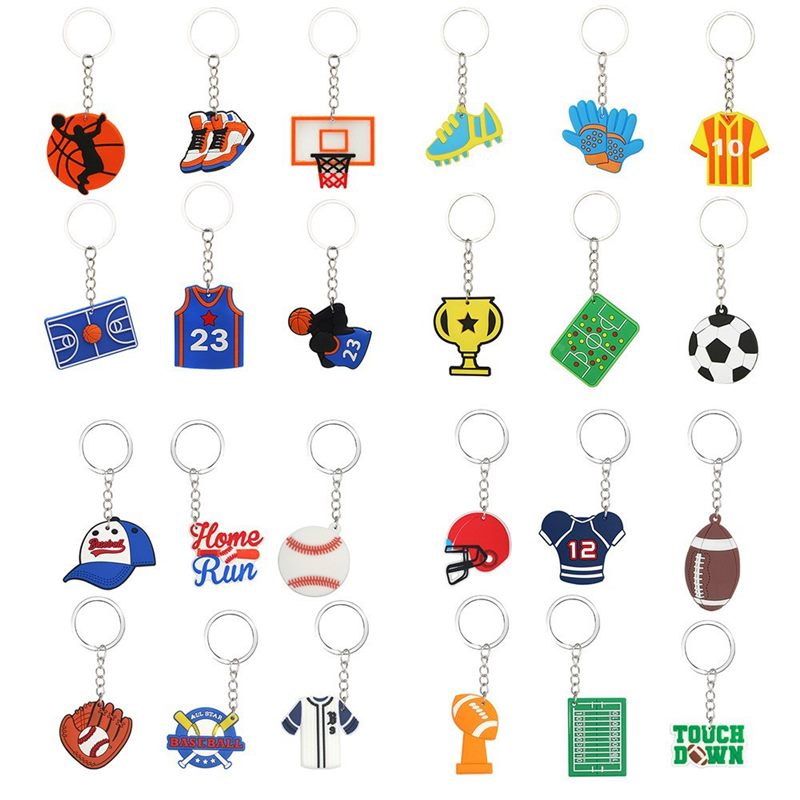
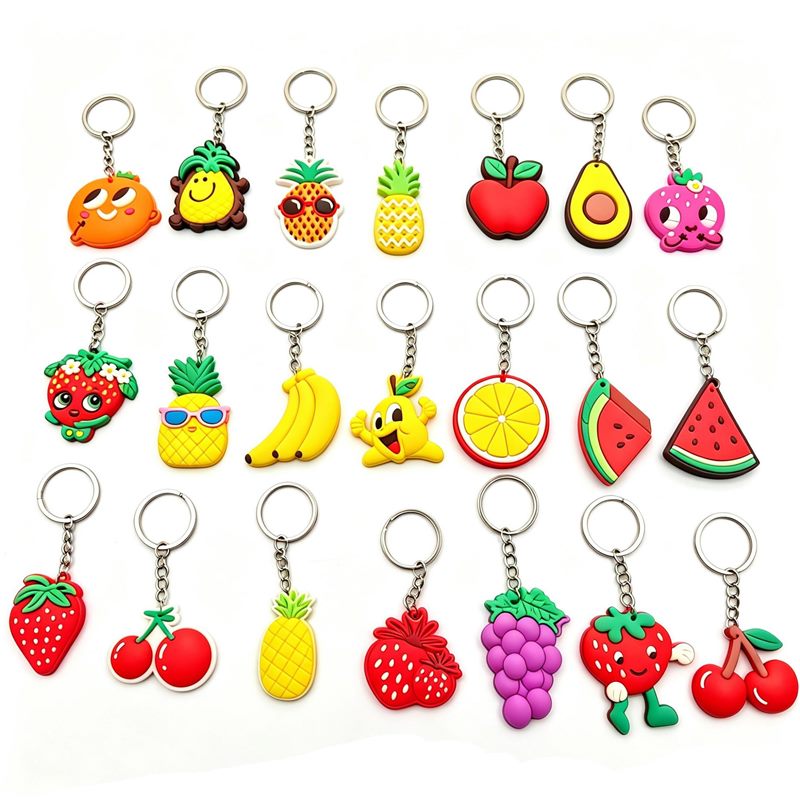
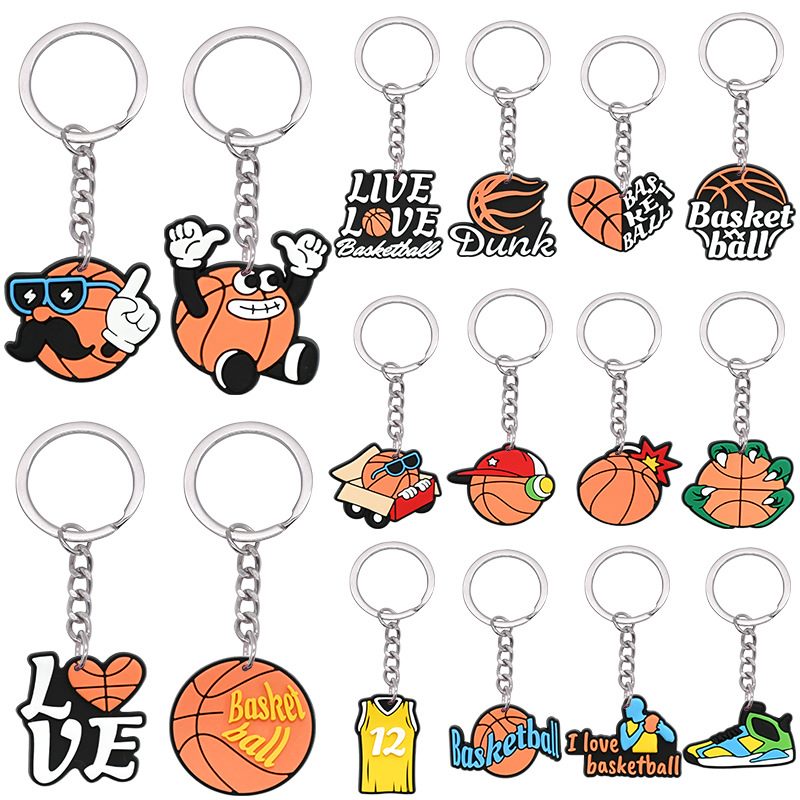
2D designs use flat or stepped color areas with clean outlines. They work well for logos, icons, simple mascots, and high-volume promotional designs. Ask how the factory controls narrow gaps, borders, color count, and attachment placement.
3D and multi-level PVC keychains
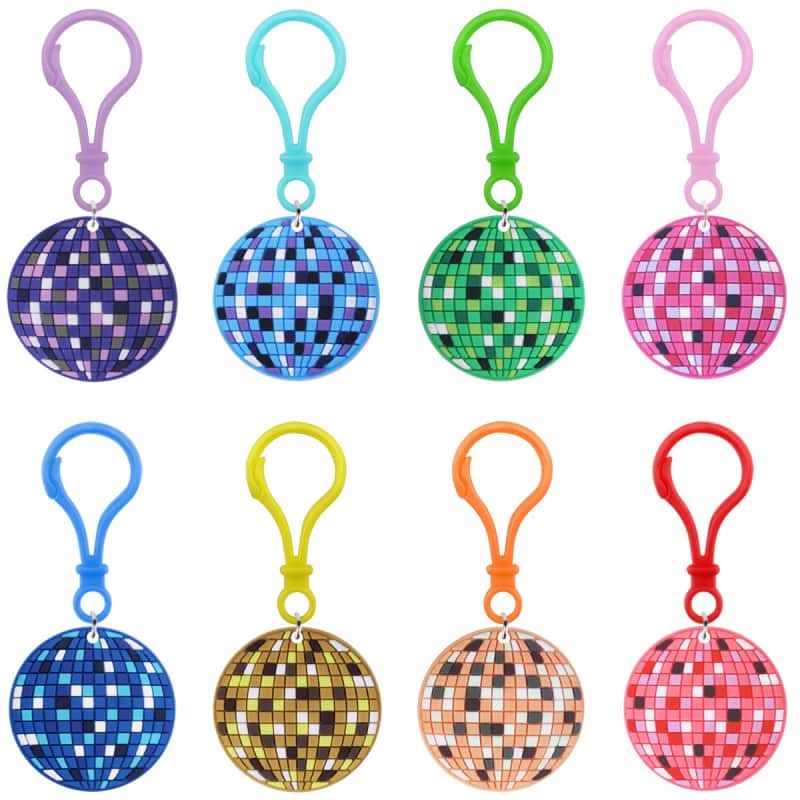
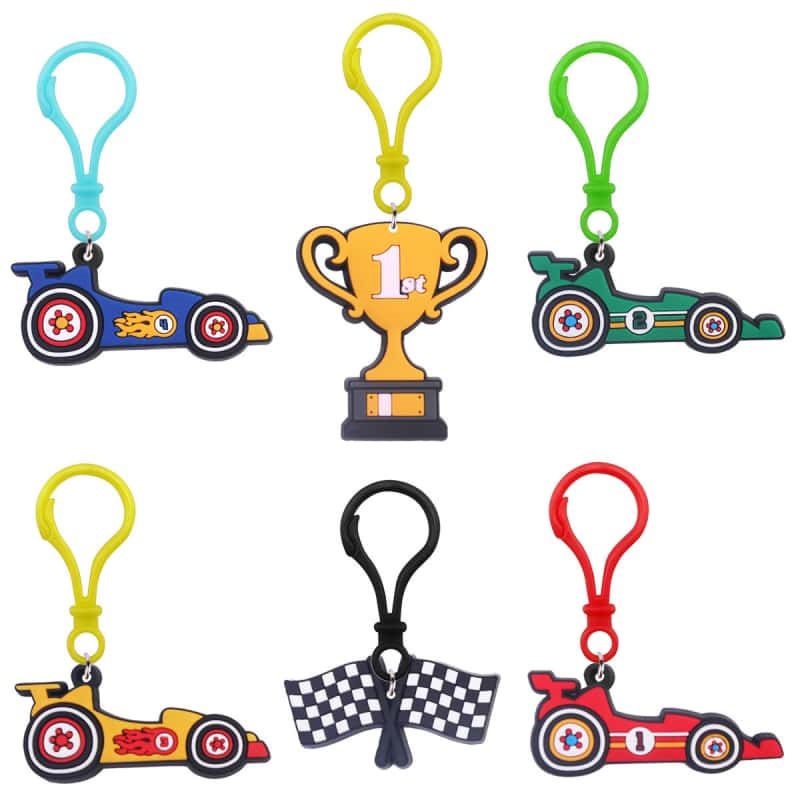
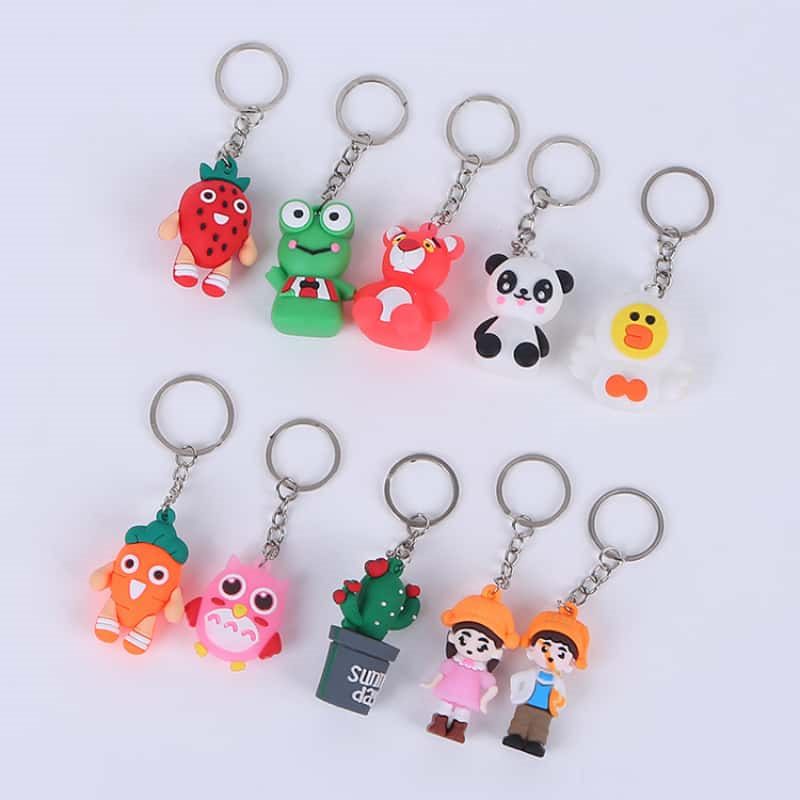
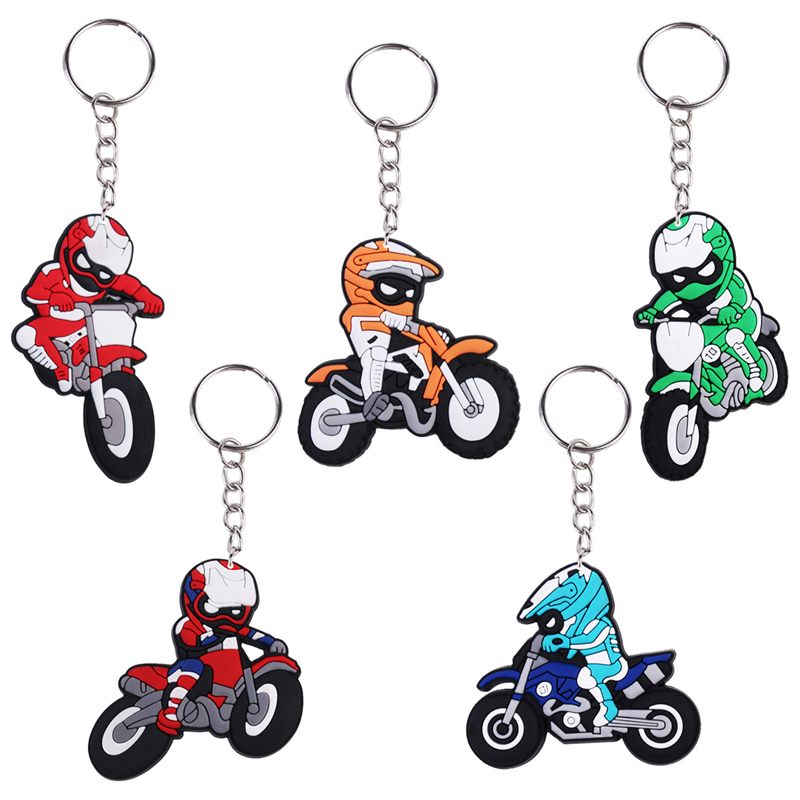
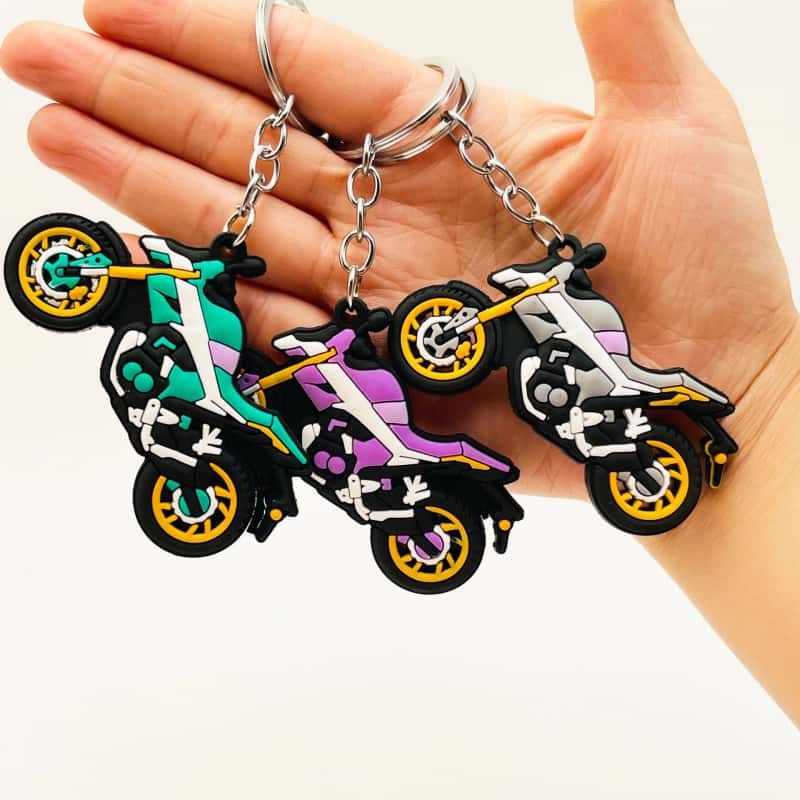
3D designs use changing relief and rounded surfaces to create depth. They suit mascots, faces, food, shoes, vehicles, and sculpted characters. Ask for a sample with similar depth, undercuts, and protruding parts—not merely another PVC product.
Printed details
Silk-screen, UV, or other printing can reproduce small text, gradients, and fine marks that would not remain legible as molded PVC. Confirm ink adhesion, rub resistance, registration, and whether printed areas are included in sample approval.
If you are comparing materials as well as suppliers, read our PVC, silicone, and metal keychain comparison.
4. How Does the Factory Match Colors and Review Artwork?
Provide Pantone references and approve the match on a physical sample. Soft PVC colors are mixed before dispensing, so screen previews cannot prove the final result. Ask how the supplier handles bright colors, translucent effects, layered blocks, color tolerance, and outdoor exposure. Smooth gradients generally suit printing rather than separate molded color zones.
What the manufacturability review should return
- Minimum feature and line limits for the proposed size.
- A border or outline recommendation that keeps the shape stable.
- The number and order of molded color layers.
- A printing fallback for tiny text, gradients, or fine marks.
- The attachment location and required reinforcement.
- Any artwork revisions required before mold cutting.
- The exact artwork revision used for quotation and tooling.
Do not assume one universal minimum line width for every design. Size, hardness, depth, relief, and the relationship between adjacent features change what can be molded. Ask the factory to mark the limits directly on your proof.
5. What Samples and Quote Details Should You Expect?
Approve the design in stages against a written specification. A reliable workflow normally includes a manufacturability review, digital proof, physical pre-production sample, and signed approval before bulk production. Keep the approved sample and dated photographs as the reference for quality control.
Physical sample approval checklist
- Finished dimensions and tolerances.
- Color against approved Pantone references.
- Relief, layer order, molded texture, and printed detail.
- Edges, trimming, surface cleanliness, and deformation.
- Ring, chain, clasp, eyelet, and pull strength.
- Packaging fit, labels, barcode, and pack-out.
- The exact signed artwork and specification revision.
What an itemized quote must include
Compare identical specifications, not headline unit prices. Request unit pricing at two or three quantities, tooling fee, number of colors, printing, hardware, packaging, sample cost, inspection or testing, freight, Incoterm, payment terms, quote validity, mold ownership and storage, revision allowance, and exclusions. Our custom keychain mold-fee guide explains the one-time tooling cost.
6. Is the Lead Time Realistic and the QC Process Documented?
Ask for a stage-by-stage schedule and identify approval dependencies. The production clock does not simply begin when you first email the artwork. It normally depends on the final brief, artwork approval, commercial terms, tooling, sample approval, bulk production, inspection, packing, and shipment.
- Artwork and specification review.
- Design-for-manufacture proof and buyer approval.
- Mold engraving or preparation.
- Physical pre-production sample and buyer approval.
- Color mixing, dispensing, baking or curing, and trimming.
- Hardware assembly and in-process inspection.
- Final inspection, packing, and shipping release.
Variables include the number of colors, 2D versus 3D complexity, approval speed, order quantity, peak season, testing scope, packing, and shipping method. A credible custom PVC keychain manufacturer gives ranges and identifies the factors that could move them.
Quality records to request
Ask whether the supplier can provide an approved-sample record, in-process checks, final inspection results, packing photographs, and coordination for third-party inspection. Confirm how it classifies critical, major, and minor defects, what sampling plan it uses, which color reference controls acceptance, and which dimensional tolerances apply.
7. Export Documents and Market Compliance Support
Plan export paperwork with the order. Depending on shipment and Incoterm, documents may include a proforma invoice, commercial invoice, packing list, HS-code assistance, country-of-origin information, product marking, and carton specifications. Ask for unit weight, carton quantity, carton dimensions, and gross weight early enough to calculate freight.
Product classification depends on intended use and presentation. A keychain is not automatically a toy. Tell the supplier the destination, intended user and age, marketing channel, PVC formulation, coatings, detachable parts, packaging, and sales channel. The importer or responsible brand determines which requirements apply; a factory test report is supporting evidence, not a universal certificate.
United States
If a design is a covered children’s product or toy, applicable CPSC requirements can include third-party testing, a Children’s Product Certificate, lead, phthalates, small-parts rules, and age grading. Review the official CPSC toy-safety guidance and Children’s Product Certificate guidance.
European Union and Great Britain
EU consumer sales can require product-safety assessment, traceability, required information for online offers, and an EU-based responsible economic operator where applicable. Certain phthalates in PVC are restricted under REACH. Start with the official EU General Product Safety Regulation. For Great Britain, consult current UK toy-safety guidance when the product qualifies as a toy.
Confirm the test plan, sample selection, laboratory, report scope, and validity against the final SKU and market. Revalidate after relevant changes to material, colorant, hardware, packaging, intended use, age grading, or destination.
8. Manufacturer Red Flags—and the Proof That Clears Them
| Red flag | Evidence that clears it |
|---|---|
| No physical sample for a new design | Dated pre-production sample and signed approval record |
| Vague answers about production | Live or dated walkthrough of mold room and dispensing process |
| “Close enough” color claims | Physical sample checked against your Pantone references |
| One-line quotation | Itemized quote with tooling, hardware, packing, terms, and exclusions |
| Generic compliance certificate | Test plan and report scoped to the final SKU and destination |
| Unrealistically short lead time | Stage schedule that includes buyer approvals and inspection |
9. What to Send a Custom PVC Keychain Manufacturer
A complete brief reduces assumptions, makes quotes comparable, and lets the factory return useful manufacturability notes. Label every item clearly:
- Vector artwork: AI, PDF, EPS, or SVG with buyer-owned or licensed marks.
- Finished dimensions and tolerance: size affects mold construction and price.
- Design type: 2D, multi-level, 3D, or printed detail.
- Colors: color count and Pantone references for every colorway.
- Fine detail: identify small text, gradients, and critical marks.
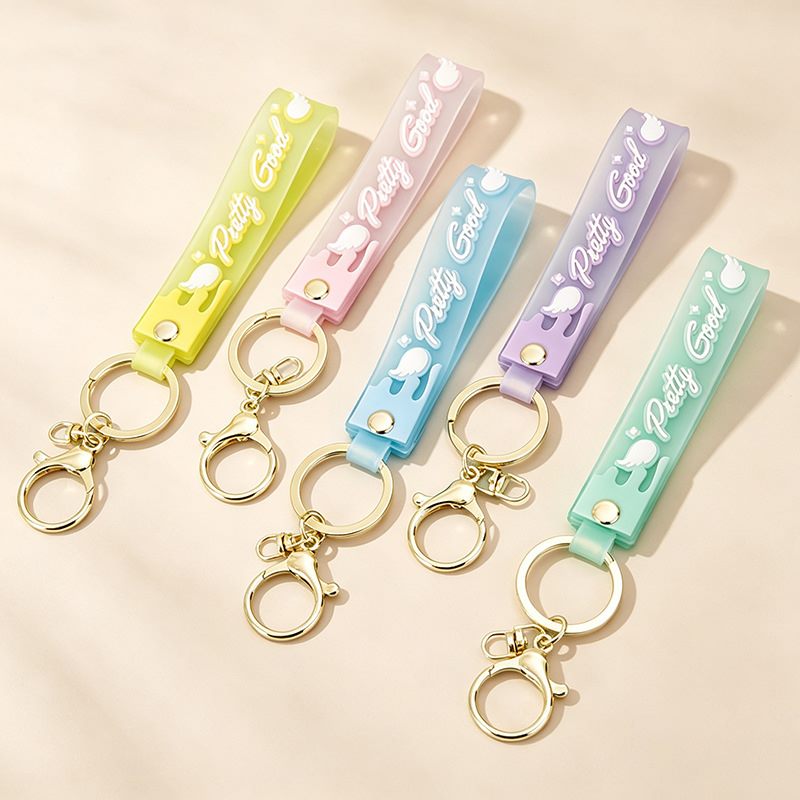
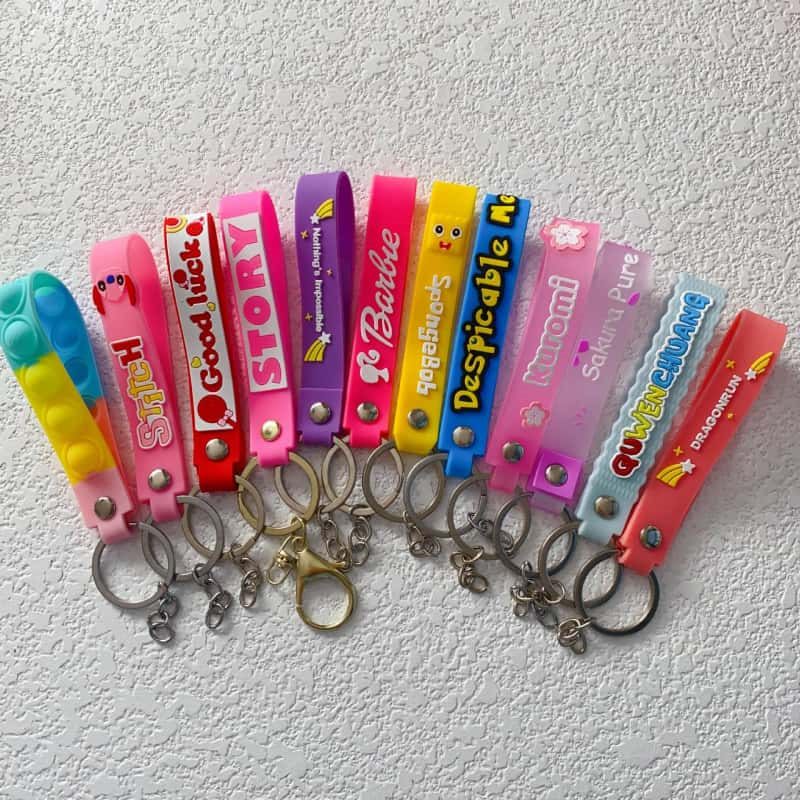
- Hardware: split ring, chain, clasp, strap, or recommended alternative.
- Packaging: polybag, backing card, barcode, gift box, or retail pack.
- Quantity: per design and color, plus alternative price tiers.
- Destination: country, sales channel, and importer details where relevant.
- Commercial terms: preferred Incoterm, freight responsibility, and deadline.
- Intended user: age group, use, marketing, and play value.
- Documentation: buyer standards, tests, inspection, and report requirements.
You can browse our custom keychain range before sending the brief or review the PVC keychain production process to understand the factory stages.
Start Your PVC Keychain Sourcing Review
Send your artwork, quantity, destination market, intended user or age group, packaging, and deadline. HUASAN will review manufacturability, outline the quote scope, and confirm documentation-support options for the proposed design. Request your factory review.
Frequently Asked Questions
How do I confirm a PVC keychain factory molds in house?
Request the legal supplier name, production-site address, and a dated video showing mold preparation and color dispensing. The supplier should identify any outsourced step in writing.
Can a factory match my exact brand colors?
Provide exact Pantone references and approve the match on a physical pre-production sample under agreed lighting. Ask about colorfastness if the product will be used outdoors.
What is the difference between a 2D and 3D PVC keychain?
A 2D design uses flat or stepped color layers, while a 3D design uses changing relief and rounded surfaces for depth. Printing can reproduce details too fine to mold.
Do custom PVC keychains need compliance testing?
It depends on destination, intended user, classification, materials, and presentation. Confirm the applicable plan for the final SKU and remember that the importer or responsible brand determines which requirements apply.
What information is needed for a manufacturability review?
Send vector artwork, dimensions, design type, Pantone references, hardware, packaging, quantity, destination, Incoterm, deadline, and intended age or use.