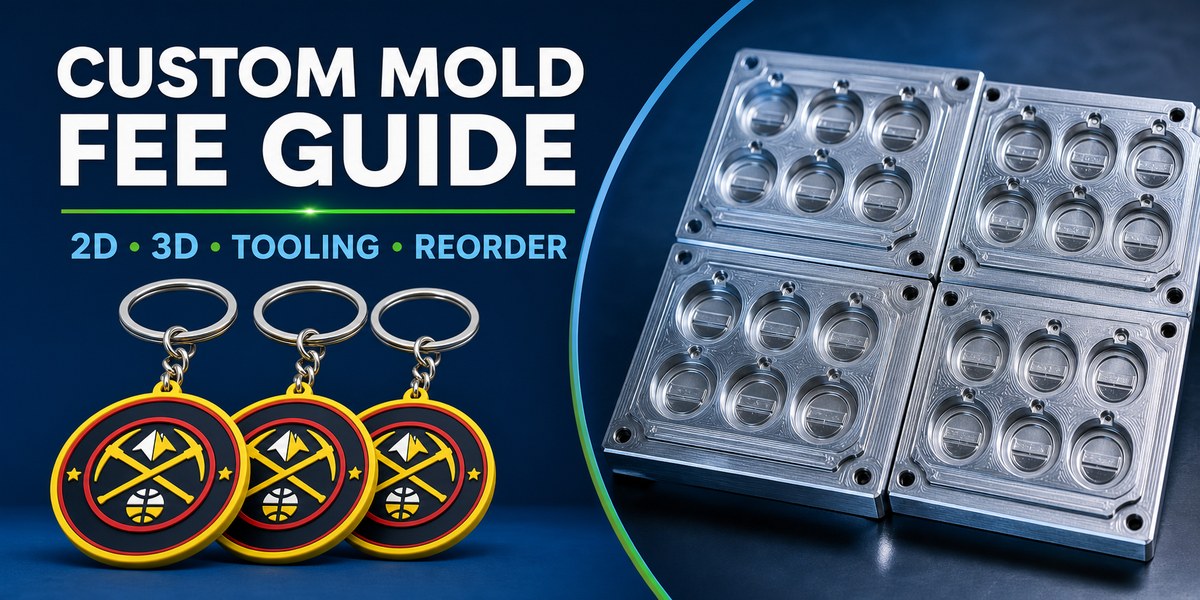
You ask for a quote on custom keychains or fridge magnets, and the price comes back with a separate line for a “mold” or “tooling” fee. It catches a lot of first-time buyers off guard. That fee is called mold opening, and understanding it is the key to reading your custom mold cost correctly and knowing where you can save. This guide explains what mold opening is, why the fee is one-time, what makes it go up or down, and how the mold gets reused on your reorders.
Here is the short version:
- Mold opening is making the custom mold for your unique shape.
- The mold fee is one-time, not per unit.
- A 2D flat design costs less to tool than a 3D sculpted one.
- Simple aluminum molds usually take 3 days to produce, and samples usually take 7 days.
- Detailed steel molds usually take 7 days to produce, and samples usually take 10 days.
- On reorders you reuse the same mold, so you pay for product only if the mold is still within the storage term.
Now here is how it all works.
What does “mold opening” actually mean?
The next step in the factory is to create the tool that will form your product: the mold opening. Your design is unique, and it needs its own mold cut to your shape, logo, character, and detail. That mold is then used to create each keychain or magnet that you order. Standard, off-the-shelf shapes do not always require a new mold, but anything with your own outline, logo, figure, or raised detail usually does.
Imagine the mold as the master. Once it exists, the factory can make your product from it again and again.
Why is there a one-time custom mold fee?
The mold fee pays for making that master tool, and it is charged once. Cutting a mold takes design work, engraving, machine time, testing, and sample adjustment. Because that mold is built only for your product, the cost sits with your order instead of being spread across other buyers. After the mold is made, you pay for the keychains or magnets themselves, not the tooling again.
This is why your first order always costs more than your reorders. The first run carries the mold. Every run after that does not, as long as the same mold can still be used.
2D vs 3D custom mold: what changes the cost?
A flat 2D mold is the simplest and cheapest to cut. It works well when your design uses a clean outline, logo blocks, flat color areas, and shallow raised lines. A 3D mold costs more because a sculpted, multi-level shape takes more engineering and machine time to carve.
For PVC products, a 2D mold usually starts at USD 120. A 3D mold normally adds about 30% because of the deeper sculpting work. For other materials, the starting cost changes: zinc alloy metal molds usually start at USD 100, while silicone molds usually start at USD 300.
A few other things move the price too: the size of the product, how fine the detail is, and how many cavities the mold has. More cavities mean the mold can produce more pieces per cycle, which speeds up a large run but adds to the mold cost. So the right setup depends on your quantity. For a smaller order, keep the mold simple. For a big run, extra cavities can lower your per-unit price.
If you are still comparing order sizes, match this section with your MOQ article so the mold cost, unit price, and minimum order quantity are judged together. If you are comparing PVC, silicone, and zinc alloy, use the same material comparison standards below so the full blog series stays consistent.
| Mold type | Starting tooling fee | Usual mold lead time | Sample turnaround | Best use |
|---|---|---|---|---|
| PVC 2D mold | From USD 120 | Simple aluminum mold: 3 days | About 7 days | Flat logos, simple characters, most low-cost keychains and magnets |
| PVC 3D mold | PVC 2D fee + about 30% | Detailed steel mold: 7 days | About 10 days | Sculpted characters, layered figures, premium detail |
| Zinc alloy metal mold | From USD 100 | About 5-7 days | About 7-10 days | Metal keychains, badges, coins, hard enamel style products |
| Silicone mold | From USD 300 | About 7 days | About 10 days | Soft silicone items, wristbands, cases, and flexible products |
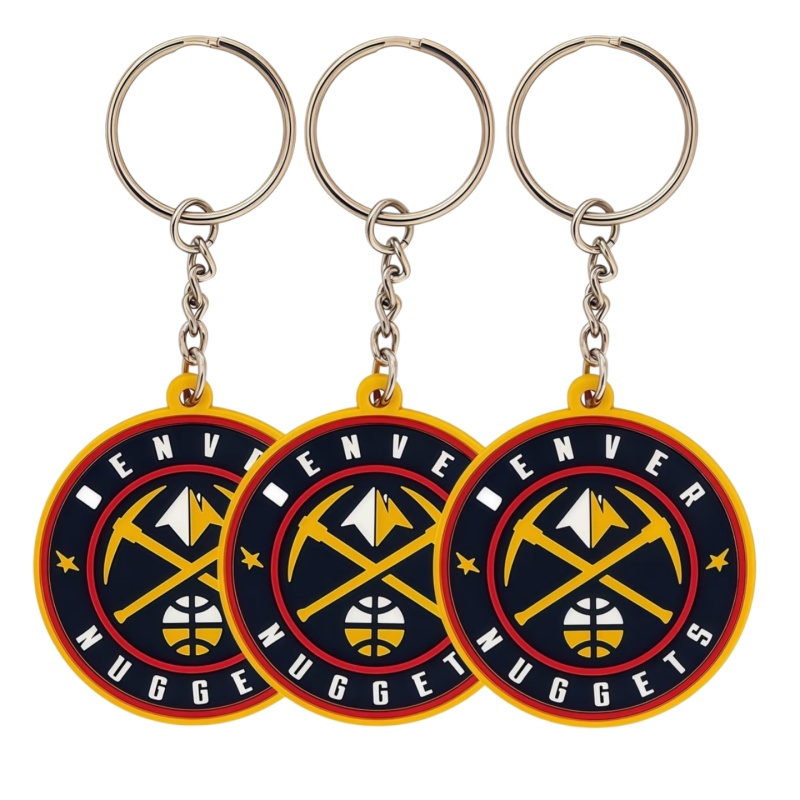
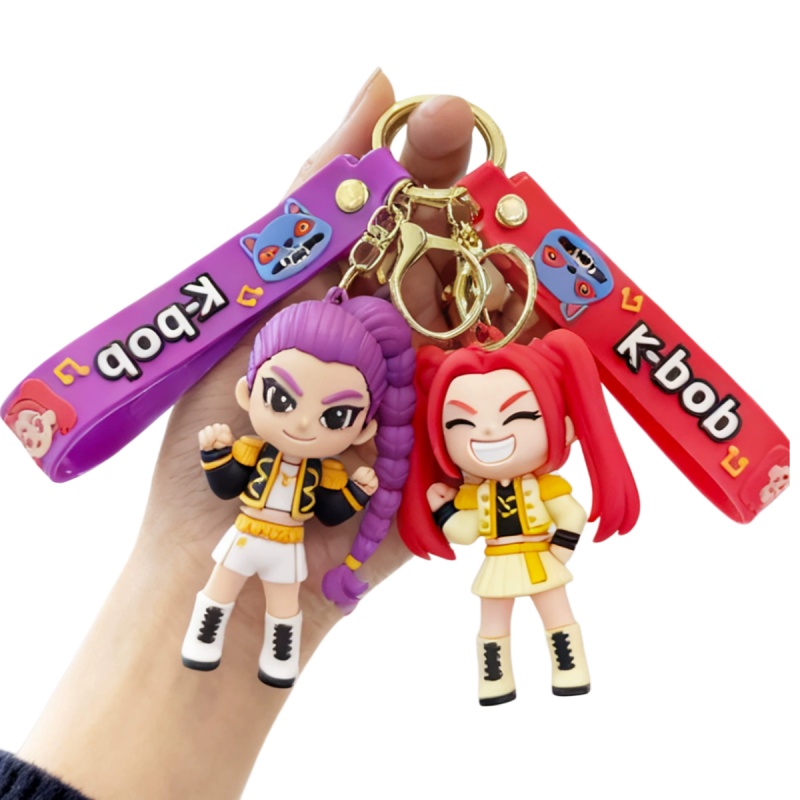
First order vs reorder: what the price difference looks like
Here is a simple example for the same-size 2D PVC design. The exact unit price depends on size, color count, accessories, and quantity, but the tooling logic stays the same.
| Order type | Quantity | Tooling fee | Unit price example | Product cost | Total |
|---|---|---|---|---|---|
| First order | 300 pcs | USD 120 | USD 0.80/pc | USD 240 | USD 360 |
| Reorder with same mold | 300 pcs | USD 0 | USD 0.80/pc | USD 240 | USD 240 |
Steel vs aluminum molds: which one do you need?
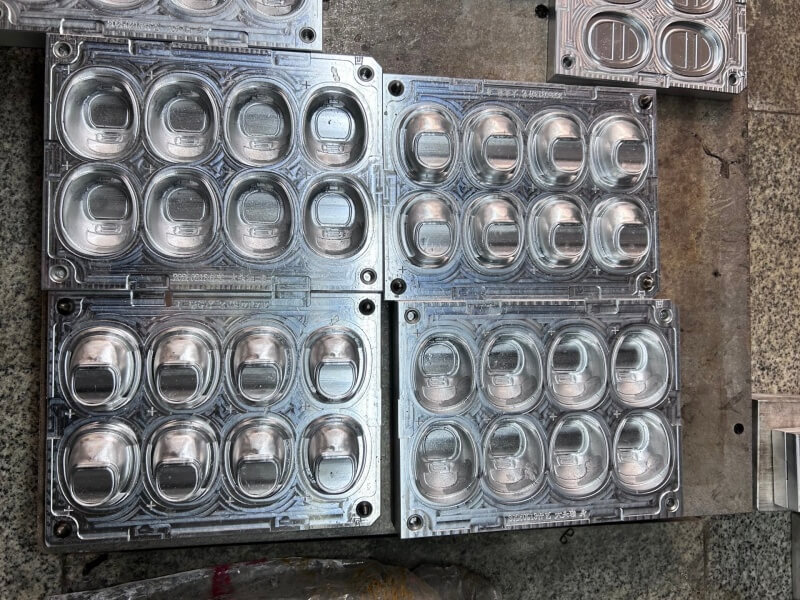
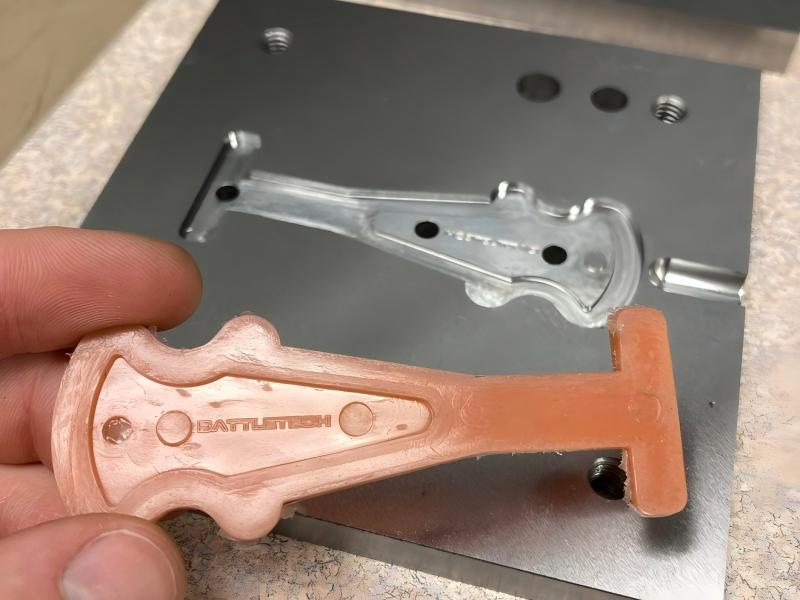
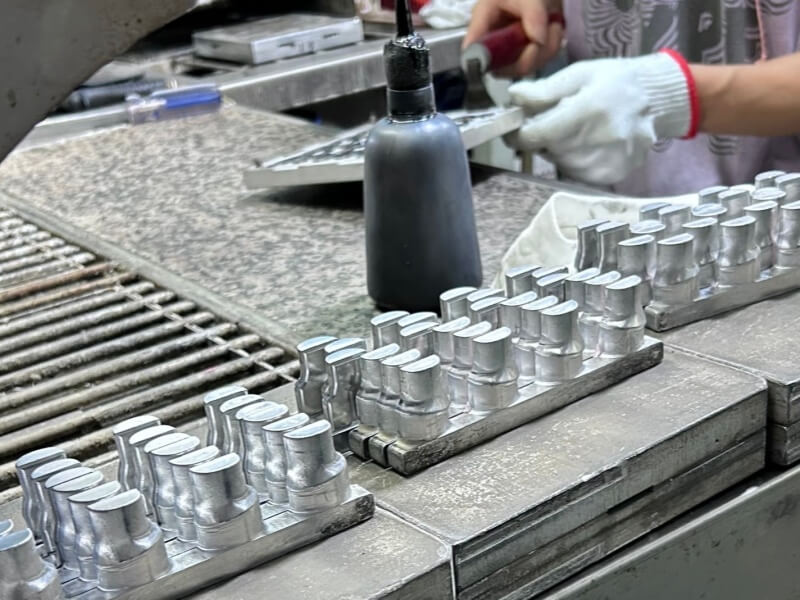
Molds are usually cut from either steel or aluminum, and the choice affects both your cost and your lead time. Steel is harder and lasts far longer, which suits very large or repeat production, but it costs more upfront and takes longer to make. Aluminum is softer and cheaper, and it is faster to cut, which makes it a good fit for smaller runs and first orders.
Aluminum Custom Mold
Steel Custom Mold
Here is how they compare:
| Mold material | Cost | Lead time | Service life | Best fit |
|---|---|---|---|---|
| Aluminum custom mold | Lower | Simple molds usually take 3 days | Shorter than steel, enough for many small and mid-size runs | Trial orders, simple 2D shapes, startup sellers, smaller batches |
| Steel custom mold | Higher | Detailed molds usually take 7 days | Longer and more durable for repeat production | Large orders, regular reorders, multi-cavity production, long-term brand programs |
If you are testing a design or ordering a modest batch, an aluminum mold usually makes more sense. If you plan to reorder the same product for years at high volume, steel pays off over time.
Mold Selection Solutions for Buyers with Different Order Scales
Not every buyer needs the same mold plan. You should match the mold to your order scale, reorder plan, and risk level.
Startup small merchants (100-300pcs trial orders): Choose a 2D aluminum custom mold with a simple outline and clean raised lines. This keeps the first tooling cost low while you test sales.
Corporate event gifts (300-800pcs): Use a 2D aluminum custom mold or a simple 3D aluminum custom mold if the gift needs more shape and detail. Extra cavities can be considered when the delivery time is tight or the event quantity is closer to the high end.
Long-term brand large clients (1000pcs+ regular reorders): Choose a durable steel mold with a multi-cavity design. The first mold cost is higher, but the mold lasts longer and helps cut unit cost across repeated large runs.
Who owns the mold, and can you reuse it?
You pay the tooling fee and the factory keeps your mold so that you can order from it later on, in most cases. That’s where the custom mold fee comes in: When the mold is in place, your subsequent orders do not have to pay it. Reorders only cover the product, hence the second run will always be less expensive than the first.
There are two things to confirm in your quote. Inquire about the duration that the factory stores your mold as a lot of factories store them for a year or two prior to their retirement. And ask who owns the mold, so you know your options if you ever move production. Having this up front means you have protection on your reorders down the road.
Rules for Mold Modification, Damage Handling & Expiry Disposal
Mold work does not end the moment the tool is cut. Sampling, approval, storage, and production can all raise practical questions.
- Minor mold revisions during the sample approval stage are usually free when they are needed to correct small line, depth, or detail issues before final approval.
- Major design changes after mass production starts usually require extra repair fees or a new mold, because the approved tool has already entered production.
- If a production mold is damaged because of normal factory production handling, the factory should remake or repair the damaged production mold free of charge.
- Once the free 12-month storage term expires, the mold may be scrapped if no storage extension is arranged. Scrapped molds cannot be recovered.
Free mold vs paid mold: what is the catch?
Some suppliers advertise a “free mold,” but the cost rarely disappears. It usually gets built into a slightly higher per-unit price instead. A supplier that charges the mold separately can often give you a lower price per piece, which works out cheaper once your quantity climbs.
Neither approach is wrong. What matters is that you know which one you are getting. Ask the supplier to show the mold fee and the unit price as separate lines, so you can compare quotes fairly and see the real total.
How to keep your mold cost down
A few simple choices lower your tooling spend:
- Pick a 2D design over 3D if your budget is tight.
- Keep the shape and detail as clean as your branding allows.
- For 100-300pcs trial orders, choose simple 2D aluminum molds instead of complex steel molds.
- For 300-800pcs corporate gift orders, consider extra mold cavities only when faster production is worth the added tooling cost.
- For 1000pcs+ repeat orders, use steel molds and multi-cavity designs to lower long-term unit cost.
- Order enough in one run to spread the mold cost across more units.
- Reorder within the 12-month free storage window so you do not pay for a new mold.
- Reuse existing factory stock designs when your project can accept a standard shape, so you avoid tooling fees entirely.
- Produce multiple color variants with one single mold when the product shape stays the same.
- Split total tooling fees across assorted designs in your budget plan, so one test style does not carry all trial-order pressure.
Fully different shaped products cannot share one mold. If you need several shapes, each shape needs its own tooling. A low-cost compromise is to keep the same outline and change only colors, printed details, or accessories where the production method allows it.
Small decisions at the design stage can save you real money before production even starts.
In-House Mold Workshop Advantages of Source Manufacturer HUASAN
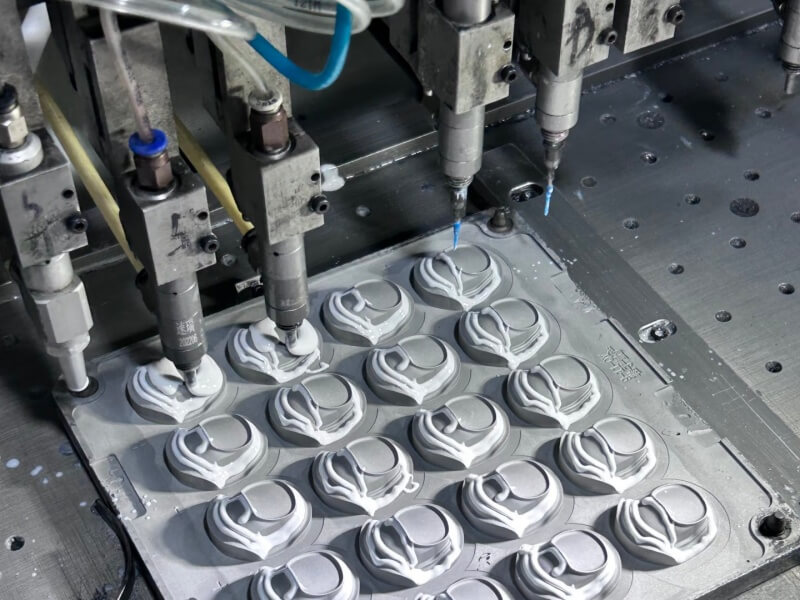
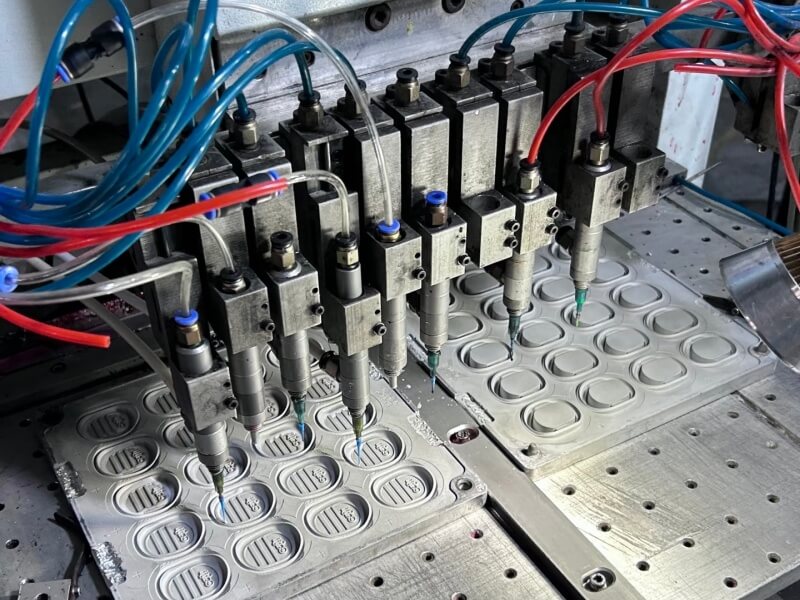
If you want tighter cost control, choose a source manufacturer with its own mold workshop instead of a supplier that outsources tooling. When mold making and production happen under the same roof, communication is faster, sample changes are easier, and there are fewer surprises between artwork approval and delivery.
HUASAN has a self-owned CNC mold workshop and can make both steel and aluminum molds. Simple molds can be produced in as little as 3 days, with samples usually ready in about 7 days. The team also supports free design and samples, 15 years of PVC customization experience, BSCI certification, and long-term mold storage service for reorder projects.
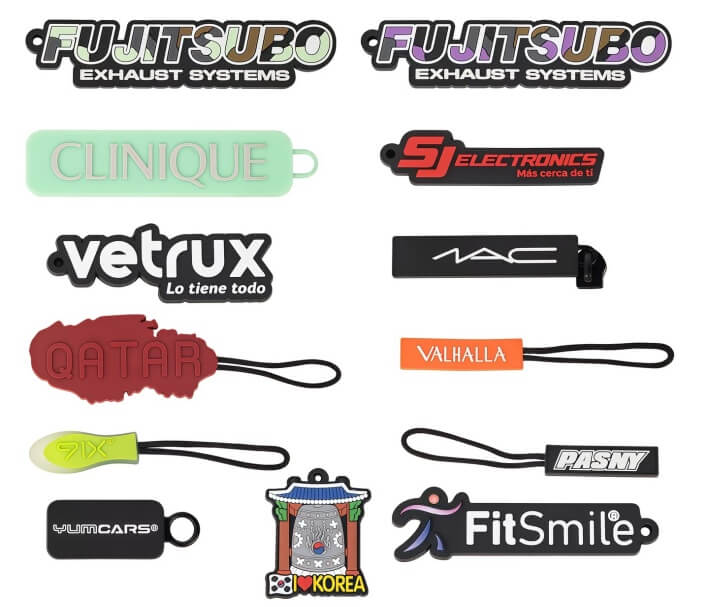
Ready to open a custom mold for your design?
Send your artwork, finished size, and order quantity. HUASAN will review the design and provide a clear quote with the one-time mold fee and unit cost shown separately.
Request a Free QuoteChoose the Right Custom Keychain Type
Compare molded and non-molded options before paying for tooling. The right process depends on your design, texture, function, and order quantity.
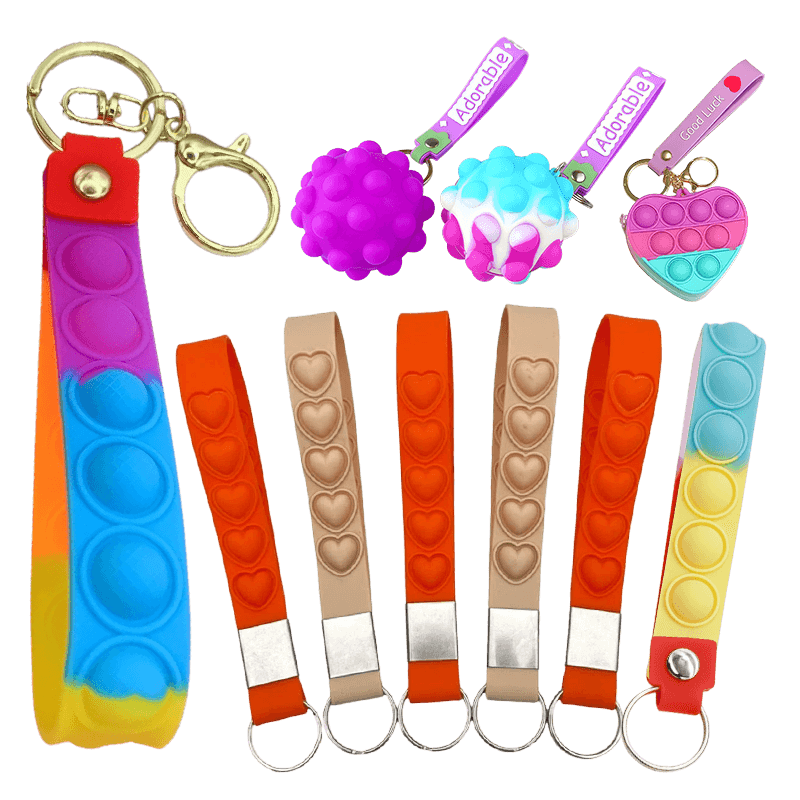
Custom Pop It Keychains
- Functional bubble and pressure-relief designs
- Custom shapes, colors, and logos
- Silicone or PVC material options
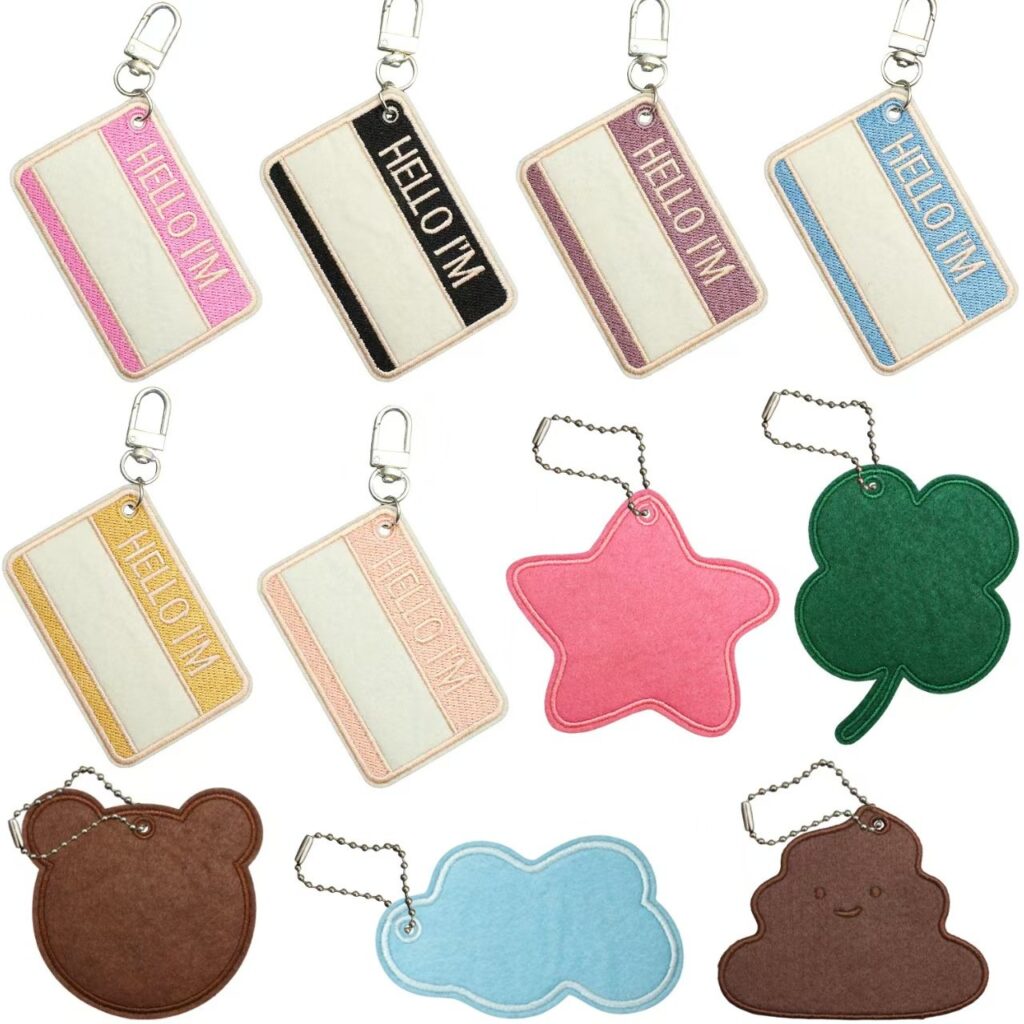
Custom Fabric Keychains
- No PVC production mold required
- Woven, embroidered, printed, or towel finish
- Samples typically ready in 1-3 days
Custom 2D PVC Keychains
- Up to 36 custom colors
- Single or multiple raised layers
- Flexible custom shapes and logo details
FAQ
What is mold opening?
Mold opening is making the custom mold that shapes your product. Your design needs its own mold cut to your exact outline and detail, and that mold then produces every unit in your order.
Is the custom mold fee a one-time cost?
Yes. You pay to create the custom mold once. After that, you pay for the keychains or magnets only, not the tooling.
Do I pay the custom mold fee again on reorders?
No, as long as the factory still has your mold. Reorders reuse the same mold, so a second run costs less than the first. Confirm how long your supplier stores the mold.
Steel or aluminum custom mold, which is better?
Aluminum is cheaper and faster, and it suits first orders and smaller runs. Steel costs more but lasts longer, so it fits large, long-term, repeat production. Your volume decides.
How long does a custom mold take to make?
It depends on the design and mold type. A simple aluminum custom mold is quick, while a detailed steel mold takes longer. HUASAN cuts molds in-house in as little as three days.
Is a “free mold” really free?
Usually the custom mold cost is built into a higher unit price instead of being removed. Ask for the mold fee and unit price as separate lines so you can compare quotes properly.
Do I own the custom mold?
You pay the tooling fee, and the factory usually stores the mold for your reorders. Ownership terms vary, so confirm them in your quote if it matters to you.
Do standard shapes need a custom mold?
Standard, existing shapes often do not need a new mold. A new custom mold is only needed when your product has a custom outline, logo, or figure.